
Last updated October 16, 2026
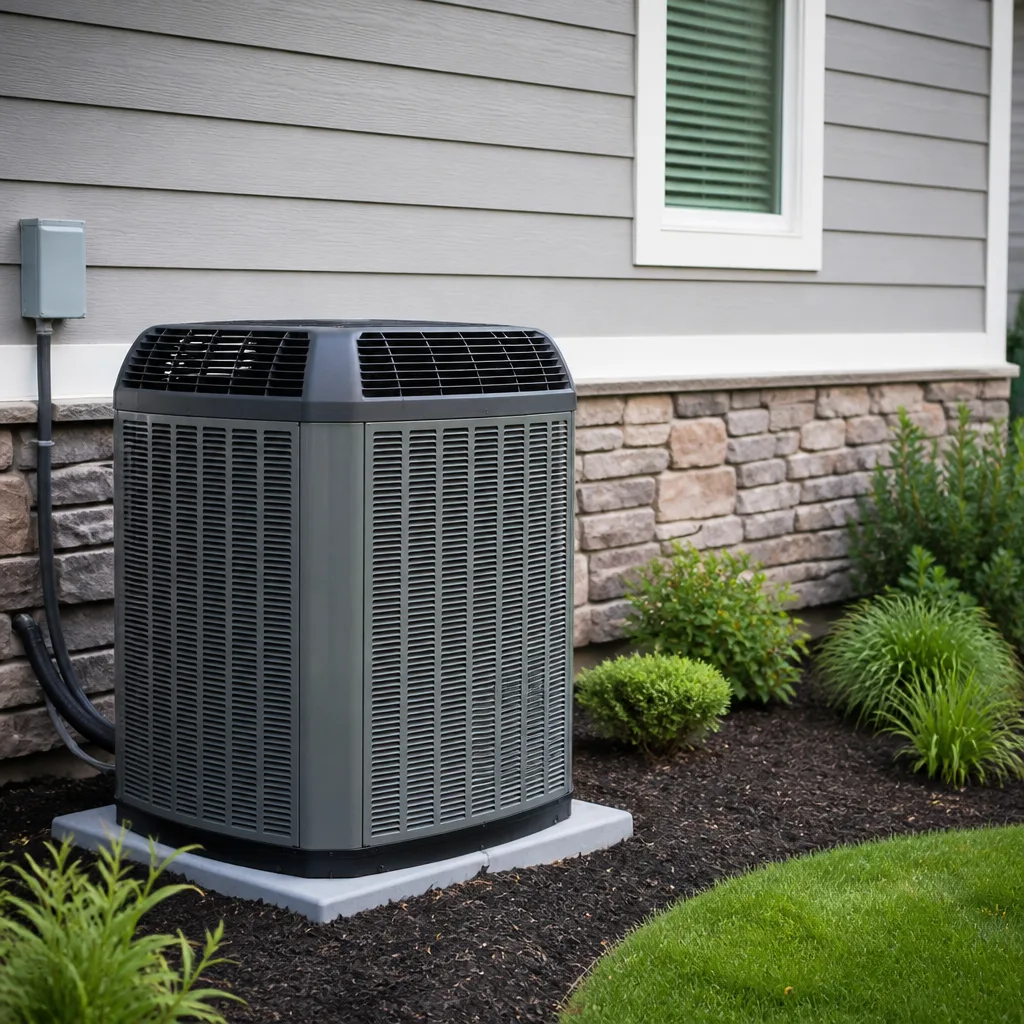 AC repair
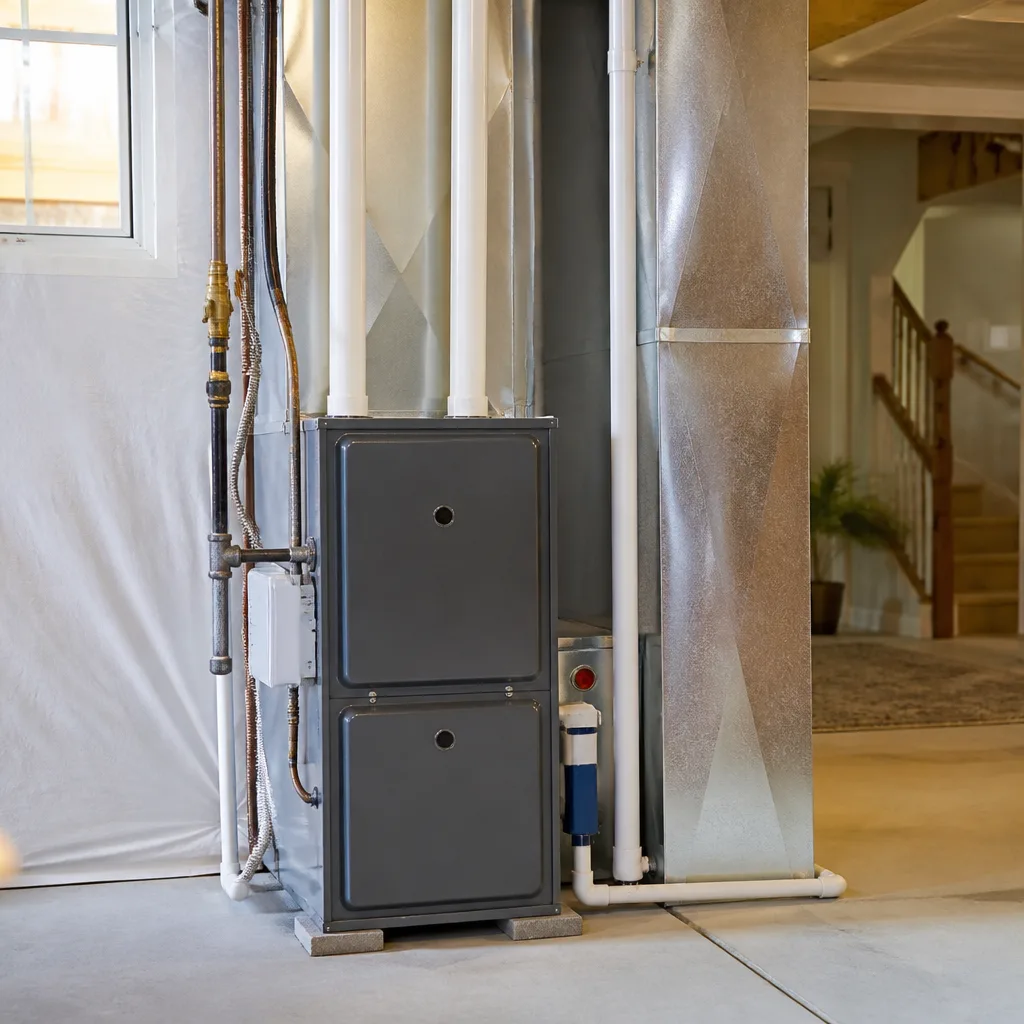 Furnace & heating
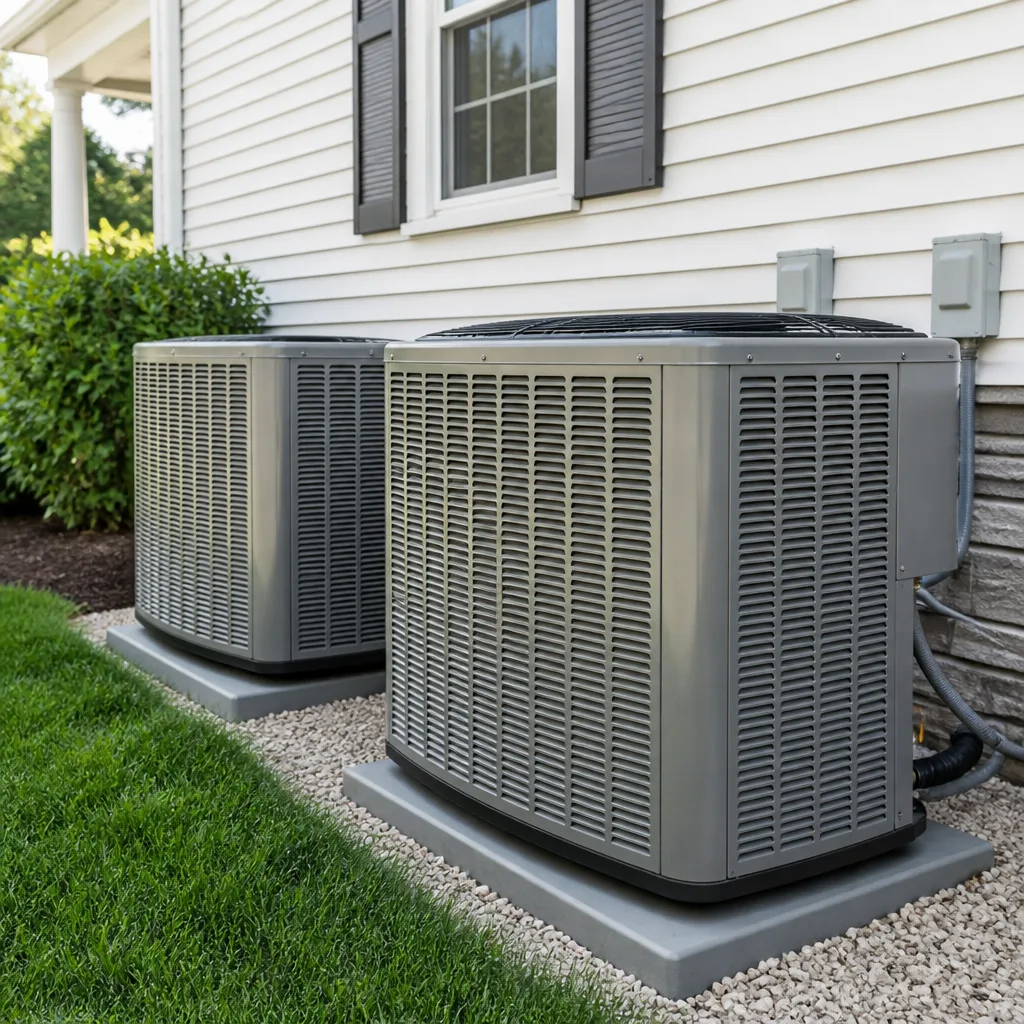 Heat pumps
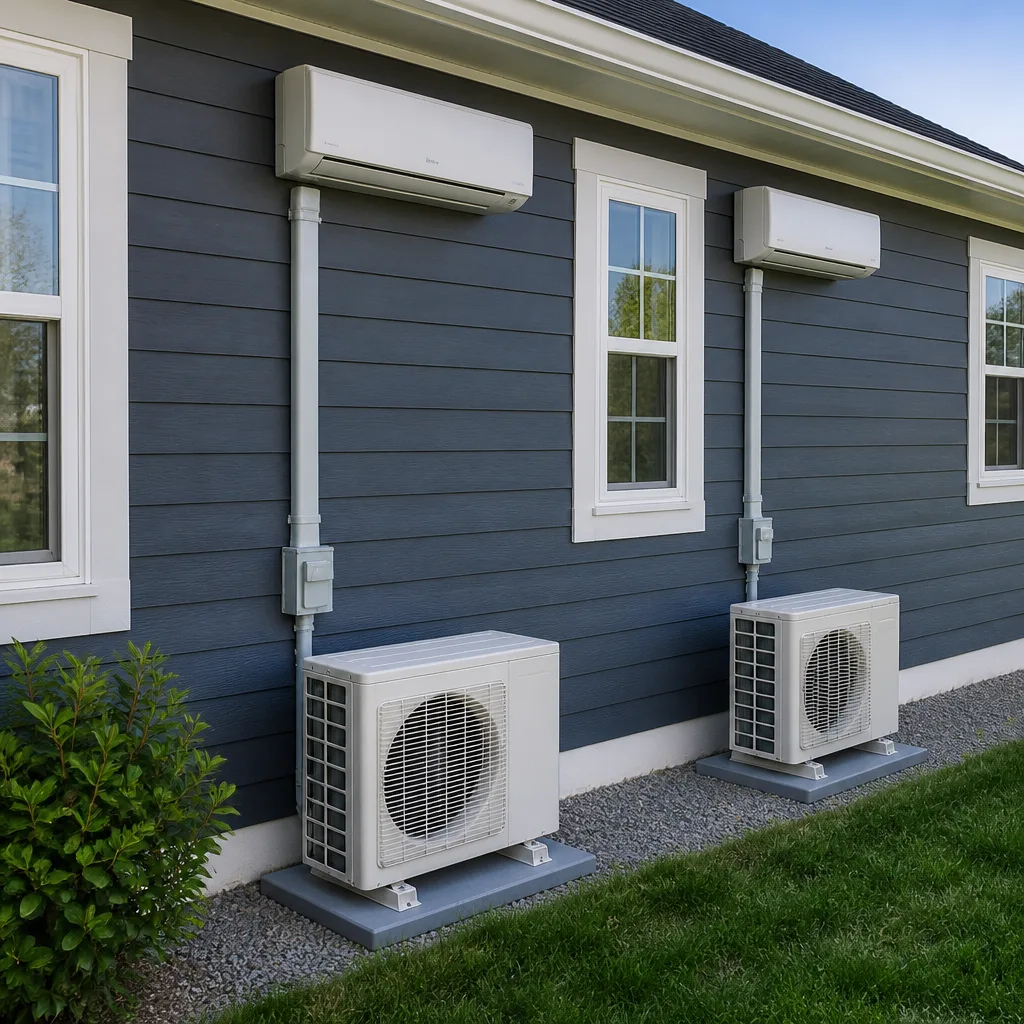 Ductless mini splits
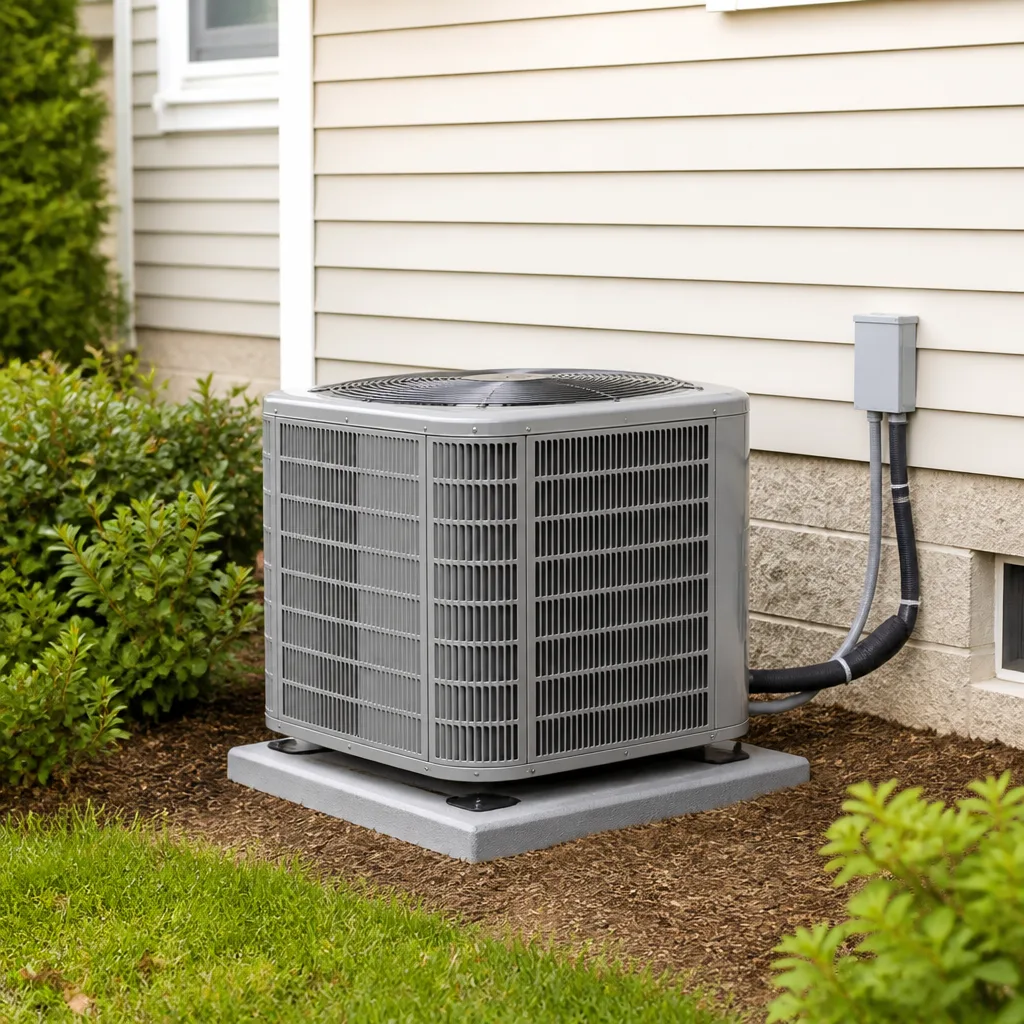 Carrier
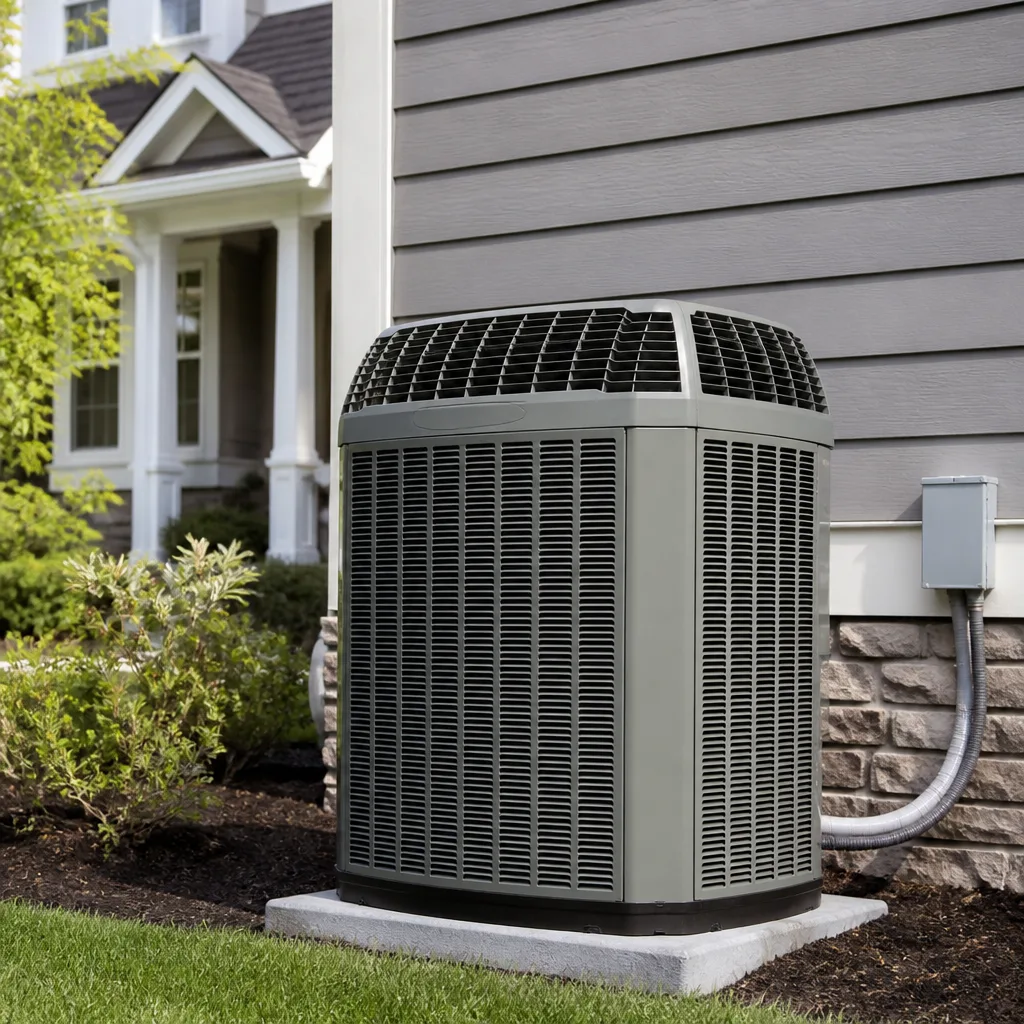 Trane
Trane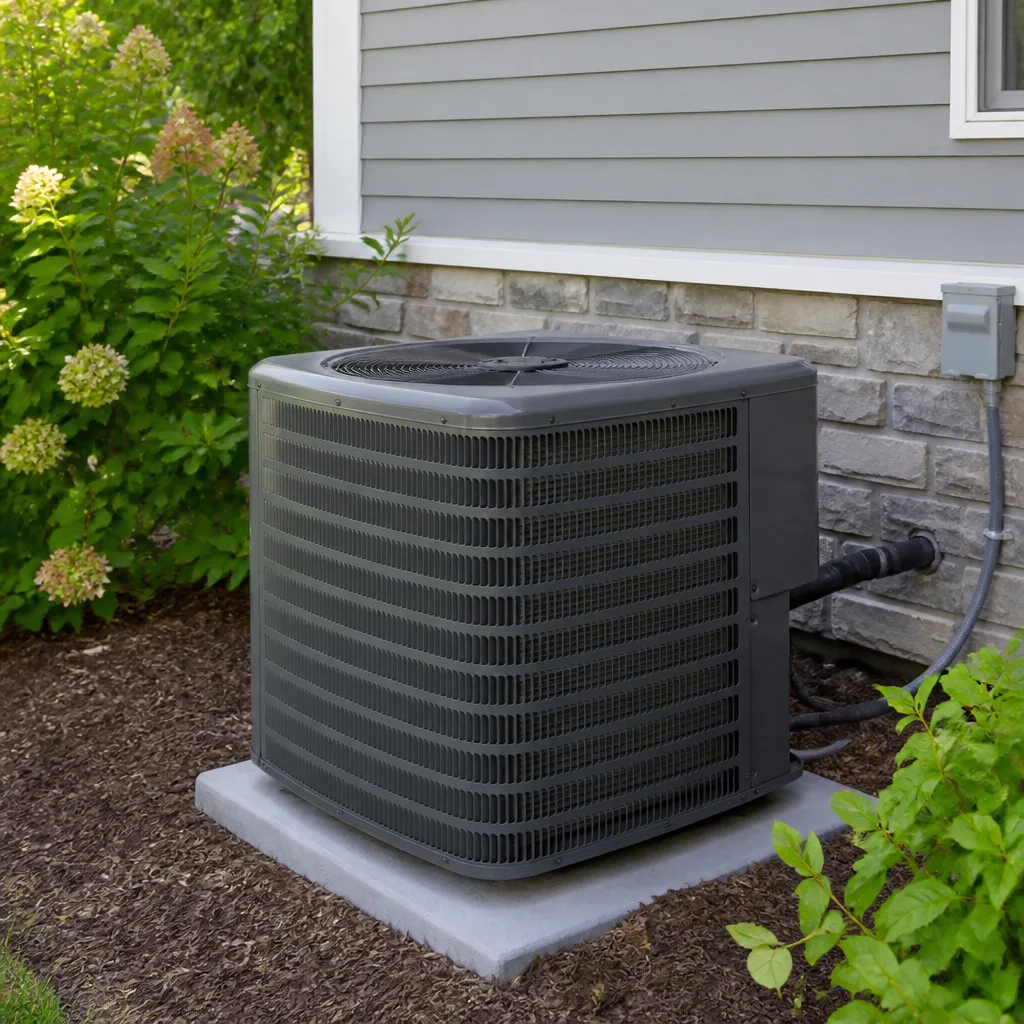 Goodman
Seasonal tune-up and full diagnostic on your Carrier, Trane, or Goodman system - readings shown to you before any repair is proposed
Diagnosis first, numbers second - you approve the repair price before a single part goes in.
Get your free estimateDIY vs Professional HVAC: The Austin Homeowner’s Decision Guide
Handling refrigerant without an EPA Section 608 certification is a federal violation carrying fines up to $44,539 per day, yet several popular HVAC DIY videos on YouTube walk viewers through exactly that process without mentioning it once. That gap between what the internet shows and what the law allows is the reason this guide exists, and why we also publish more guides & resources for Austin homeowners navigating HVAC decisions. If you own a home in Austin, you’ve probably wondered which HVAC tasks you can safely handle yourself and which ones require a licensed technician. This guide draws the legal line clearly, covers the five DIY tasks that are genuinely safe and worth doing, and explains how a well-intentioned weekend repair can quietly void a manufacturer warranty or cost you more than calling a pro would have in the first place.
Styles & brands we work with
Quick Answer
In Austin, homeowners can legally handle routine maintenance tasks like filter changes, thermostat replacements, drain line flushing, outdoor unit clearing, and register balancing, but any work involving refrigerant, gas lines, or permitted equipment replacement is restricted by Texas law and EPA regulations to licensed technicians. Attempting restricted work can void your manufacturer warranty, create safety hazards, and trigger fines that dwarf the cost of a professional service call. When in doubt, the financially and legally safe move is to handle the simple maintenance yourself and call a licensed HVAC contractor for anything involving refrigerant, combustion gas, or electrical panels; our How to Hire a HVAC Contractor in Austin: A Step-by-Step Guide walks you through finding the right pro.
Table of Contents
- The Legal Line: What Texas Law and the EPA Reserve for Licensed Technicians
- The 5 DIY HVAC Tasks Austin Homeowners Can Safely Do
- How DIY Repairs Interact with Manufacturer Warranties
- The Hidden Cost of a Well-Intentioned DIY Fix
- When to Call the Same Day vs. Schedule for Next Week: A Decision Matrix
- Austin’s Climate and Why It Changes the DIY Calculus
- Tools vs. Skill: What the DIY Videos Don’t Show You
- Common Mistakes to Avoid
- When to Call a Professional
- Frequently Asked Questions
- The Bottom Line
The Legal Line: What Texas Law and the EPA Reserve for Licensed Technicians
The DIY-versus-pro HVAC debate usually ignores the legal dimension. In Texas, several HVAC tasks are restricted by statute to licensed technicians, which means the real question isn’t skill level. It’s which tasks the law permits homeowners to do and which ones void warranties or create liability when done without a license.
Here is the unvarnished legal picture for Austin homeowners:
- Refrigerant handling: Under EPA Section 608 of the Clean Air Act, anyone who handles refrigerant for compensation must hold an EPA Section 608 certification. But the rule goes further: even a homeowner who “tops off” their own system with refrigerant purchased online is violating federal law if the system is not properly recovered and the refrigerant is not handled through certified equipment. The fine structure starts at $44,539 per violation per day. Several YouTube tutorials skip this detail entirely, which is how a $40 can of refrigerant from an auto parts store turns into a legal exposure that makes an Austin AC repair bill look like pocket change.
- Gas line work: In Texas, work on natural gas piping connected to a furnace or water heater requires a licensed plumber or a licensed HVAC technician, and in many Austin-area jurisdictions, a permit and inspection as well. A homeowner who disconnects a furnace gas line to replace a thermocouple and does not properly leak-test the connection is creating a combustion safety hazard. Carbon monoxide is odorless, and Austin homes are sealed tight enough during summer months that a slow gas leak can accumulate faster than people realize.
- Permitted equipment replacement: Austin’s building code requires permits for replacing a furnace, air handler, or condenser unit. The permitting process includes verification that the installing party holds a valid Texas Air Conditioning and Refrigeration Contractor license. A homeowner who installs a new condenser without a permit can face code enforcement action when the unpermitted work is discovered during a future home sale inspection, and most home insurance policies will not cover damage caused by unpermitted equipment installation.
- Electrical panel work: Replacing a capacitor inside a condenser unit is technically simple, but the condenser is fed by 240-volt power from a disconnect box. Opening that box and working inside the unit while capacitors are still charged is how homeowners end up in urgent care. A capacitor holds a charge even after the power is off, and the discharge procedure is not something most weekend DIYers have been trained to do safely.
The practical takeaway: in Austin, the law draws the line at anything involving refrigerant, gas, electrical disconnects, or structural permitting. If the task touches any of those four things, it’s not a DIY job. It’s a licensed professional’s job, and the cost of the service call-detailed in our HVAC Cost Breakdown: The Austin Homeowner’s Reference for 2026-is the cost of staying on the right side of federal and state law.
The 5 DIY HVAC Tasks Austin Homeowners Can Safely Do
Not every HVAC task requires a technician. Five maintenance items are genuinely safe, legal, and worth doing yourself in Austin. These tasks save you money on service calls and keep your system running efficiently between professional tune-ups. Here is how to do each one correctly.
1. Change the Air Filter
The single highest-impact DIY task. Austin’s pollen season runs from February through May, and cedar fever in January and February dumps a fine yellow dust into the air that clogs filters faster than most homeowners expect. During peak allergy months, a standard 1-inch filter may need changing every 30 days instead of the usual 90.
- Turn off the system at the thermostat.
- Locate the filter slot, typically in the return air grille on a wall or ceiling, or in a filter cabinet near the air handler.
- Slide out the old filter and note the arrow printed on the frame. The arrow points in the direction of airflow.
- Slide in the new filter with the arrow matching the airflow direction.
- Turn the system back on.
A clogged filter forces the blower motor to work harder, which shortens its life and increases energy use. In our experience, a significant share of Austin AC repair calls in spring are resolved by nothing more than replacing a filter that hasn’t been changed since the previous fall.
2. Flush the Condensate Drain Line
Austin’s humidity from May through September creates constant condensation inside the evaporator coil. That water drains through a PVC line that runs from the indoor unit to a drain outside or into a plumbing pipe. Algae and mold grow inside that line during the hot months, and when the line clogs, water backs up and spills onto the floor or trips a float switch that shuts the system off.
- Locate the drain line access point, usually a small T-fitting with a cap near the indoor unit.
- Pour 1 cup of white vinegar into the line. Vinegar kills algae and mold without damaging PVC.
- Let it sit for 30 minutes, then pour 2 cups of warm water through to flush the debris.
- Repeat monthly during summer in Austin.
If the line is already clogged and water is backing up, skip the vinegar and call for professional attention. A technician has the equipment to blow out a hard clog without pushing it further into the line.
3. Replace the Thermostat
If your thermostat is old enough to have a mercury switch or no programmability, replacing it with a modern programmable or smart thermostat is a safe DIY project as long as the power to the HVAC system is off at the breaker box. Most thermostats in Austin homes are low-voltage, 24-volt devices that don’t carry dangerous current, but you should still turn off the breaker before touching any wires.
- Photograph the existing wiring before removing anything. The photo is your wiring diagram.
- Label each wire with the terminal letter it connected to, using small stickers or masking tape.
- Remove the old thermostat base and mount the new base.
- Connect each labeled wire to the matching terminal on the new thermostat.
- Restore power and follow the manufacturer’s setup procedure.
One Austin-specific note: many older homes in East Austin and Brentwood still have two-wire heating-only thermostats. If you don’t have a C-wire (common wire), a smart thermostat may not work without an adapter, and installing one incorrectly can create short cycling that damages the compressor. When the wiring doesn’t match, that’s the moment to call a professional AC repair technician in Austin.
4. Clear the Outdoor Unit
Your outdoor condenser unit needs at least 2 feet of clear space on all sides to move air across the coil. In Austin, live oaks, pecan trees, and the spring cottonwood blooms all drop debris that clogs condenser fins. Grass clippings from mowing and the ever-present dust from dry spells also accumulate on the coil.
- Turn off the power to the outdoor unit at the disconnect box next to the unit.
- Remove any large debris by hand: leaves, sticks, grass clumps, cottonwood fluff.
- Use a garden hose with a spray nozzle to rinse the coil from the inside out. Do not use a pressure washer. The high-pressure stream bends the delicate aluminum fins.
- Trim any vegetation back to at least 2 feet from the unit.
- Restore power.
If the coil is heavily caked with dust or the fins are bent, a professional coil cleaning is the right call. The technician has the chemical cleaner and fin comb to restore full airflow without damaging the coil.
5. Balance the Registers
If some rooms in your Austin home are noticeably warmer or cooler than others, register balancing is a free fix you can do in an afternoon. The goal is to direct more conditioned air to the rooms that need it by partially closing registers in rooms that are already comfortable.
- Identify which rooms are too warm or too cool.
- In the comfortable rooms, close the registers about halfway. Don’t close them completely, which creates static pressure that strains the blower.
- Open the registers fully in the problem rooms.
- Run the system for a full cycle and check temperatures room by room.
- Adjust in small increments over a few days until the temperature evens out.
If the imbalance persists after a week of adjustments, the cause may be undersized ductwork or an improperly sized system, not register position. That’s a problem a technician needs to diagnose with airflow measurements, not a DIY fix.
These five tasks cover the safe territory. Everything else, particularly anything involving refrigerant, gas, or high-voltage electricity, is the point where Cold Harbour Heating and Air Austin recommends a licensed technician.
How DIY Repairs Interact with Manufacturer Warranties
Most Austin homeowners have never read the warranty language that came with their HVAC system. The specific clause that matters reads something like this, taken from the warranty documentation of a Goodman condenser installed in a typical Austin home:
“This warranty does not cover damage or malfunction resulting from: installation, repair, or service performed by a person other than a qualified contractor or service technician.”
That sentence is in nearly every residential HVAC warranty from Lennox, Rheem, York, and the other major brands. The word “qualified” is the operative term. In Texas, a qualified contractor means a person holding a current Texas Air Conditioning and Refrigeration Contractor license. A homeowner working on their own system is not a qualified contractor, regardless of how skilled or well-intentioned the work is.
The warranty stakes are higher than most people realize. A typical residential compressor carries a 10-year parts warranty when the system is registered. If the compressor fails in year 3 and the manufacturer discovers that a homeowner opened the sealed refrigeration system to add a DIY refrigerant charge, that 10-year warranty is void. The replacement compressor cost, typically $1,800 to $2,400 in the Austin market, becomes the homeowner’s responsibility in full.
Warranty coverage also interacts with documentation requirements. Most manufacturers require proof of professional installation and annual professional maintenance to keep the warranty valid. A homeowner who self-installs a new Lennox air handler and then files a warranty claim for a failed blower motor will be asked for the installing contractor’s license number. When that number doesn’t exist, the claim is denied.
The safe approach: do the maintenance items yourself and keep records of when you changed filters and flushed the drain line. But leave anything that touches refrigerant, gas, or electrical components to a licensed technician whose license number can go on the warranty claim. That’s the only way the manufacturer’s written promise stays intact.
The Hidden Cost of a Well-Intentioned DIY Fix
There is a line item on real Austin HVAC service invoices that most DIY calculators don’t account for: the technician’s time to undo a homeowner repair attempt before making the correct repair. This line item is not punitive. It’s the honest cost of diagnosis when a system has been altered in a way that obscures the original fault.
Here is a typical scenario from an Austin service call. A homeowner notices the AC isn’t cooling. The outdoor unit runs but the air from the vents is warm. The homeowner watches a YouTube video, concludes the capacitor is bad, and replaces it with a part from a supply house or online retailer. The system still doesn’t cool. The homeowner then calls us at Cold Harbour Heating and Air Austin for AC repair.
The technician arrives and finds the homeowner installed a capacitor with the wrong microfarad rating. The compressor has been running with the wrong electrical characteristics for two weeks. The original fault turns out to be a refrigerant leak in the evaporator coil, which the homeowner couldn’t have detected without a manifold gauge set and an electronic leak detector. The repair invoice now includes the time to remove the incorrect capacitor, test the compressor for damage, replace the capacitor with the correct-rated part, and then diagnose and repair the actual refrigerant leak.
The DIY capacitor replacement cost the homeowner the price of the wrong part plus the technician’s time to correct the homeowner’s work. That’s before the cost of the actual repair. The same homeowner who had called first would have paid for one diagnostic visit and one repair, not one diagnostic visit, one repair, and the correction of a well-intentioned mistake.
On real Austin invoices, this correction line item typically runs between $50 and $150 depending on the complexity of the un-doing. But the larger cost is the delay. A system that runs wrong for two weeks in an Austin August is a system that sustains additional wear, and that wear shortens the life of the compressor, the most expensive single component in the system.
When to Call the Same Day vs. Schedule for Next Week: A Decision Matrix
One of the hardest calls for an Austin homeowner is urgency. When the AC acts up in June, every problem feels like an emergency. But not every symptom requires a same-day visit. Here is a simple decision matrix for the most common Austin HVAC symptoms.
| Symptom | Urgency | Why |
|---|---|---|
| No cooling, and the outdoor unit is not running at all | Same day, especially above 95°F | Could be a failed capacitor, contactor, or compressor. Austin afternoons in July and August exceed 100°F. A non-cooling home becomes unsafe for elderly residents, infants, and pets within hours. |
| No cooling, but the outdoor unit is running and making a buzzing sound every few minutes | Same day | The compressor is trying to start and failing. Running it this way can destroy the compressor, turning a $300 repair into a $2,400 replacement. |
| Cooling is weak, but the system runs continuously | Schedule within 1-3 days | Likely a dirty coil, low refrigerant from a slow leak, or an undersized system. The home stays habitable, but efficiency is dropping. Delaying more than a week in Austin summer compounds the problem. |
| Water pooling around the indoor unit or dripping from the ceiling near the air handler | Same day | A clogged condensate drain or a cracked drain pan. Water damage to drywall, flooring, and ceilings accelerates quickly in Austin’s humidity. |
| Furnace won’t ignite in winter | Same day if below 40°F | Austin winter nights can drop below freezing. A non-functioning furnace in a home without a secondary heat source is a health risk. At minimum, the technician can diagnose the issue and provide temporary heat if parts are needed. |
| Odd smell from the vents: musty, sour, or electrical | Same day for electrical smell; schedule for musty | An electrical or burning smell suggests overheating components or failing wiring, a fire hazard. A musty smell suggests mold in the ductwork or coil, which is a health concern but not an immediate safety risk. |
| Thermostat blank or unresponsive | Check the batteries and breaker first, then schedule | In many cases, this is a dead thermostat battery or a tripped breaker, both homeowner-fixable in five minutes. If replacing batteries and resetting the breaker doesn’t restore function, scheduling a visit within a day or two is reasonable. |
This matrix removes the guesswork. In general, any symptom that involves no cooling during a heat advisory, water damage, or an electrical smell justifies a same-day call. Weaker but present cooling, musty smells, and thermostat quirks can wait a day or two.
Austin’s Climate and Why It Changes the DIY Calculus
Austin’s climate is not like Dallas or Houston. It’s a unique combination of extended triple-digit heat, sudden winter cold snaps, and humidity that spikes in May, June, and September when the Gulf moisture pushes inland. That climate shapes the HVAC maintenance calendar and changes which DIY tasks matter most.
Austin averages about 60 days per year with temperatures above 100°F, and the heat season now stretches from May through October. An air conditioner in Austin runs more hours per year than the same unit in most other Texas cities. That runtime means components wear faster. Capacitors, contactors, and fan motors all have finite lifespans measured in operating hours, and an Austin AC logs more hours in a year than a Dallas or a Houston system.
The flip side is winter. Austin winters are mild but punctuated by hard freezes that catch homeowners off guard. The February 2021 freeze and the December 2022 freeze both exposed furnaces that hadn’t been serviced in years. A furnace that sits idle for nine months and then runs continuously for a week is a furnace that fails on day three of the cold snap, and Austin’s repair capacity reaches its limit during those events. The lesson for Austin homeowners: furnace maintenance in October or November, not December, is the move.
Humidity is the third factor. Austin’s relative humidity sits between 60% and 80% for much of the summer. That humidity flows through your evaporator coil, condenses into water, and drains through the condensate line. The constant moisture creates perfect conditions for algae and mold growth inside the drain line, which is why flushing that line monthly during summer is the highest-value DIY task an Austin homeowner can do.
The climate also affects the DIY-versus-pro decision directly. A homeowner who attempts a DIY repair on a 105°F day and fails is now waiting several days for a technician visit in a home that’s becoming dangerously hot. The peak-season service wait in Austin can stretch to 3 to 5 days for non-emergency calls. Starting with a professional on day one avoids adding your own failed attempt to that timeline.
Tools vs. Skill: What the DIY Videos Don’t Show You
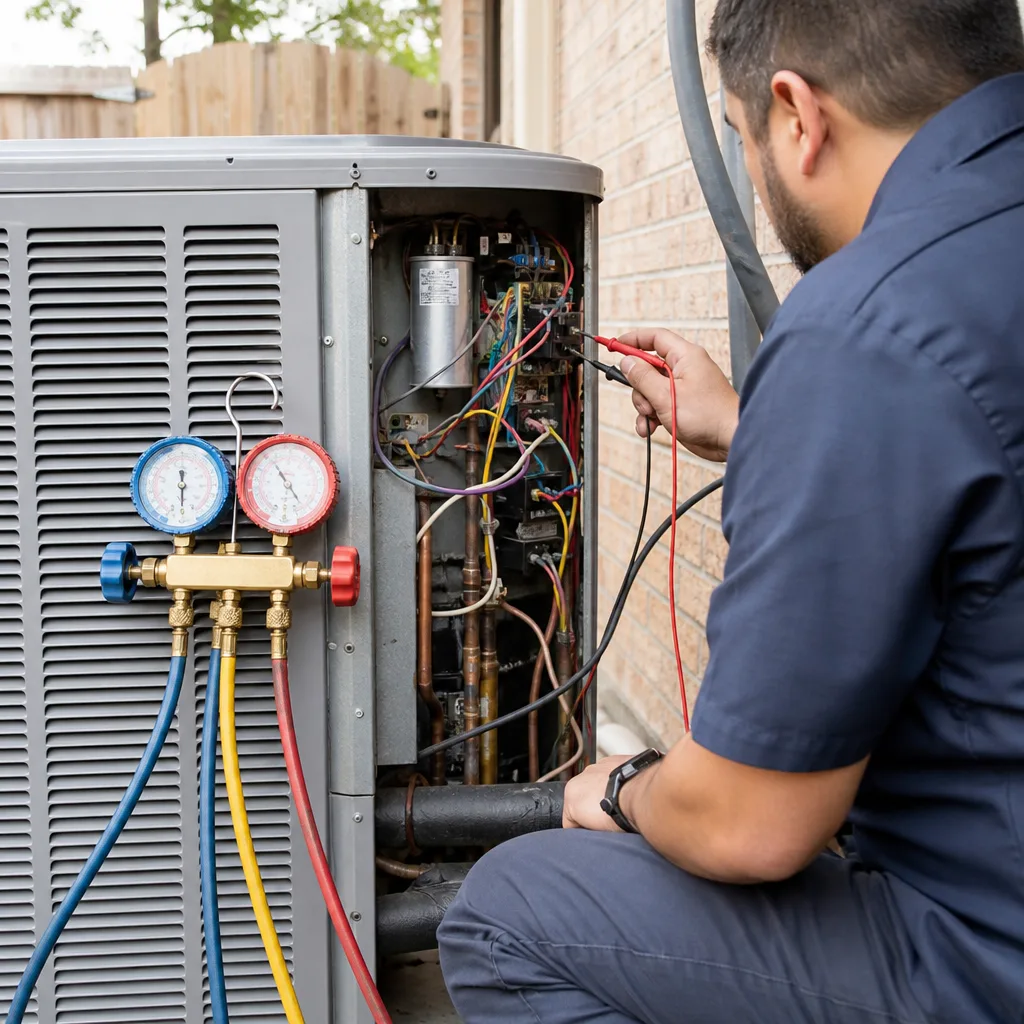
The YouTube tutorials make HVAC repair look approachable because the host has a rack of tools that most homeowners don’t own and haven’t been trained to use. Here is what a professional technician carries to a typical Austin AC repair call:
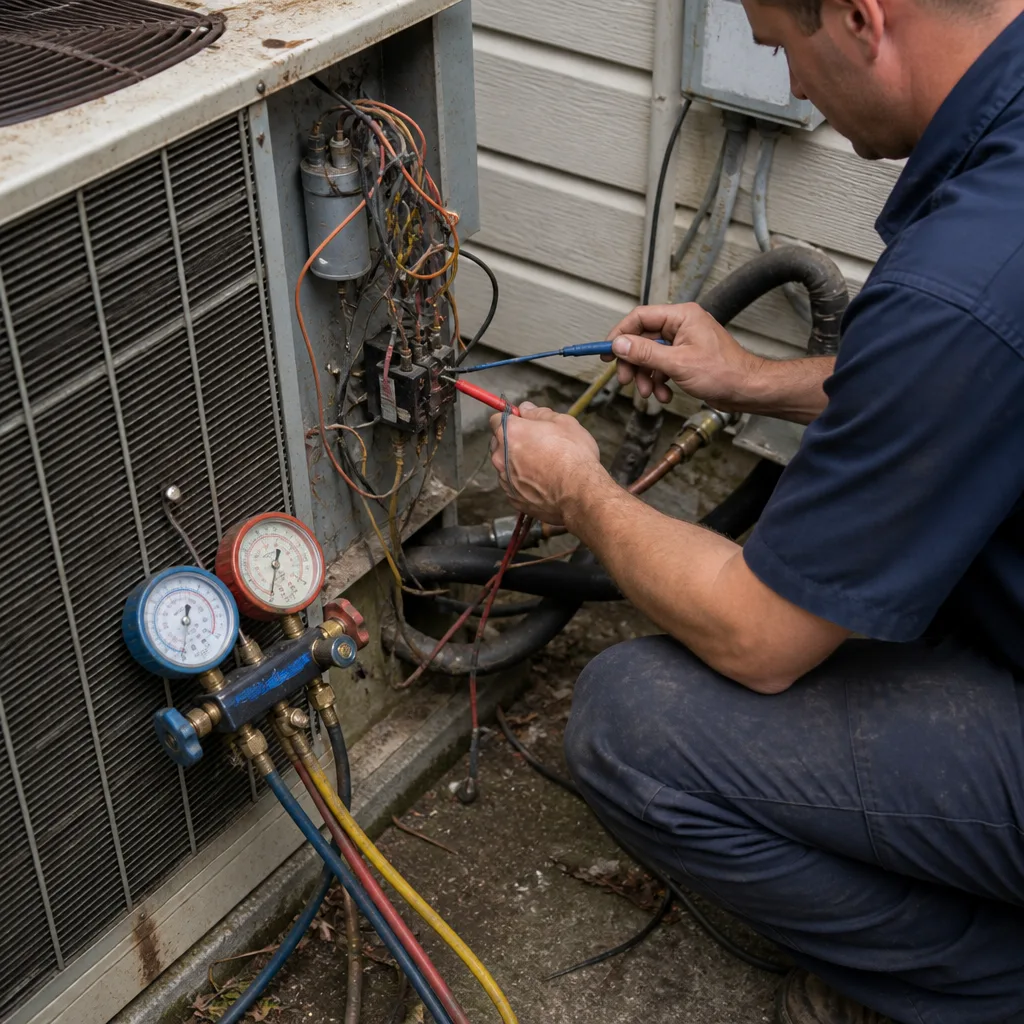
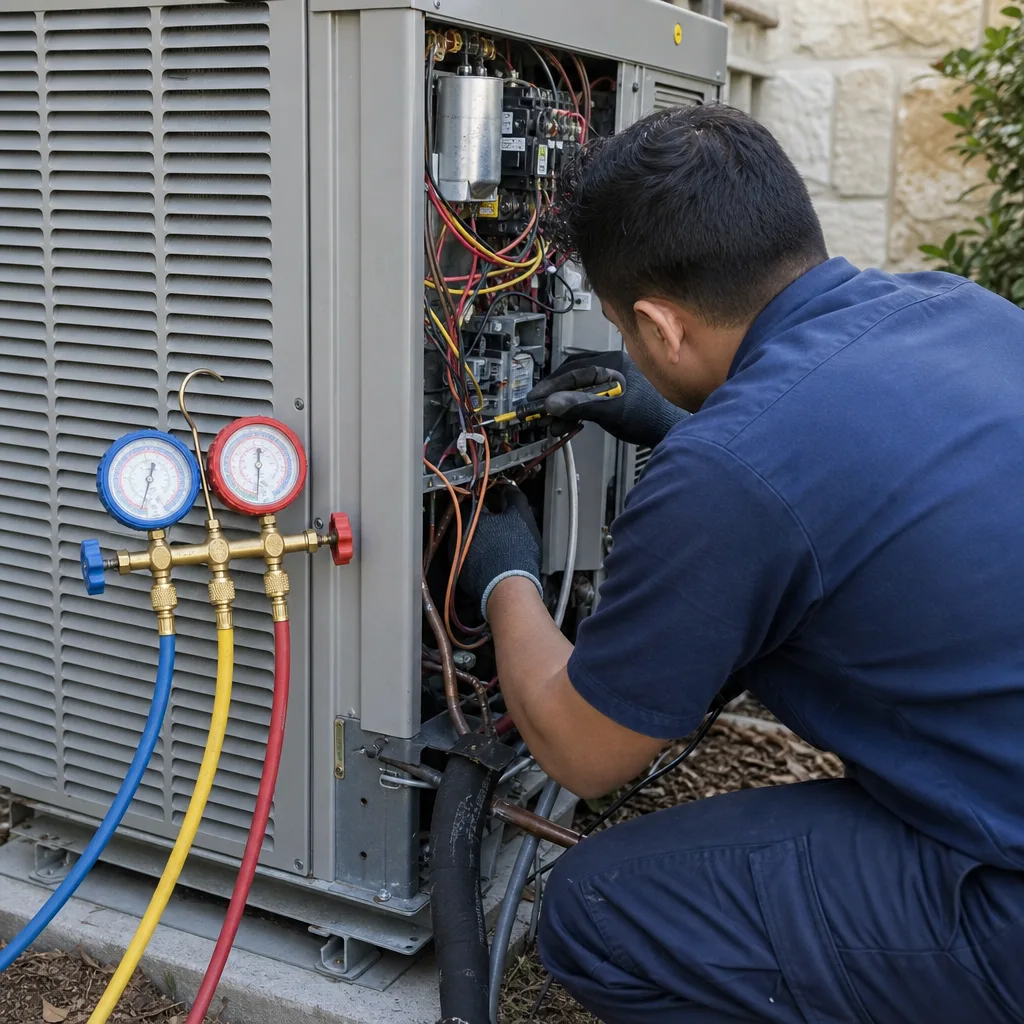
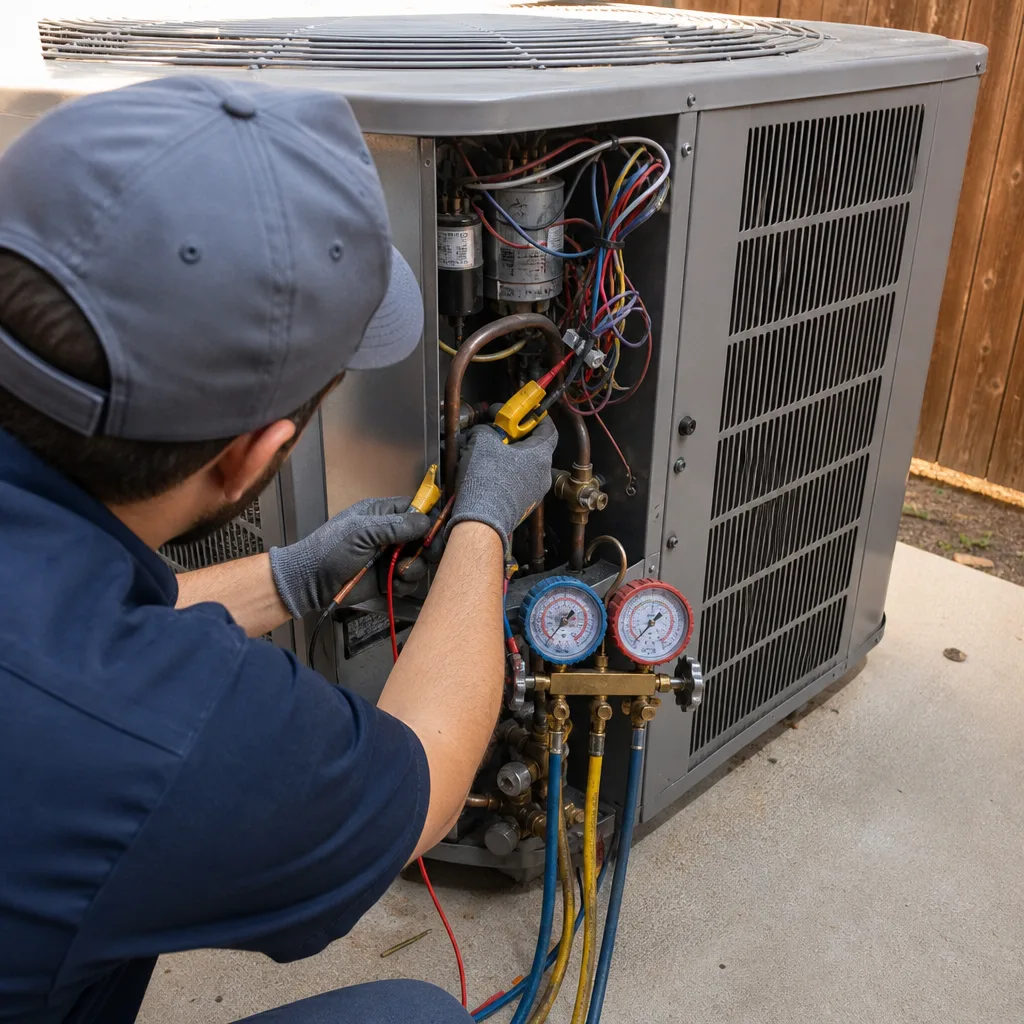
- Manifold gauge set: Measures suction and discharge pressures in the refrigeration circuit. Reading the gauges correctly requires knowing the target pressures for the specific refrigerant, ambient temperature, and system type. Misreading the gauges leads to overcharging, which can destroy a compressor.
- Electronic leak detector: Finds refrigerant leaks in coils and line sets. A visual inspection only finds leaks large enough to leave an oil residue. Slow leaks, the kind that drain a system over six months, require an electronic sniffer.
- Multimeter: Tests capacitors, contactors, transformers, and motor windings for proper electrical values. A capacitor that looks fine visually can be electrically dead, and only a multimeter set to the microfarad range tells the difference.
- Recovery machine and recovery cylinder: Required by law for removing refrigerant from a system before opening the sealed circuit. A homeowner who vents refrigerant to the atmosphere by cutting a line is committing a federal violation.
- Vacuum pump: Pulls a deep vacuum on the system after opening it to remove moisture and non-condensable gases. Skipping this step leaves air and moisture in the system, which causes acid formation that destroys the compressor over time.
- Fin comb: Straightens bent condenser fins to restore airflow. Using the wrong tool on fins bends them further and reduces heat exchange efficiency.
The cost of this tool set runs into the thousands of dollars, and that’s before the training to use each tool correctly. The DIY videos showing a compressor replacement in 14 minutes are edited. They don’t show the hour of recovery, the hour of vacuum pumping, the leak testing, or the charging to exact weight using a refrigerant scale. They make the work look clean and simple because that’s what drives views, not because that’s what the work is actually like.
An honest cost comparison: a DIY compressor replacement on a Rheem or York system might save $1,500 in labor, but if the new compressor fails because the system wasn’t properly evacuated or the charge wasn’t weighed in precisely, the second compressor replacement is full priced. For most Austin homeowners, the risk-adjusted math favors hiring a licensed technician who carries the tools, has the training, and stands behind the repair with a written guarantee.
Common Mistakes to Avoid
- Adding refrigerant without fixing the leak: Refrigerant doesn’t get used up. A low charge means there’s a leak somewhere, and topping off without repairing the leak just means another recharge in a few months. In Austin’s heat, a system running low on charge works harder and costs more to run until the leak is found and fixed properly.
- Using a pressure washer on the condenser coil: The high-pressure stream bends the aluminum fins, reducing airflow across the coil and cutting system efficiency by 10% or more. A garden hose with a spray nozzle is the right tool.
- Closing registers in unused rooms to save energy: Homeowners in large Austin homes often close vents in guest rooms, thinking it redirects conditioned air. What it actually does is increase static pressure in the duct system, which strains the blower motor and can cause the evaporator coil to freeze.
- Replacing a capacitor with the wrong rating: A capacitor labeled with a different microfarad value than the original changes the electrical characteristics of the motor start circuit. The correct replacement must match the original’s rating, not just fit the same mounting bracket.
- Breaking the refrigerant seal on a bet: Some YouTube channels show homeowners cutting refrigerant lines to replace a component. Once that seal is broken, federal law requires the use of recovery equipment, a vacuum pump, and a certified technician to put the system back together legally. There is no un-breaking that seal.
- Skipping the breaker box before touching any electrical component: The thermostat may be set to off, but the outdoor unit still carries 240 volts from the disconnect box. The disconnect switch needs to be pulled and the capacitor discharged before any electrical work begins. This is how homeowners end up in urgent care.
When to Call a Professional
Call a licensed HVAC technician whenever the symptom involves no cooling or no heating, a refrigerant leak, a gas smell, an electrical smell, water damage from a failed drain, or any work that requires opening the sealed refrigeration system. These are the situations where the legal line, the warranty language, and the safety risk all point the same way: this is not a DIY job.
When you’re ready to make that call, Cold Harbour Heating and Air Austin for furnace repair and AC service operates on The Kingswell Way: the written price arrives before any work begins, the technician shows up in the window promised, the job site is left cleaner than found, and every repair carries a 365-Day Done Right Promise in writing. If the repair fails within that year, we come back and correct it at no additional charge. Cold Harbour Heating and Air Austin offers AC installation in Austin as well, with the same written guarantees. Call (361) 204-1605 for a free estimate.
Frequently Asked Questions
It depends on the repair. Simple maintenance like filter changes, drain flushing, thermostat replacement, and outdoor unit clearing is legal for homeowners. Any work involving refrigerant handling, gas line connections, or permitted equipment replacement is restricted by Texas law and EPA regulations to licensed technicians; see our full guide to HVAC Permits, Codes & Inspections in TX: What You Need to Know for details. A homeowner who handles refrigerant without Section 608 certification faces federal fines of up to $44,539 per day per violation.
You can change air filters, flush the condensate drain line with vinegar, replace the thermostat, clear debris from around the outdoor unit, and balance registers between rooms. These five tasks cover the safe DIY territory. Everything else, especially anything involving refrigerant, gas, or 240-volt electrical components, requires a licensed technician.
Yes, in most cases. Warranty language from major manufacturers including Lennox, Goodman, Rheem, and York excludes damage resulting from work performed by anyone other than a qualified contractor. Since a homeowner is not a licensed contractor, any warranty claim tied to a component the homeowner touched is likely to be denied. Some warranties also require proof of professional installation and annual professional maintenance to remain valid.
Most Austin AC repairs fall between $150 and $450 for standard component replacements like capacitors, contactors, and thermostat replacements. More involved repairs, like evaporator coil replacement or compressor replacement, run $1,200 to $2,800. The exact cost depends on the specific component, the system brand, and whether the repair is covered by a warranty. Call (361) 204-1605 for an exact quote before any work begins.
The standard formula is the repair cost times the age of the system. If the repair cost multiplied by the system’s age in years exceeds $5,000, replacement is usually the better financial move. For example, a $1,500 repair on a 12-year-old system equals $18,000, far past the replacement threshold. An $800 repair on a 5-year-old Rheem system equals $4,000, just under the line, suggesting repair is still worthwhile. A technician who performs a full diagnostic can give you a specific recommendation for your system’s condition and efficiency rating.
For genuine emergencies like no cooling during a heat advisory, water leaking from the indoor unit, or an electrical smell, yes. Cold Harbour Heating and Air Austin answers phones with a live person 24 hours a day, 7 days a week, and same-day emergency service is available for urgent calls. For routine maintenance or non-urgent repairs, scheduling within one to three days is typical. Call (361) 204-1605 to check current availability.
The Bottom Line
DIY HVAC in Austin is not an all-or-nothing question. Five maintenance tasks are safe, legal, and worth doing yourself: filters, drain lines, thermostats, outdoor unit clearing, and register balancing. Everything else, from refrigerant work to gas lines to capacitor replacement, carries legal restrictions, warranty risks, and safety hazards that make professional service the only sensible choice. Austin’s climate, with its months of triple-digit heat and sudden winter freezes, raises the stakes on both sides of that line. Do the safe maintenance on schedule and keep a licensed HVAC technician’s number handy for the rest. Cold Harbour Heating and Air Austin has served Austin homeowners since 2003 with written pricing, written guarantees, and the 365-Day Done Right Promise on every repair. Call (361) 204-1605 for a free estimate, and we’ll give you the price before any work begins.
Written by Victor Mancini, Owner at Cold Harbour Heating and Air Austin, serving Austin since 2003.
See the difference
 Before
 After
After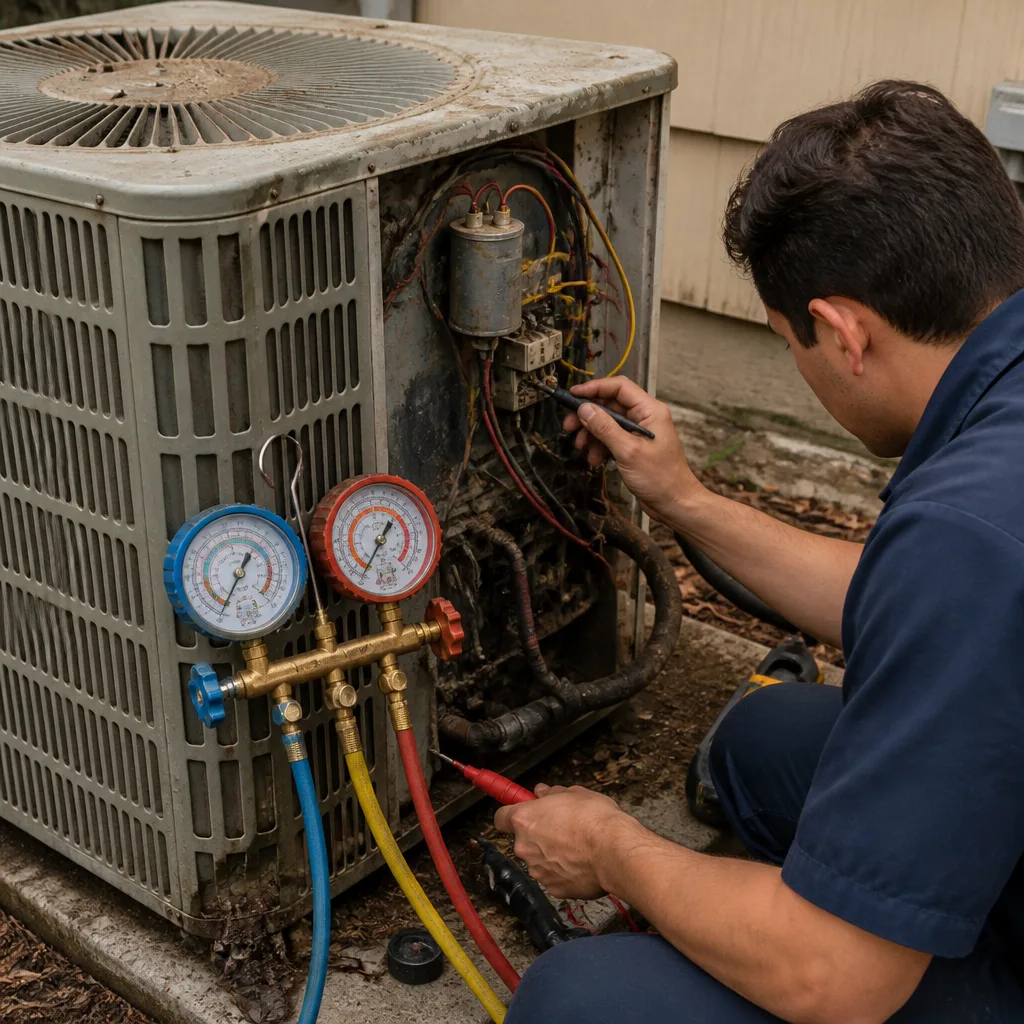 Before
 After
After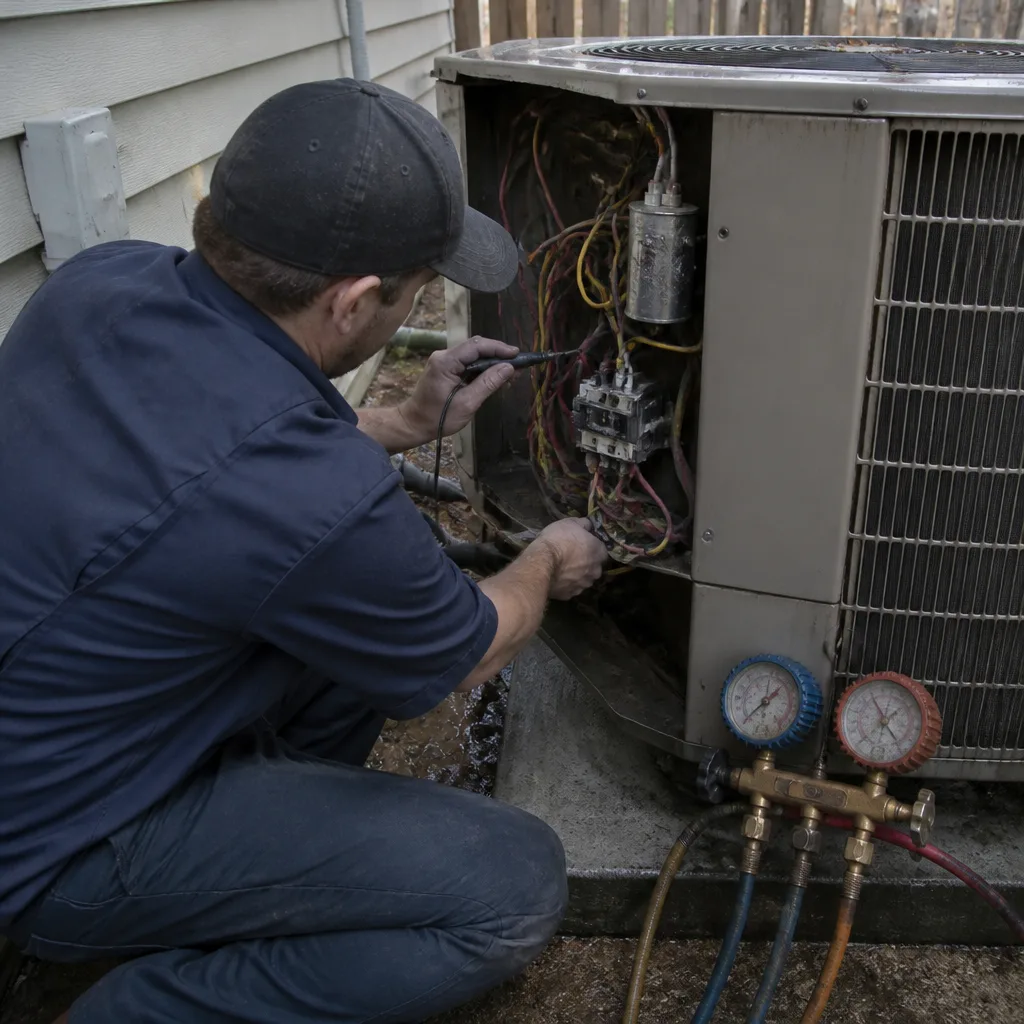 Before
 After
After