
Last updated October 16, 2026
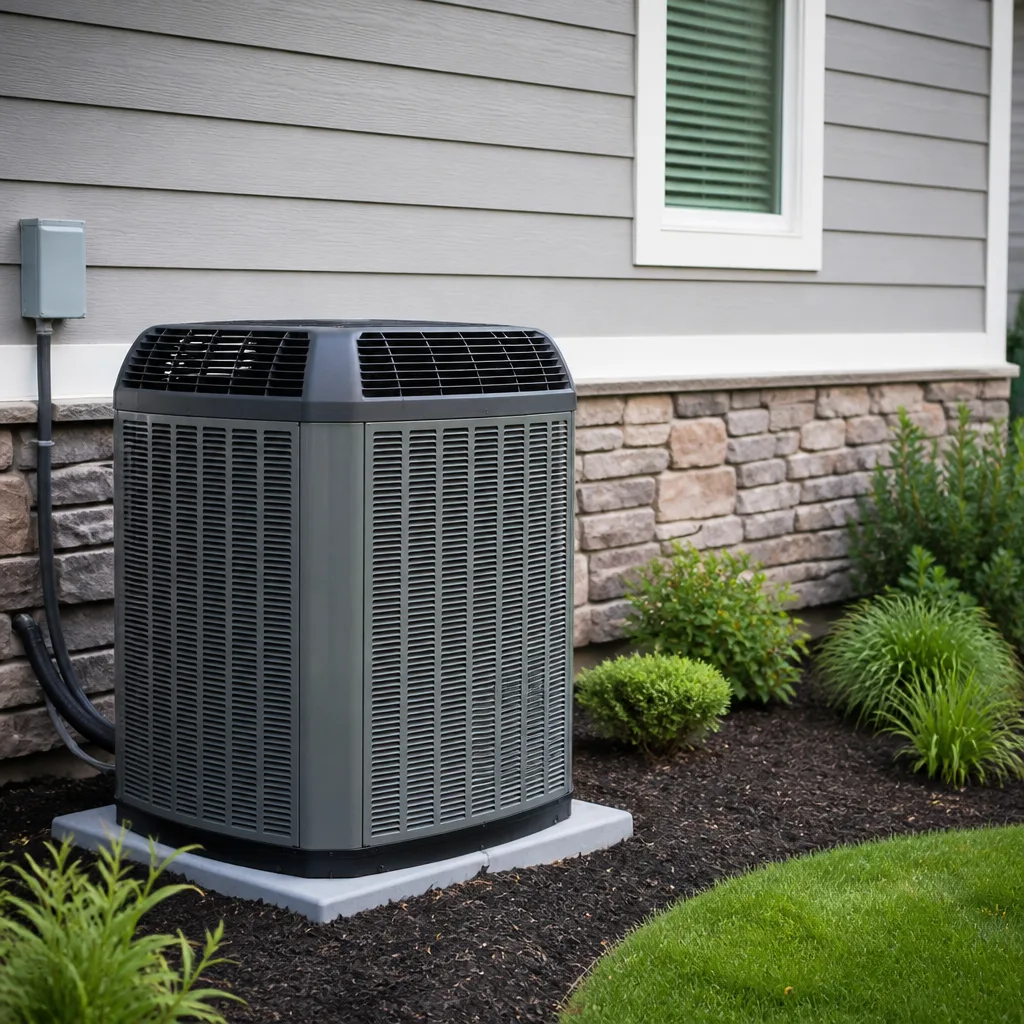 AC repair
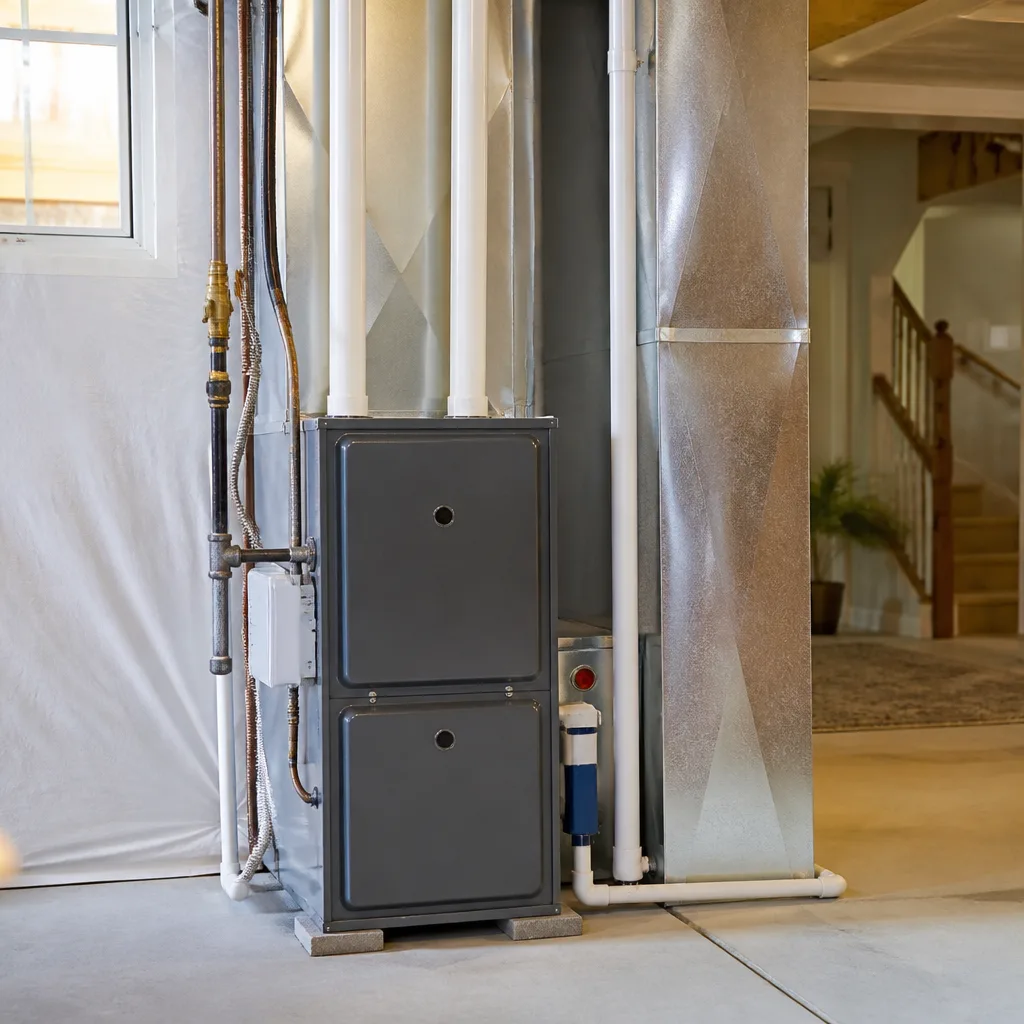 Furnace & heating
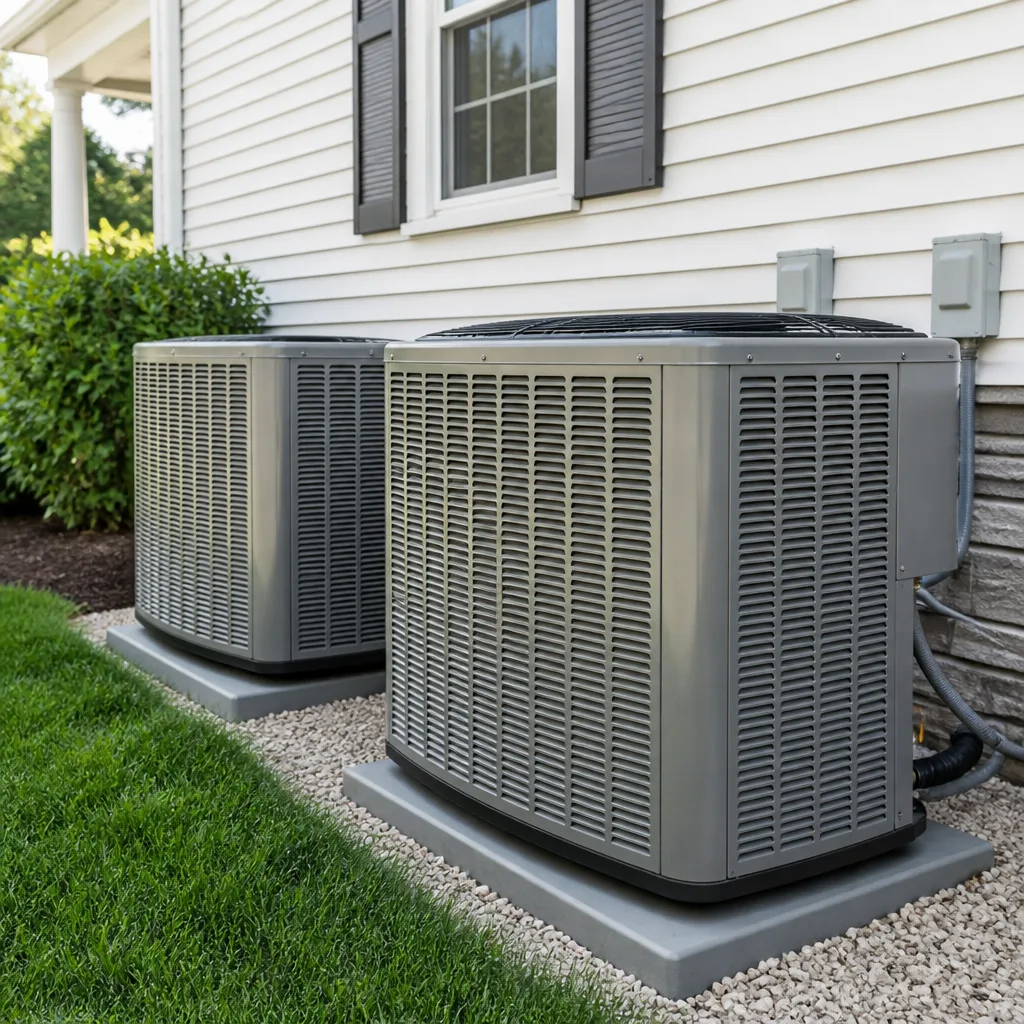 Heat pumps
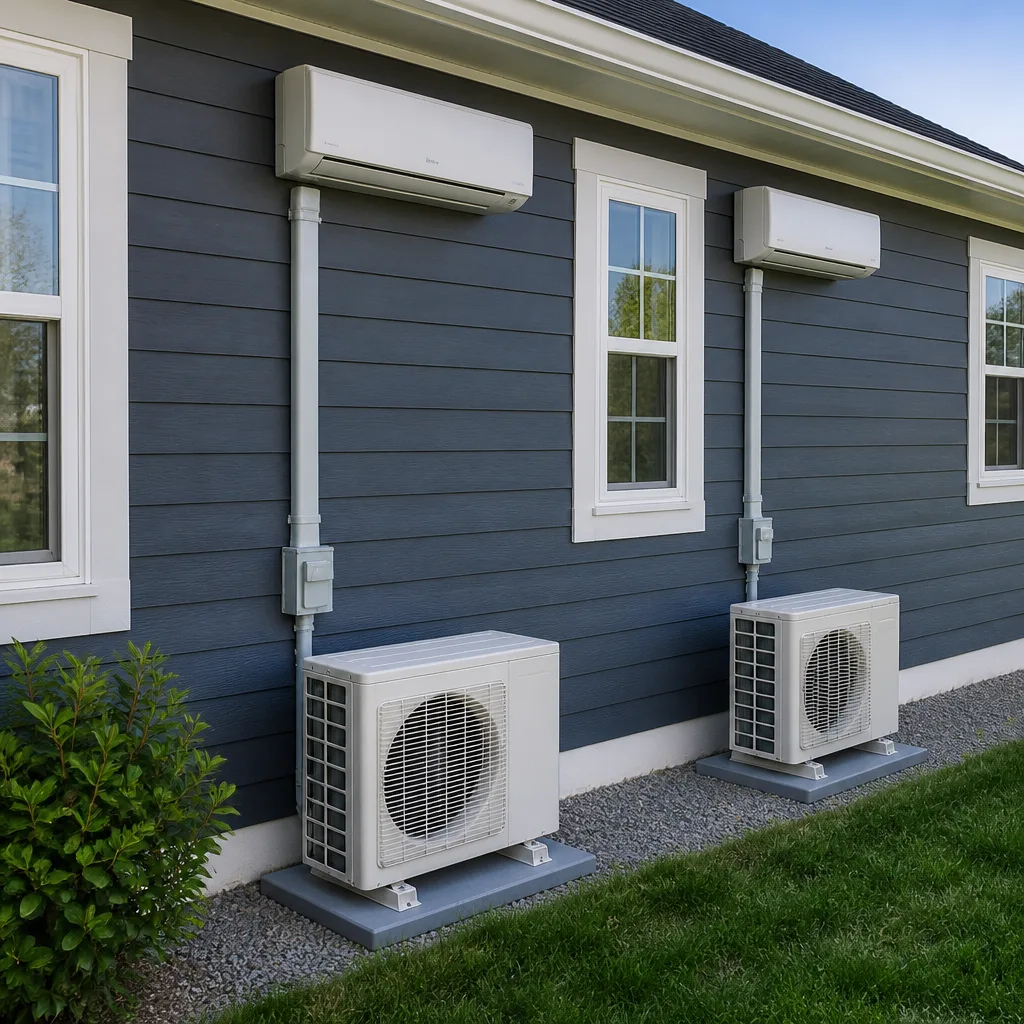 Ductless mini splits
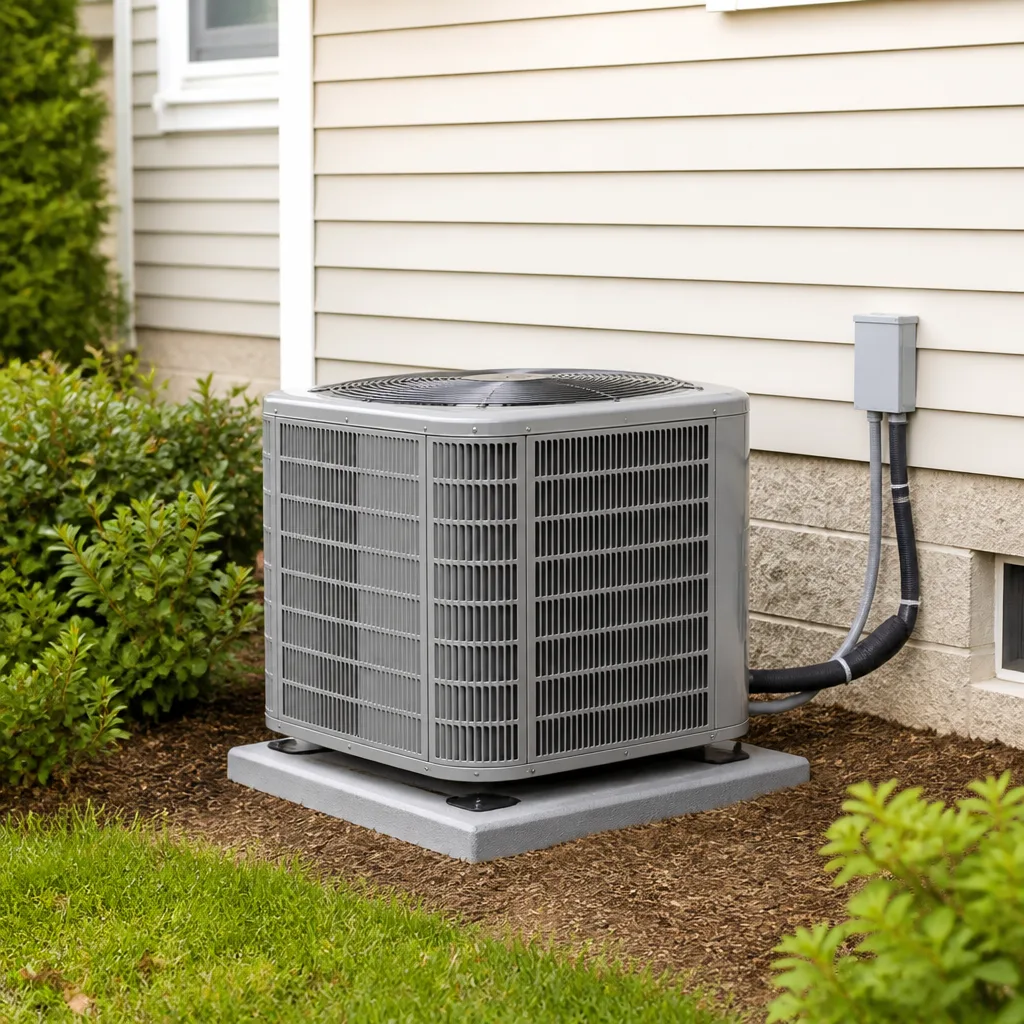 Carrier
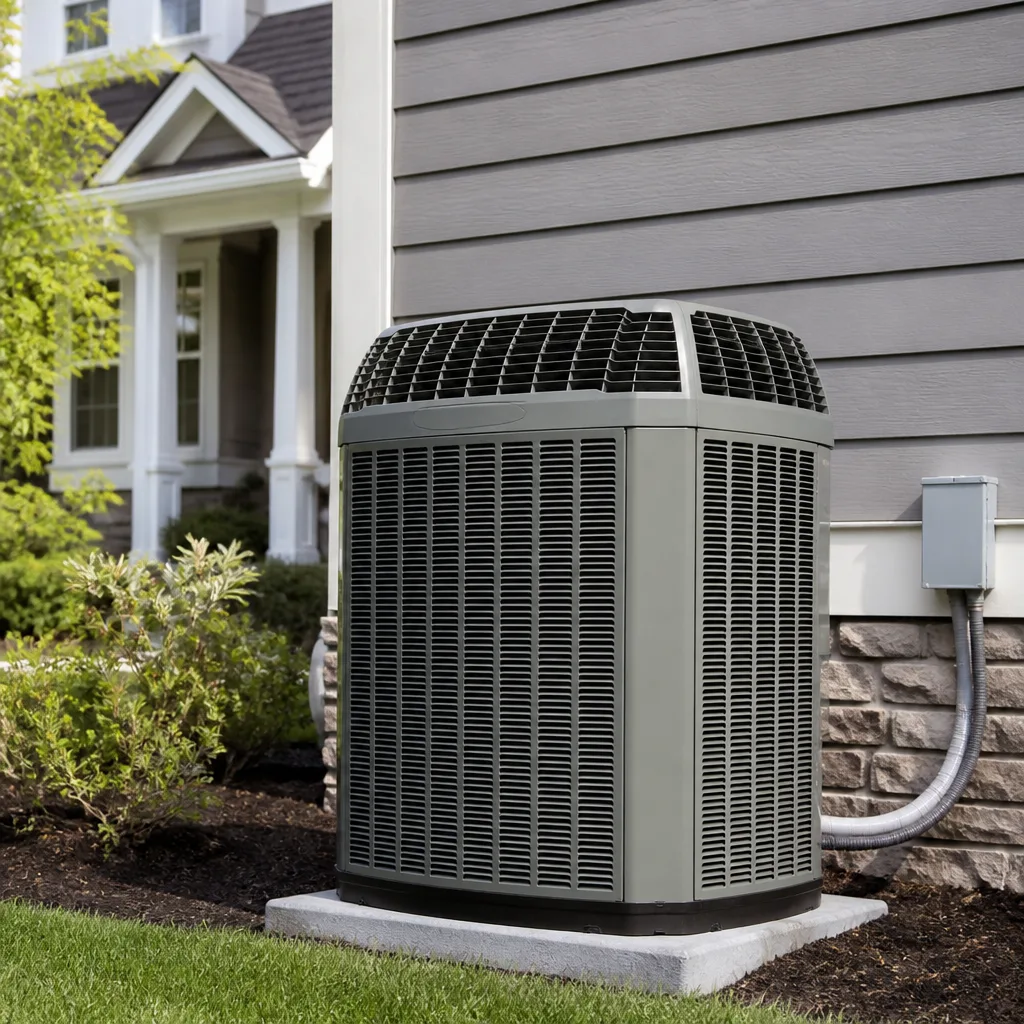 Trane
Trane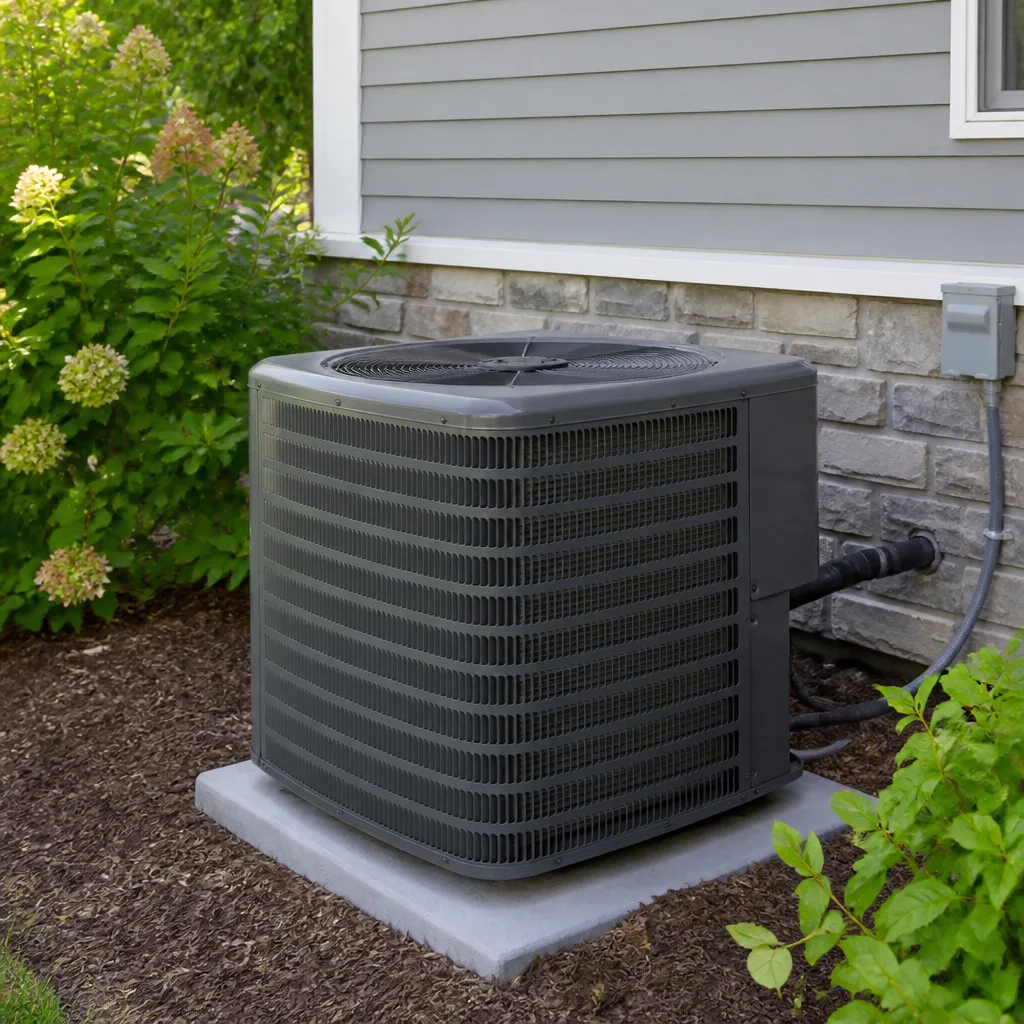 Goodman
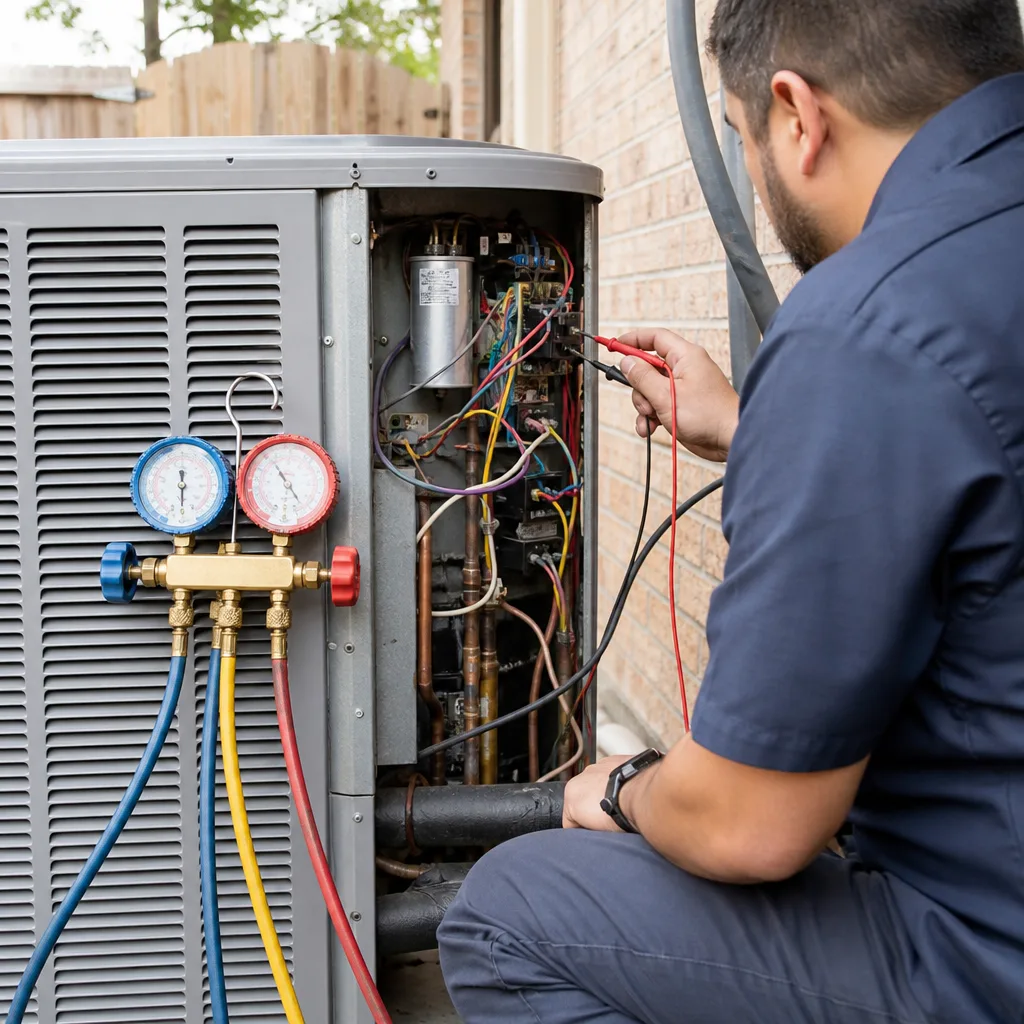
Seasonal tune-up and full diagnostic on your Carrier, Trane, or Goodman system - readings shown to you before any repair is proposed
Diagnosis first, numbers second - you approve the repair price before a single part goes in.
Get your free estimateHVAC Cost Breakdown: The Austin Homeowner’s Reference for 2026
Two Austin homeowners on the same street, with nearly identical 2,200-square-foot homes, received quotes for the same system replacement last month that differed by $3,400. The gap was not because one contractor marked everything up and the other gave a discount. The lower bidder simply left line items off the quote: no permit fee, no refrigerant, no disposal, no warranty registration. The higher bidder listed every one of those costs on paper. The lower bid was not cheaper. It was incomplete, and the homeowner who accepted it found that out on installation day when the “unexpected” costs appeared. This guide explains what actually drives HVAC pricing in Austin in 2026, how to read a quote line by line, and how to compare bids without getting fooled by a number that only looks lower because it is missing the truth. For more guides & resources, see our blog.
Quick Answer
Most Austin homeowners will spend between $7,800 and $14,500 on a full HVAC system replacement in 2026, depending on equipment tier, home size, and whether ductwork needs modification. Repairs typically run $180 to $650 for common fixes like capacitors, igniters, and refrigerant top-offs, while a seasonal tune-up costs $89 to $175. The single biggest factor separating an honest quote from a lowball is whether every cost appears as a written line item before the work starts.
Styles & brands we work with
Table of Contents
- What Each HVAC Job Costs in Austin: Typical 2026 Price Ranges
- How to Read an HVAC Quote Line by Line
- SEER2 Upgrade Math: What Actually Pays Back in Austin
- Austin-Specific Cost Factors Most Guides Skip
- What a Written Repair Guarantee Is Worth in Dollars
- The Three Cost Drivers Behind 2026 Pricing
- Repair or Replace: A Decision Framework for Austin Homes
- How to Choose a Contractor Without Getting Burned
What Each HVAC Job Costs in Austin: Typical 2026 Price Ranges
Austin’s HVAC market has shifted meaningfully over the past two years. Equipment costs rose through 2024 and 2025 as manufacturers absorbed tariff-related component price increases, and labor rates have climbed because licensed technicians are in short supply across Central Texas. What follows are the price ranges we see on actual Austin jobs in 2026, not national averages pulled from a database.
Full System Replacement: $7,800 to $14,500
A complete system replacement means new outdoor condenser, new indoor evaporator coil, and usually a new furnace or air handler. In a typical 1,800 to 2,400 square foot Austin home, expect to pay between $7,800 at the entry level and $14,500 for a high-efficiency two-stage system with a variable-speed blower. Larger homes, homes needing duct modifications, or installations in tight attics push toward the top of that range or beyond.
AC Repair: $180 to $650 for Most Common Fixes
The majority of repair calls we run in Austin fall into a narrow band. A failed capacitor (the small cylinder that gives your compressor and fan motor the jolt they need to start) typically runs $180 to $320 with parts and labor. A contactor, which is the electrical switch that turns the outdoor unit on and off, costs $160 to $290 to replace. A refrigerant recharge, which means topping off the cooling fluid your AC needs to run, runs $250 to $500 depending on how much refrigerant the system lost and what type it uses. More involved repairs, like a failed blower motor or a burned-out compressor, climb into the $700 to $2,300 range. That is when the repair-versus-replace question becomes real.
Spring or Fall Tune-Up: $89 to $175
A maintenance visit in Austin, where the cooling season runs from March through October and the system cycles constantly in the summer, typically costs between $89 and $175. The visit should include coil inspection, drain line clearing, capacitor testing, refrigerant pressure check, and a written report of what was found. We believe the written report matters more than the checklist itself. If a technician cannot show you what they found in writing, you paid for an hour of ladder time, not a tune-up.
Evaporator Coil Replacement: $1,400 to $2,800
The evaporator coil sits inside the indoor unit and absorbs heat from your home’s air. Austin’s humidity and hard water put real stress on these coils, and leaks are common after eight to twelve years. Replacing a coil means recovering refrigerant, swapping the coil, pressure-testing, vacuuming the lines, and recharging the system. On a system under warranty, you pay labor and refrigerant, which usually lands around $1,400 to $1,900. Out of warranty, with the coil itself included, expect $2,200 to $2,800.
Ductwork: $2,500 to $7,000+ Depending on Scope
Duct work is the least-discussed and often most-expensive surprise in an Austin HVAC project. Replacing the duct runs in a standard single-story Austin home costs $2,500 to $5,000 for a partial job. A full duct replacement with new plenums, sealed connections, and mastic-applied joints runs $5,000 to $7,000 or more depending on attic accessibility. Austin attics are notoriously hot, cramped, and difficult to work in, which adds labor hours. If your ducts are twenty years old, uninsulated, or leaking at the connections, a new system will not perform correctly without addressing them.
For an exact price on any of these jobs in Austin, call Cold Harbour Heating and Air Austin at (361) 204-1605. Estimates are free, and the written price you get is the price you pay.
How to Read an HVAC Quote Line by Line
Most homeowners look at the bottom number first and stop there. That is a mistake, because two quotes with a $3,400 gap often differ only in what they include on paper. You should be able to see, in writing, six separate categories on any legitimate replacement or major repair quote.
- Equipment cost – the condenser, coil, and air handler or furnace, with model numbers listed. If a quote says “new AC system” without a model number, ask for one. Without a model number you cannot compare tiers between bids.
- Labor – the hours required for installation or repair. This is where attic conditions, crawlspace access, and system location affect price. A two-story Austin home with the air handler in a finished attic costs more to work on than a single-story with easy access.
- Refrigerant – new systems ship pre-charged, but line-set lengths beyond a certain point require additional refrigerant, and R-410A has a cost. On repair work, refrigerant should always be a separate line item.
- Permit fee – the City of Austin requires mechanical permits for system replacements and many repair scopes. The fee is small, typically $50 to $150, but a quote without a permit line either skips the permit or hides the cost somewhere else. Skipping the permit is not a favor. It can complicate a home sale later.
- Disposal – the old equipment and any recovered refrigerant must be disposed of properly. Hauling and disposal costs $75 to $200 on most jobs. Quotes that leave disposal off the page will add it on the invoice.
- Warranty registration – manufacturer parts warranties often require registration within a specific window, usually 60 to 90 days. The contractor should do this and confirm it in writing. If a quote does not mention warranty registration, the registration is probably not happening.
When every line item appears on the page, you can compare two bids honestly. When one bid is missing three of these lines, the gap is not savings. It is deferred cost that will show up later.
SEER2 Upgrade Math: What Actually Pays Back in Austin
SEER2 is the efficiency rating system that replaced SEER for equipment manufactured after January 1, 2023. It measures cooling output per watt of electricity under more realistic testing conditions than the old standard. Higher SEER2 numbers mean lower operating cost, but they also mean higher purchase price. In Austin, where summer cooling dominates the utility bill from May through September, the question is which tier actually earns its premium back.
Austin Energy’s residential rates currently sit around 13 to 15 cents per kilowatt-hour on the standard rate schedule, with usage-based tiers above a threshold. For a typical 2,000-square-foot Austin home running a 3-ton system, the annual cooling load translates to roughly 4,500 to 6,000 kilowatt-hours per year of air conditioning use. At those numbers, the annual operating cost difference between a 14.3 SEER2 entry system and a 16 SEER2 mid-tier system is roughly $110 to $180 per year. Between a 16 SEER2 and an 18 SEER2, the gap shrinks further, often under $80 per year.
Here is the practical math: a 14.3 SEER2 to 16 SEER2 upgrade typically adds $900 to $1,400 to the installed price. At $150 per year in savings, the payback lands between six and nine years, which is reasonable if you plan to stay in the home. A 16 SEER2 to 18 SEER2 upgrade often adds $1,500 to $2,200 while saving $80 per year. That is an eighteen-to-twenty-seven-year payback, which exceeds the useful life of the equipment for most Austin homeowners. Two-stage and variable-speed systems offer comfort benefits beyond raw efficiency, namely better humidity control and quieter operation, and those are legitimate reasons to spend more. But if the sales pitch is framed purely around utility savings above 16 SEER2, the numbers in Austin do not support it.
Austin-Specific Cost Factors Most Guides Skip
National HVAC cost articles give national averages. Austin is not a national average. Four local factors move pricing in ways that never show up in a generic guide.
City of Austin Permit Requirements
Austin requires HVAC Permits, Codes & Inspections in TX: What You Need to Know for system replacements, new installations, and certain repair scopes. The permit fee is modest, but the inspection process adds scheduling steps and sometimes a return visit. Contractors who operate legally in Austin build this into their pricing. Contractors who skip permits can offer a lower number, but an unpermitted replacement can surface as a problem during a home sale inspection or an insurance claim. When you see a quote dramatically lower than others, ask whether the permit fee appears as a line item. If it does not, the quote is not comparable.
Attic Heat and Labor Hours
Austin attics in July and August routinely reach 140 degrees. No technician works fast in a 140-degree attic, and no technician should. Labor slows because safety and hydration dictate the pace. Homes with the air handler or furnace in the attic, which describes most Austin single-story construction, carry a labor premium during peak heat months. This is not a contractor padding the bill. It is the real cost of doing physically demanding work in genuinely dangerous heat. Reputable companies plan for it and price it honestly.
Peak-Season Surge Pricing
When Austin hit 105 degrees for eleven consecutive days in the summer of 2024, every HVAC company in the metro ran weeks behind. During those stretches, same-day repair demand creates what amounts to surge pricing. Some companies charge emergency dispatch fees or after-hours premiums during heat waves. Others, like Cold Harbour Heating and Air Austin, do not charge overtime for emergency calls, but availability tightens no matter who you call. The practical takeaway: scheduling a Seasonal HVAC Care for Austin: Year-Round Homeowner’s Guide tune-up in March or October is cheaper and faster than waiting for a July breakdown.
Hard Water and Coil Stress
Austin’s water supply, drawn largely from the Colorado River, is moderately hard. While water hardness does not directly touch your AC, the humidity Austin carries from the Hill Country and the constant condensate production during long cooling seasons mean drain lines clog and coils corrode faster than in drier climates. This shortens the effective lifespan of evaporator coils and makes drain line maintenance more important. Homeowners in neighborhoods like Allandale, Crestview, and Hyde Park, where homes often run systems that are fifteen or more years old, see more coil failures simply because the equipment has spent its whole life fighting Austin humidity.
What a Written Repair Guarantee Is Worth in Dollars
Here is a scenario we see in Austin every single month. A homeowner pays $600 for a repair in May. The technician says the fix is solid. In October, the same failure returns. The company that did the work has no written guarantee, so the homeowner pays another $600. The repair that looked like $600 actually cost $1,200, and both bills were “fair” by the standards of a company that does not back its work in writing.
Now consider the same repair from a company that issues a written 365-day guarantee. The repair fails at month ten. The company returns, corrects the work, and charges nothing. The repair cost $600 once, not twice. The warranty is not a marketing slogan. It is a financial term embedded in the price.
Cold Harbour Heating and Air Austin operates under the Kingswell Way, which includes the 365-Day Done Right Promise. Every repair we perform in Austin comes with a written guarantee valid for a full year. If the repair fails during that window, we return and make it right at no additional charge. The guarantee is on paper before the technician leaves, not described verbally afterward. When you compare quotes between companies, a $650 repair with a written one-year guarantee is less expensive in expected value than a $550 repair with no guarantee, because the uncovered repair carries a repeat-failure risk the guaranteed repair does not.
Ask any contractor you are considering: “Is your repair guarantee in writing, and what exactly does it cover?” A company that hesitates to answer has answered.
The Three Cost Drivers Behind 2026 Pricing
Austin HVAC pricing in 2026 is being driven by three forces most homeowners do not know to ask about. Understanding them will not lower your bill, but it will explain why quotes look the way they do and help you spot a quote that is too low to be real.
1. Equipment Tariff Carry-Overs
Tariffs on imported steel, aluminum, and HVAC components, first imposed in stages between 2018 and 2025, have not gone away. Manufacturers absorbed some of the cost initially, but by 2026 the price of residential condensers, coils, and air handlers reflects the full pass-through. Even equipment assembled in the United States contains imported compressors, motors, or copper tubing that carries tariff cost. This is why entry-level equipment prices rose faster than inflation between 2023 and 2026. A contractor quoting a 2026 job with 2022 pricing is either eating margin or quoting equipment that no longer exists at that price.
2. Austin’s Tight Licensed Technician Market
The labor shortage in skilled trades hit Austin harder than most Texas metros because the city’s construction boom, population growth, and rising cost of living all pull from the same pool of licensed technicians. A licensed HVAC tech in Austin earns more than a tech in San Antonio or Waco, and those labor rates show up in installation and repair pricing. Companies that pay well and train well, like the Kingswell network Cold Harbour belongs to, retain technicians longer, but they also price their labor honestly. A quote with labor rates far below market is a red flag, not a bargain. It often means the installer is underpaid, undertrained, or both.
3. Permit Fees That Vary by Job Scope
Austin’s permit fees scale with the mechanical work being performed. A simple AC replacement permit costs less than a full system changeout with duct modification. The difference is small in absolute terms, rarely more than $100 between scopes, but it matters for quote comparison. A quote that includes the correct permit fee for the scope described is a quote from a contractor who knows Austin’s rules. A quote with no permit line at all, or a flat fee that does not match the scope, signals either unfamiliarity with Austin requirements or a decision to work outside them.
For AC Repair in Austin, these cost drivers mean repair pricing has ticked up too, though the effect is smaller on a $300 capacitor replacement than on an $11,000 system installation. The structural pressure is the same: equipment, labor, and compliance all cost more in Austin in 2026 than they did three years ago.
Repair or Replace: A Decision Framework for Austin Homes
The repair-or-replace decision haunts every homeowner whose system quits in July. The standard advice, replace when the repair cost times the system age exceeds $5,000, is a blunt instrument. Here is a sharper framework for Austin conditions.
Step one: find out why the system failed. A failed capacitor on a seven-year-old system is a repair, full stop. A burned-out compressor on a fourteen-year-old system that has needed three repairs in the past two years is a replacement signal.
Step two: check the refrigerant. Systems running R-22 refrigerant, which was phased out of new production in 2020, face rising recharge costs as the remaining supply dwindles. If your system is an R-22 unit from before 2010 and it needs a significant refrigerant recharge, replacement with a modern R-410A system is usually the better financial move, even if the recharge itself would “fix” the immediate problem this season.
Step three: get the replacement math in writing before deciding. Ask for a detailed replacement quote that includes equipment, labor, refrigerant, permit, disposal, and warranty registration as separate lines. If the repair is $800 and the replacement is $11,000, repair now and plan for replacement is reasonable, especially if the warranty on the repair is in writing. If the repair is $2,300 and the system is fifteen years old, replacement starts to make more sense, because the next failure is likely months away, not years away.
Step four: consider your timeline in the home. If you are selling within three years, a working system that passes inspection matters more than a new system. If you are staying ten years, a new mid-tier system with AC Installation in Austin done right returns value in comfort, reliability, and avoided repair roulette.
How to Choose a Contractor Without Getting Burned
The Austin HVAC market has dozens of licensed contractors, and an unhappy experience with one is what drives most homeowners into the arms of the next one. The homeowners who call us have almost always been let down before: a no-show, a price that jumped at the door, a repair that failed within a month. Here is what we would tell a neighbor to look for, regardless of which company they ultimately call.
- Is the written price in hand before the work starts? Cold Harbour follows the Kingswell Way: the price is written down and handed over before a single tool comes out, and that price does not change at the door. If a company will not commit to a written price, walk away.
- Is the guarantee on paper? Verbal promises do not survive contact with a failed repair. The 365-Day Done Right Promise we issue on every repair is a written document. It states what was repaired, when, and that a failure within 365 days brings us back at no charge.
- Who exactly is coming to your home? Background-checked, uniformed technicians should be the default. You should know the name of the person walking through your door before they ring the bell.
- Can they work on your existing equipment? Some contractors push replacement because they only install one brand and cannot competently service what you already have. Cold Harbour technicians are trained to service nine major residential brands, including Carrier, Trane, Lennox, Goodman, Rheem, York, Daikin, Bryant, and American Standard. You should be able to keep the system you have if keeping it makes sense.
- Does a live person answer the phone? When the AC quits at 9 pm on a Saturday in August, a voicemail tree is not a solution. Cold Harbour answers its phones with a live person 24 hours a day, 7 days a week. Try calling any contractor you are considering at an odd hour and see what happens.
If you are comparing quotes for Furnace Repair in Austin or a full replacement, apply the same test. A company that can clearly explain what they are doing, what it costs, and what happens if it fails is the company worth hiring, even if the number is not the lowest on the page.
Common Mistakes to Avoid
- Comparing only bottom-line numbers. A quote missing permit fees, refrigerant, or disposal will look cheaper because it is incomplete, not because it is a better deal. Always compare line items, not totals.
- Skipping the permit because the contractor suggests it. An unpermitted HVAC replacement in Austin can complicate a home sale and create insurance headaches. The permit fee is small. The liability is not.
- Upgrading past 16 SEER2 purely for “savings.” In Austin at current utility rates, efficiency gains above 16 SEER2 rarely pay back within the life of the equipment. Buy above 16 for comfort features, not for a return on investment that the math does not support.
- Accepting a verbal guarantee. If the warranty is not written down before the technician leaves, it does not exist. Insist on paper, every time.
- Recharging an R-22 system repeatedly. Each recharge on a pre-2010 system is money spent delaying an inevitable replacement. R-22 refrigerant is increasingly expensive, and repeated recharges do not fix the leak.
- Ignoring the duct work because it is not visible. Austin attics hide leaks, gaps, and uninsulated runs that quietly waste paid-for cooling. A new system on bad ducts will underperform a repaired system on good ducts.
- Waiting for a July breakdown to call. Peak-season demand in Austin means longer waits, hotter attics for the technician, and higher emergency premiums at some companies. March and October tune-ups are cheaper, faster, and easier to schedule.
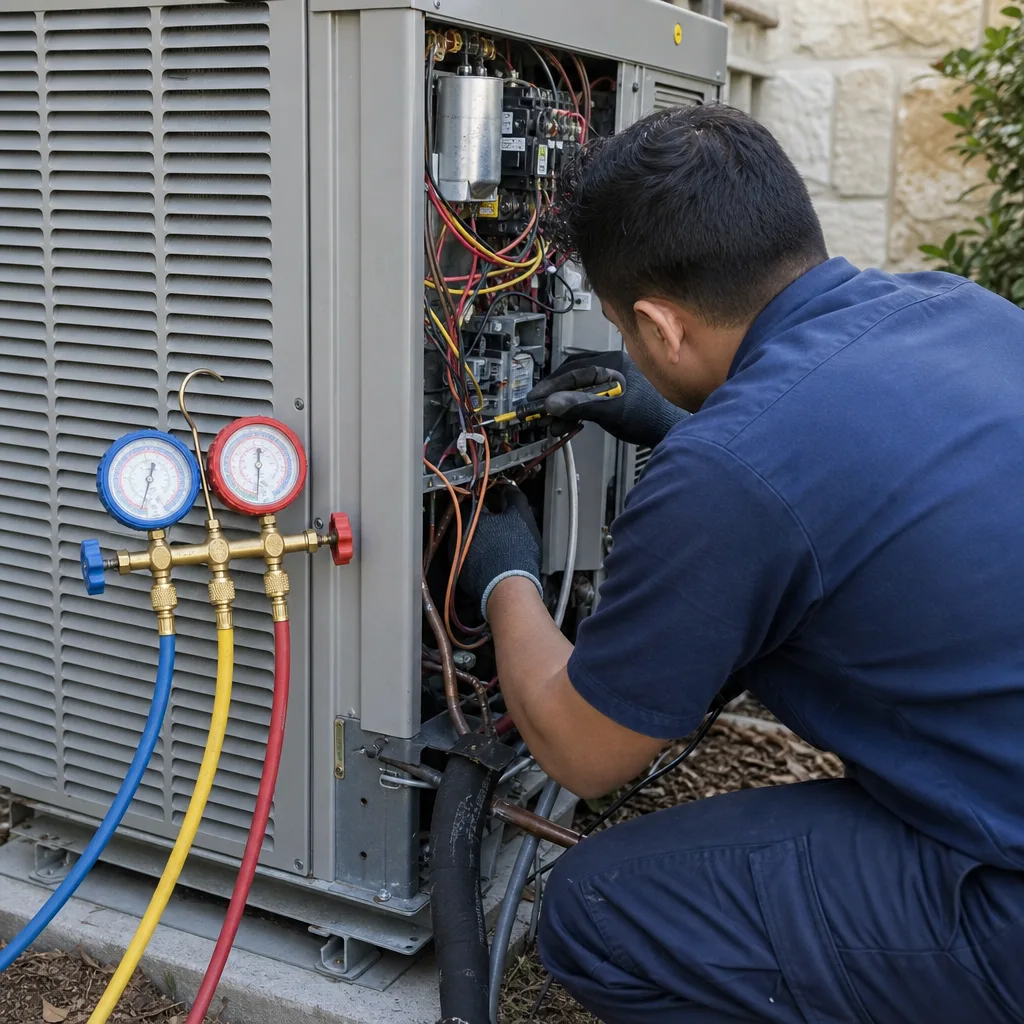
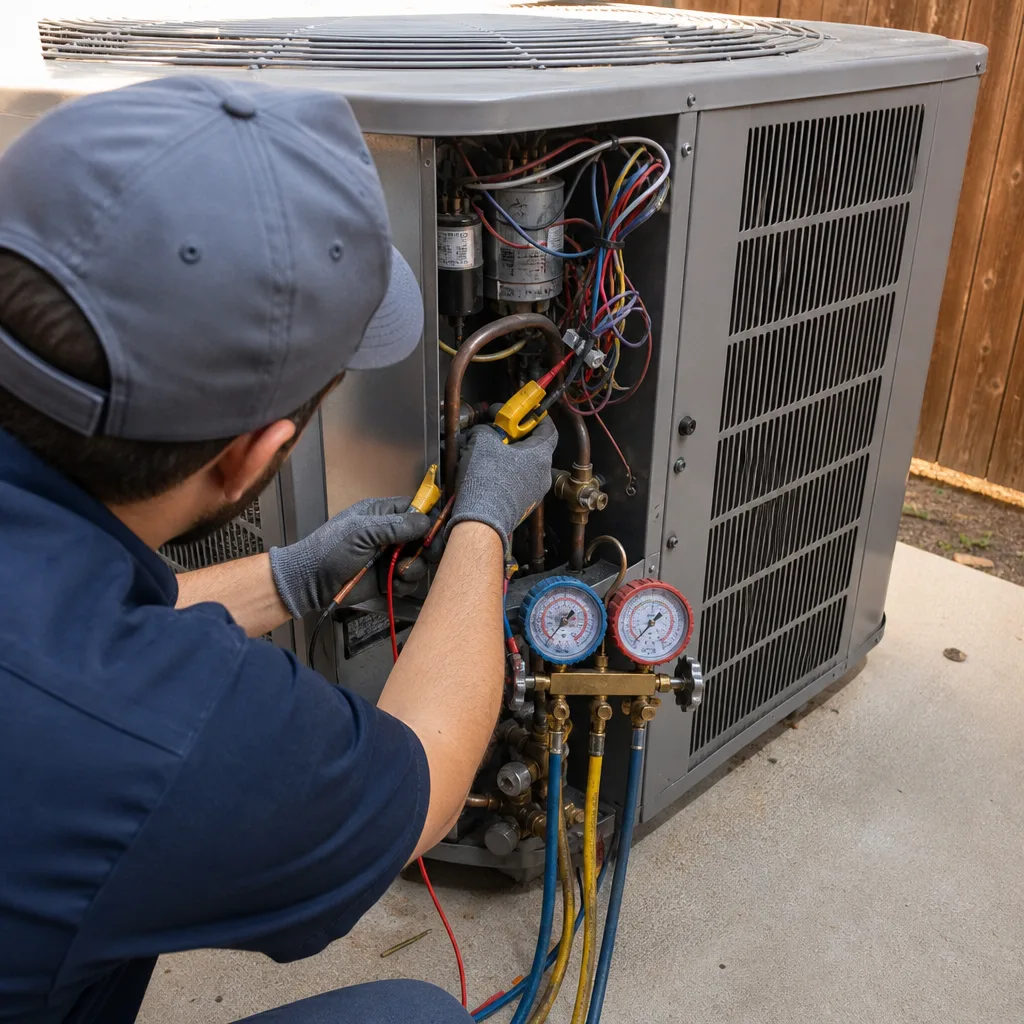
See the difference
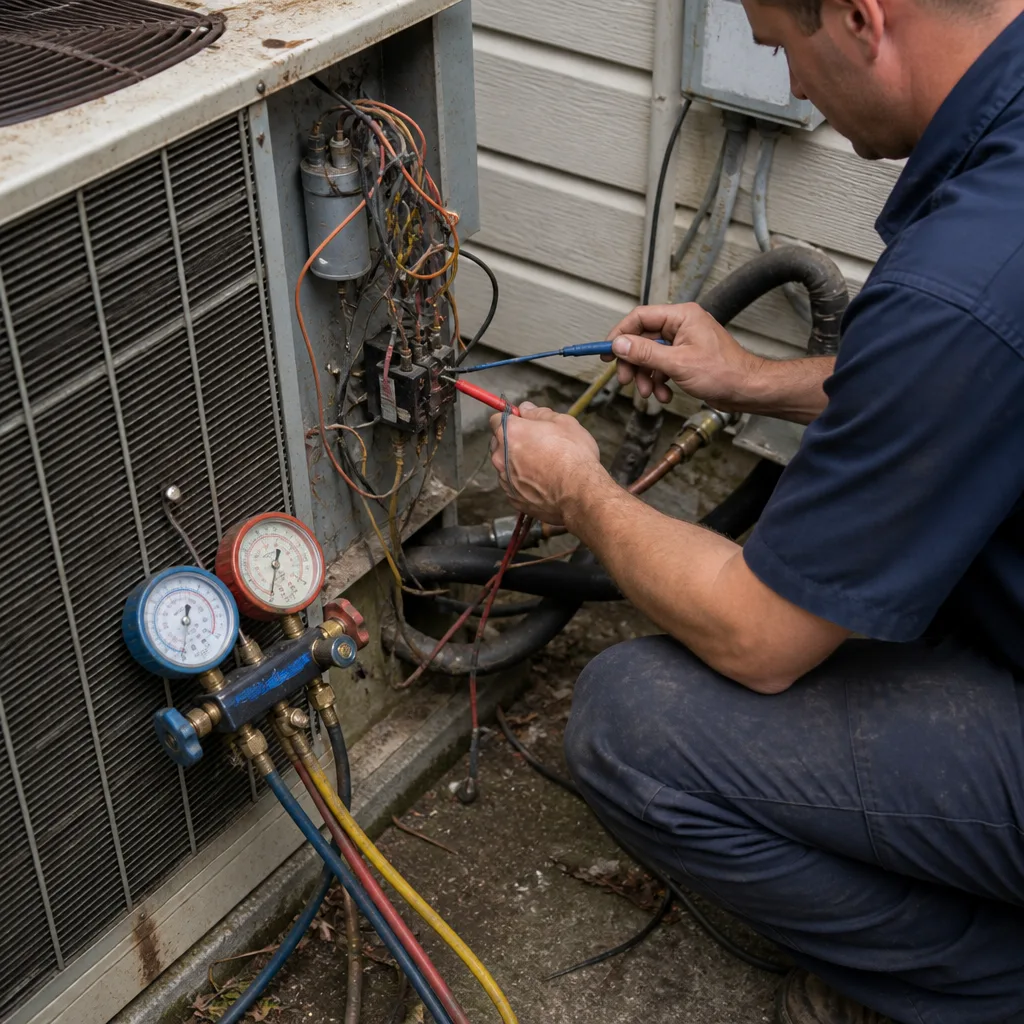 Before
 After
After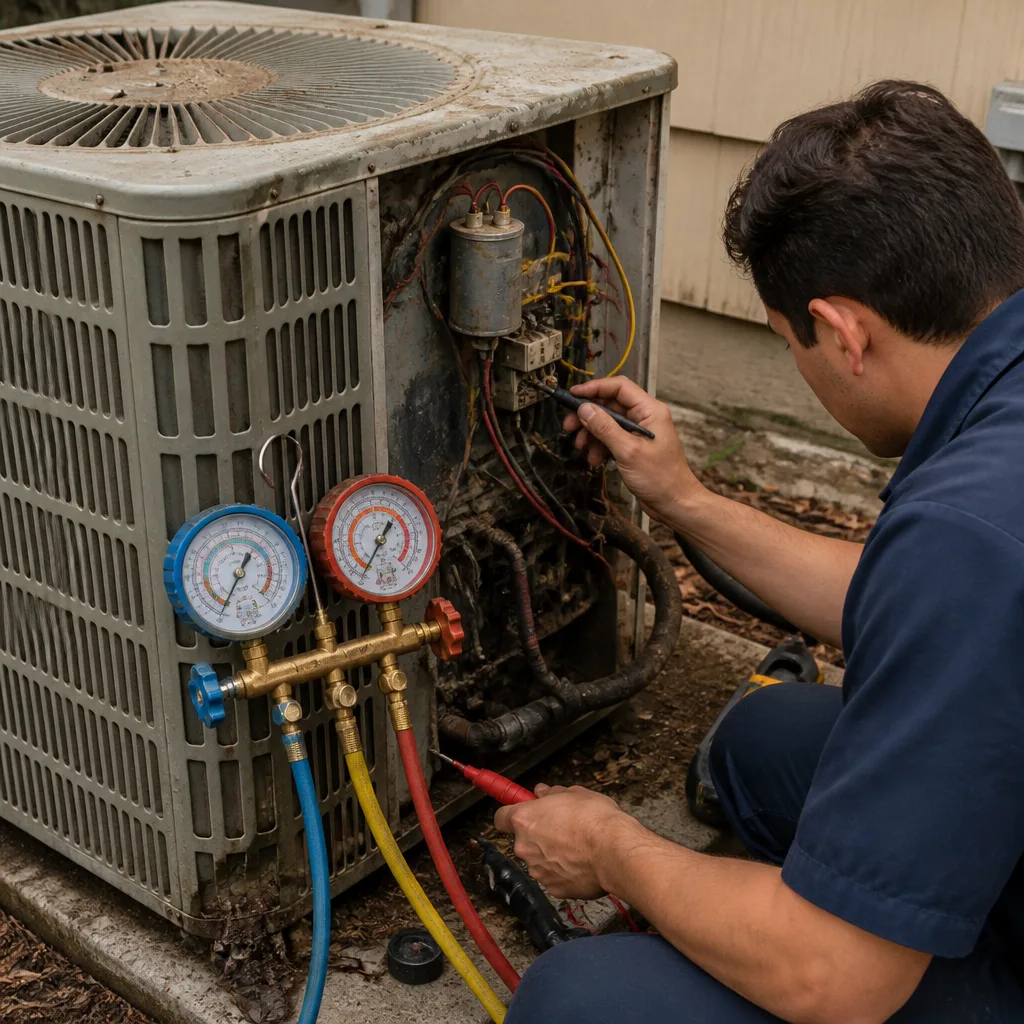 Before
 After
After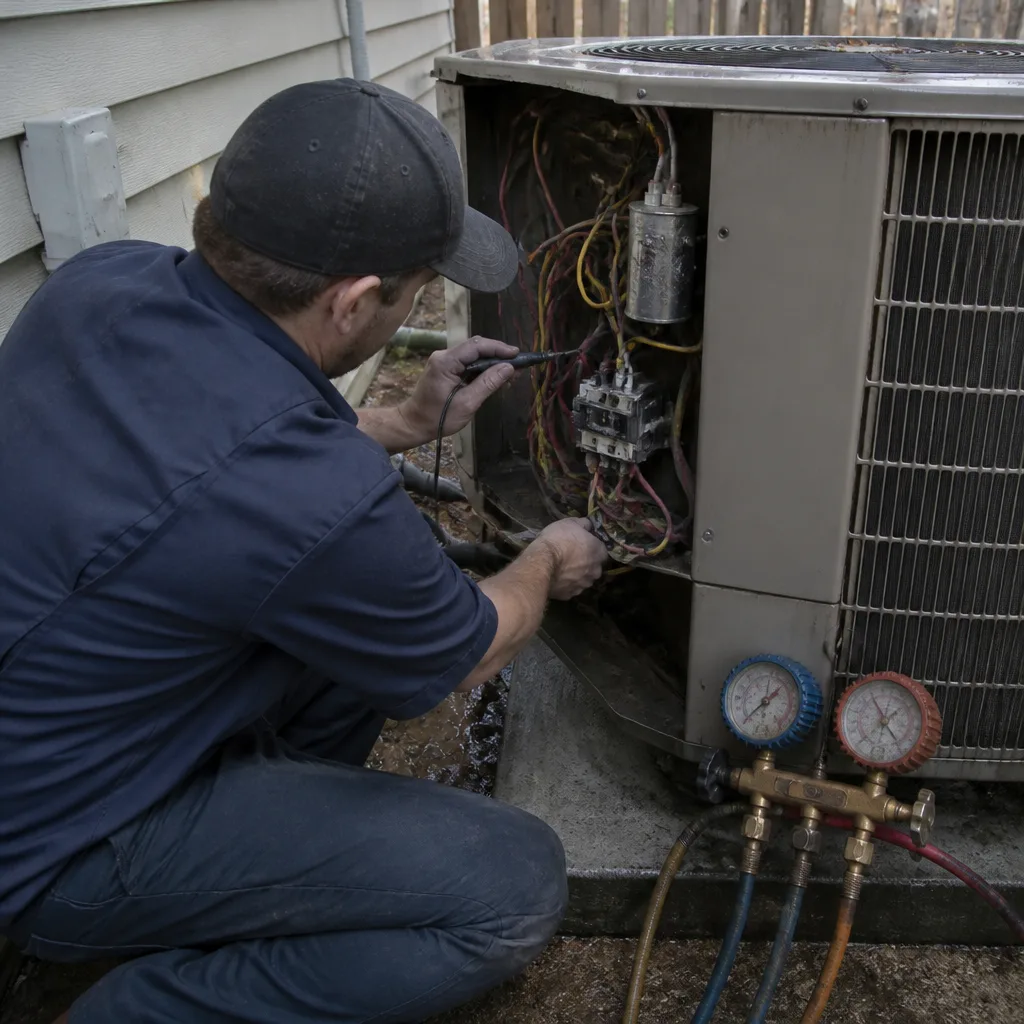 Before
 After
AfterWhen to Call a Professional
HVAC work involves high-voltage electrical connections, refrigerant under pressure, and gas lines on furnace-side repairs. A capacitor can hold enough charge to injure even with the system off. Refrigerant handling requires EPA certification. A gas furnace repair done incorrectly can leak carbon monoxide into the home. These are not DIY-adjacent risks. If your system is blowing warm air, making unusual noise, leaking water, or running constantly without satisfying the thermostat, call a licensed professional rather than opening the unit yourself. See our HVAC Warning Signs: A Austin Homeowner’s Reference Guide for more details. The diagnostic fee, typically $79 to $129 in Austin, is cheap insurance against a hospital bill or a worse breakdown. Cold Harbour Heating and Air Austin offers free estimates in Austin – call (361) 204-1605 and a live person will answer, any hour, any day.
Frequently Asked Questions
A full system replacement in Austin typically costs between $7,800 and $14,500 in 2026, depending on home size, equipment efficiency tier, duct modifications, and attic access conditions. That range covers the outdoor condenser, indoor coil, and furnace or air handler, with permit, refrigerant, disposal, and warranty registration included. Call (361) 204-1605 for a written quote specific to your home – estimates are free.
The cheapest reliable approach is a spring tune-up, which costs $89 to $175 in Austin, plus monthly filter changes and keeping the outdoor unit clear of debris and foliage. A tune-up catches small failures like a weakening capacitor before they become July breakdowns, and a clean system runs more efficiently, which lowers your Austin Energy bill directly.
Most systems in Austin last twelve to sixteen years, but the long, humid cooling season and constant summer cycling push wear faster than in milder climates. Systems that receive annual maintenance and prompt repairs tend to reach the upper end of that range. Austin’s hard water and humidity also stress evaporator coils, which often fail before the compressor does.
Replace the system if it is over twelve years old, has needed multiple repairs in the past two years, runs on discontinued R-22 refrigerant, or faces a compressor-level repair costing over $2,000. Repair makes sense when the system is under ten years old, the failure is a wear part like a capacitor or contactor, and the repair comes with a written guarantee. A written 365-day guarantee changes the math: a $600 repair with a full-year written guarantee is a reasonable bridge, while a $600 repair with no guarantee is a gamble.
Yes, the City of Austin requires mechanical permits for system replacements and certain repair scopes. The permit fee is typically $50 to $150 and should appear as its own line item on any legitimate quote. Contractors who skip permits can quote lower, but an unpermitted replacement can create problems during a home sale inspection or insurance claim.
For most Austin homes, a 15 to 16 SEER2 system offers the best balance of purchase price and operating cost. At Austin Energy’s current rates, the jump from 14.3 SEER2 to 16 SEER2 pays back in roughly six to nine years, while higher tiers above 16 rarely return their premium through savings alone. Buy above 16 SEER2 for comfort features like quieter operation and better humidity control, not for a payback the numbers will not deliver.
The Bottom Line
Austin HVAC pricing in 2026 is what it is: equipment costs reflect tariff carry-overs, labor rates reflect a tight technician market, and permit fees reflect a city that takes mechanical compliance seriously. You cannot negotiate around those structural factors, but you can protect yourself by demanding written line-item quotes, written repair guarantees, and honest answers about permits, refrigerant, and warranty registration. The homeowners who avoid the worst outcomes are not the ones who find the lowest number. They are the ones who find the most complete one. If you want a company that puts the price in writing before the work starts and the guarantee in writing before the technician leaves, call Cold Harbour Heating and Air Austin at (361) 204-1605. A live person answers, every time.
Written by Victor Mancini, Owner at Cold Harbour Heating and Air Austin, serving Austin since 2003.