
 Furnace & heating
 AC repair
 Heat pumps
 Ductless mini splits
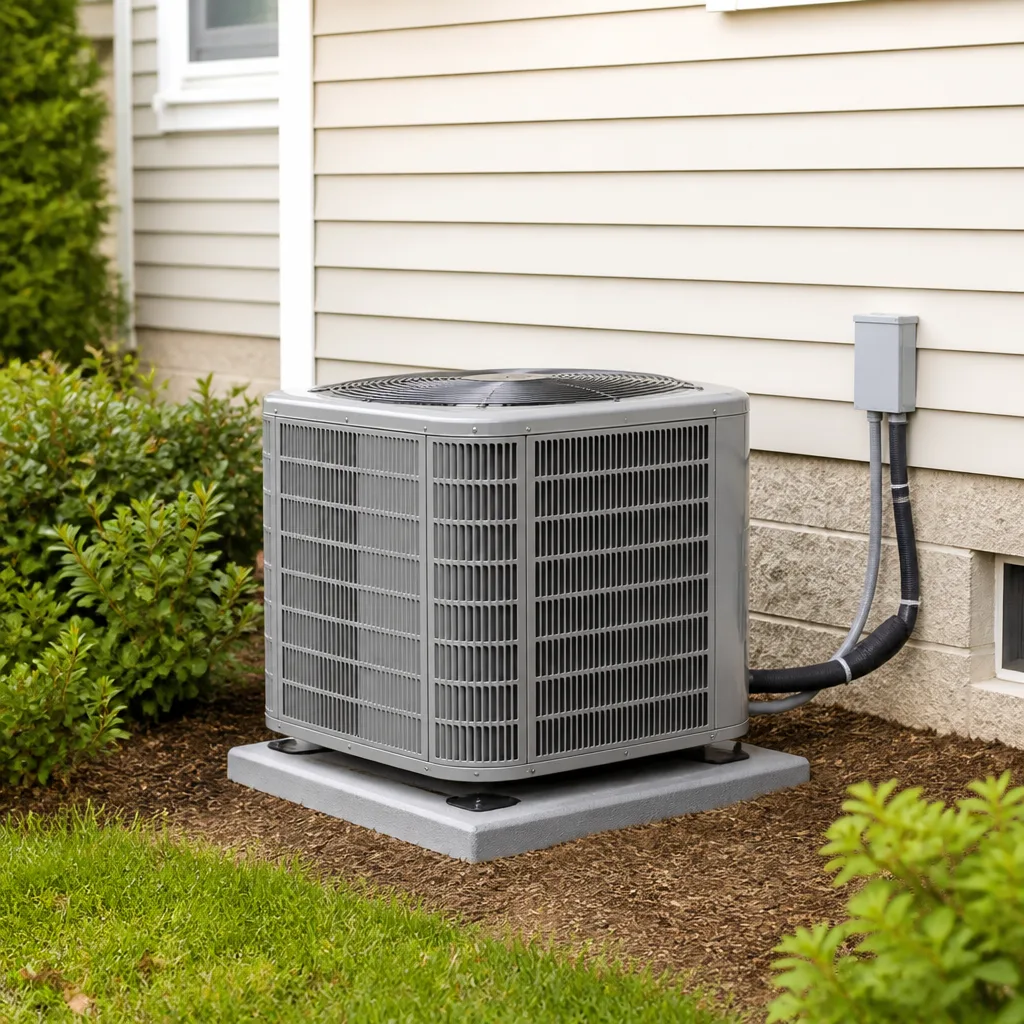 Carrier
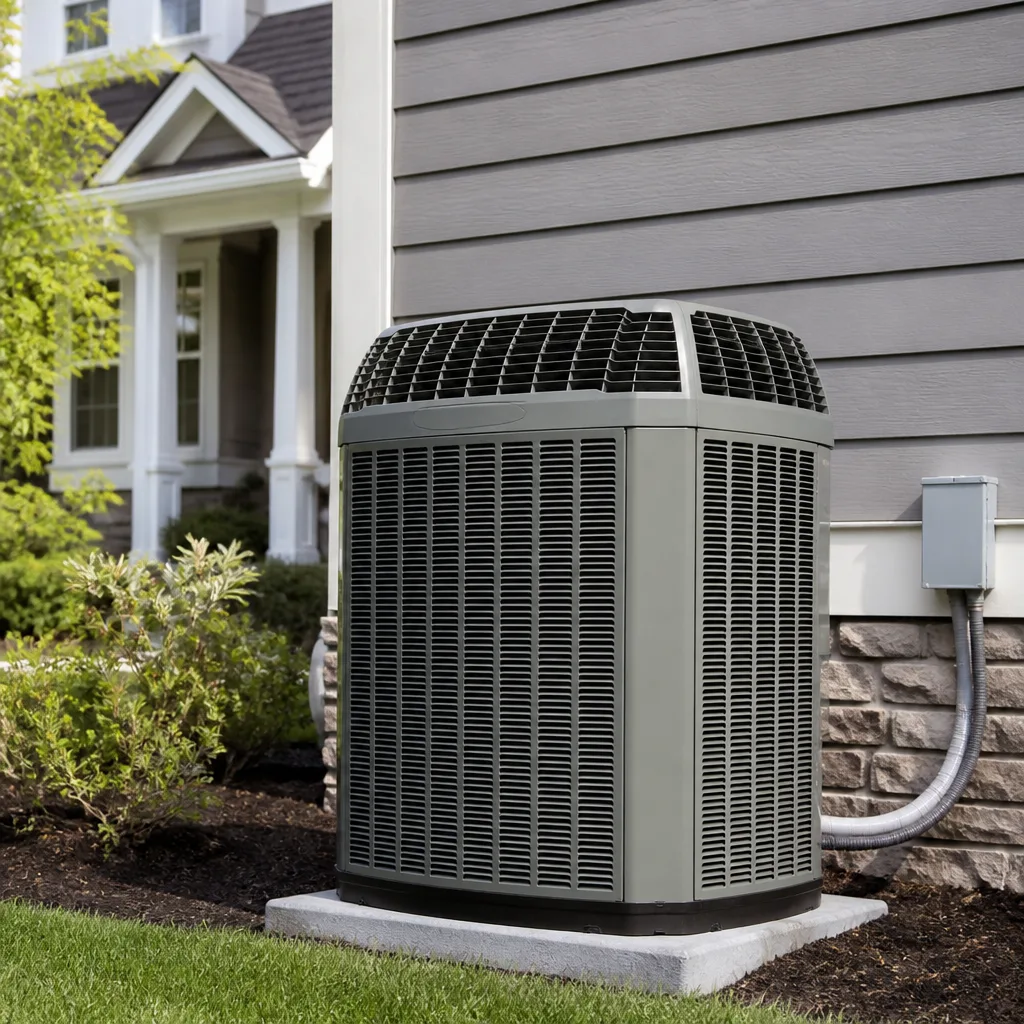 Trane
Trane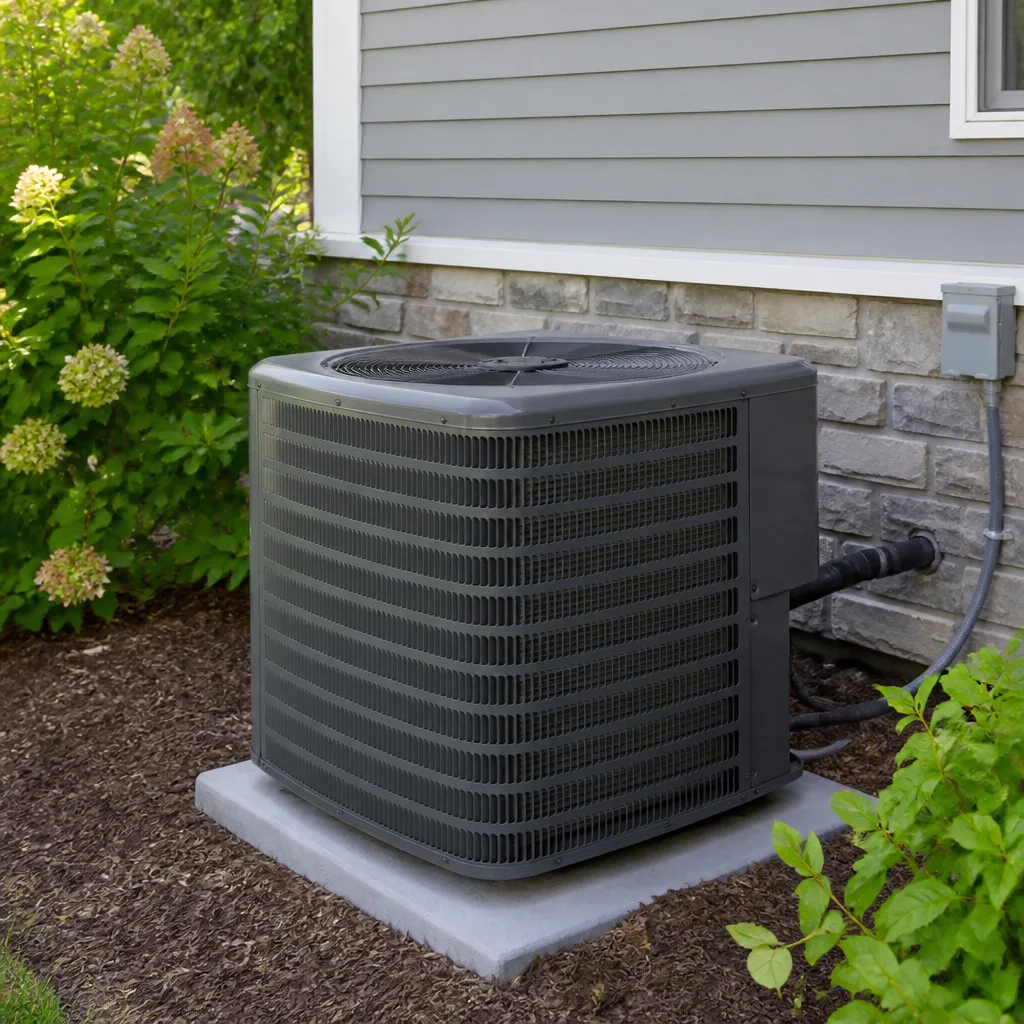 Goodman
Seasonal tune-up and full diagnostic on your Carrier, Trane, or Goodman system - readings shown to you before any repair is proposed
Diagnosis first, numbers second - you approve the repair price before a single part goes in.
Get your free estimateDaikin Capacitor Replacement: The Austin Owner’s Guide
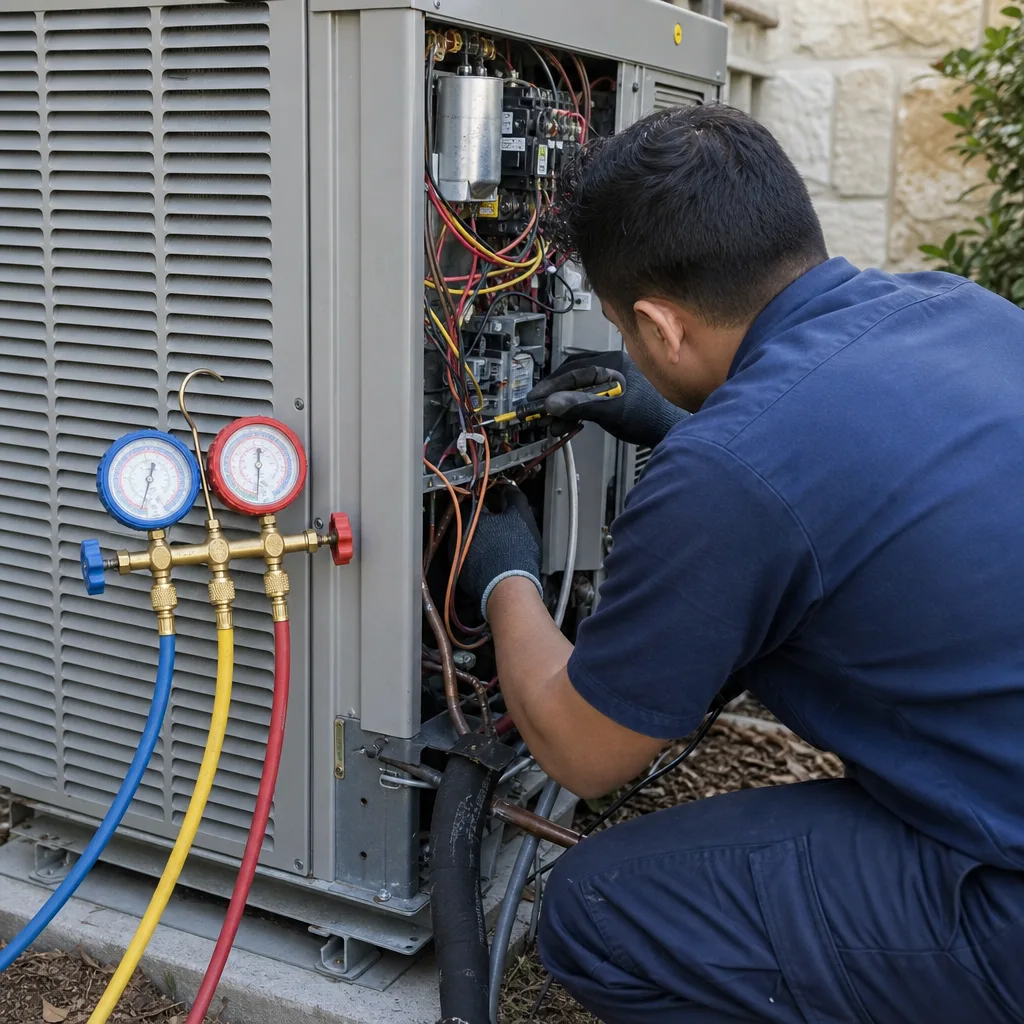
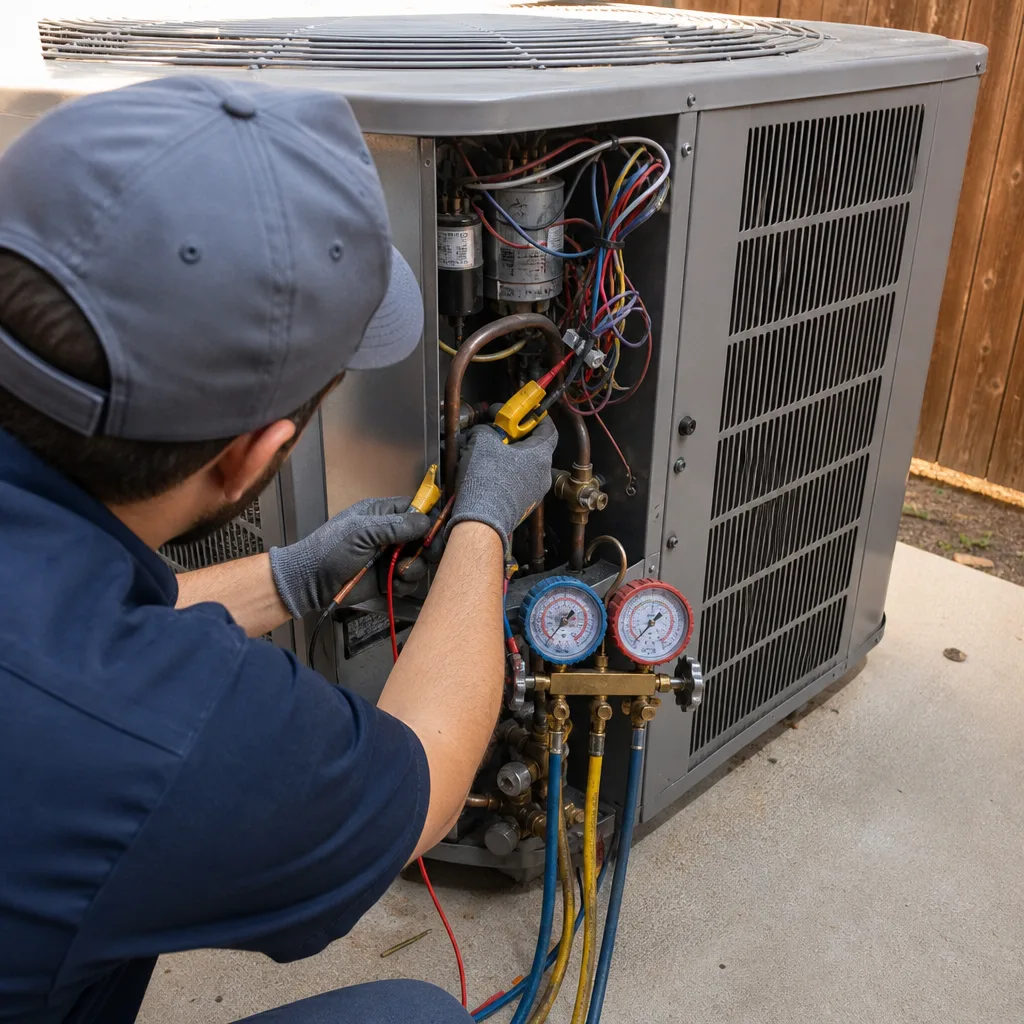
We replace Daikin capacitors in Austin homes most weeks, and the installed price typically lands between $180 and $340, parts and labor included. Same-day service is available when we have the right capacitor stocked on our trucks, which covers the majority of Daikin residential systems out there. Most homeowners discover the problem the hard way: the outdoor unit hums but the fan won’t spin, the compressor won’t kick on, or the system runs for twenty minutes and then shuts down on a hot afternoon. A capacitor is a small cylinder inside the condenser unit that stores and releases the electrical jolt needed to start the fan motor and compressor. When it fails, the whole system goes quiet or struggles.
Which Daikin Models This Applies To
Daikin residential systems use capacitors across a broad range of model families, including the DX, DC, and Fit series common in Austin’s newer subdivisions, as well as older Daikin Comfort and Amana-badged Daikin units still running in neighborhoods like Crestview, Allandale, and Cherrywood. The capacitor you need is not a one-size-fits-all part. Daikin specifies capacitors by three numbers printed right on the side of the cylinder: microfarad rating (µF), voltage rating, and shape (round or oval). A common Daikin dual-run capacitor is 45/5 µF at 370V or 440V, but we have pulled 35/5, 40/5, 50/5, and 70/5 units out of Daikin systems across the city. If you open the service panel and read us the label over the phone, we can confirm what we are bringing before we drive out.
There is a real difference between OEM Daikin capacitors and quality aftermarket equivalents. Daikin does not manufacture its own capacitors; they source them from the same industrial suppliers as brands like Carrier, Trane, and Lennox. A quality aftermarket capacitor from GE, Mars, or AmRad typically matches or exceeds OEM spec and is what most independent technicians, including our crew, install every day. We also stock parts for Carrier, Trane, and Lennox systems, but for Daikin we carry the most common dual-run and start capacitor specs on our trucks so we can often complete the repair on the first trip.
One compatibility gotcha worth knowing: Daikin inverter-driven systems (the Fit series and some DX models) do not use a traditional capacitor at all. The inverter board handles motor starting electronically. If your condenser is an inverter model and a technician is diagnosing a bad capacitor, you want a second opinion. That is not a knock on the tech; it just means the real issue is likely the inverter board or the fan motor itself.
Styles & brands we work with
Signs Your Daikin Capacitor Replacement Is Failing
- The outdoor unit hums but the fan won’t spin. Power reaches the unit, but the capacitor cannot deliver the jolt needed to start the fan motor. The hum is the motor trying and failing to move.
- The compressor struggles to start and then trips the breaker. A weak capacitor forces the compressor to draw more current than it should, which can trip the circuit and, over time, damage the compressor.
- The system blows warm air on a hot day. If the compressor will not start, the refrigerant never circulates, and the indoor coil can’t absorb heat from the house.
- You hear a clicking sound, then nothing. The capacitor tries to release its charge, but the charge is too weak. The system clicks and gives up.
- The capacitor is visibly swollen, leaking, or misshapen. In Texas heat, capacitors bulge or split open. This is not subtle; if the top is domed instead of flat, the part is dead.
Here is the reality of Austin weather: capacitors are rated for a certain lifespan, but our summers are brutal on electrical parts. A capacitor that would last ten years in a mild climate can die in five or six in Austin. Attic heat and relentless run cycles push capacitors to the edge. We have replaced capacitors in July that were only four years old.
See the difference
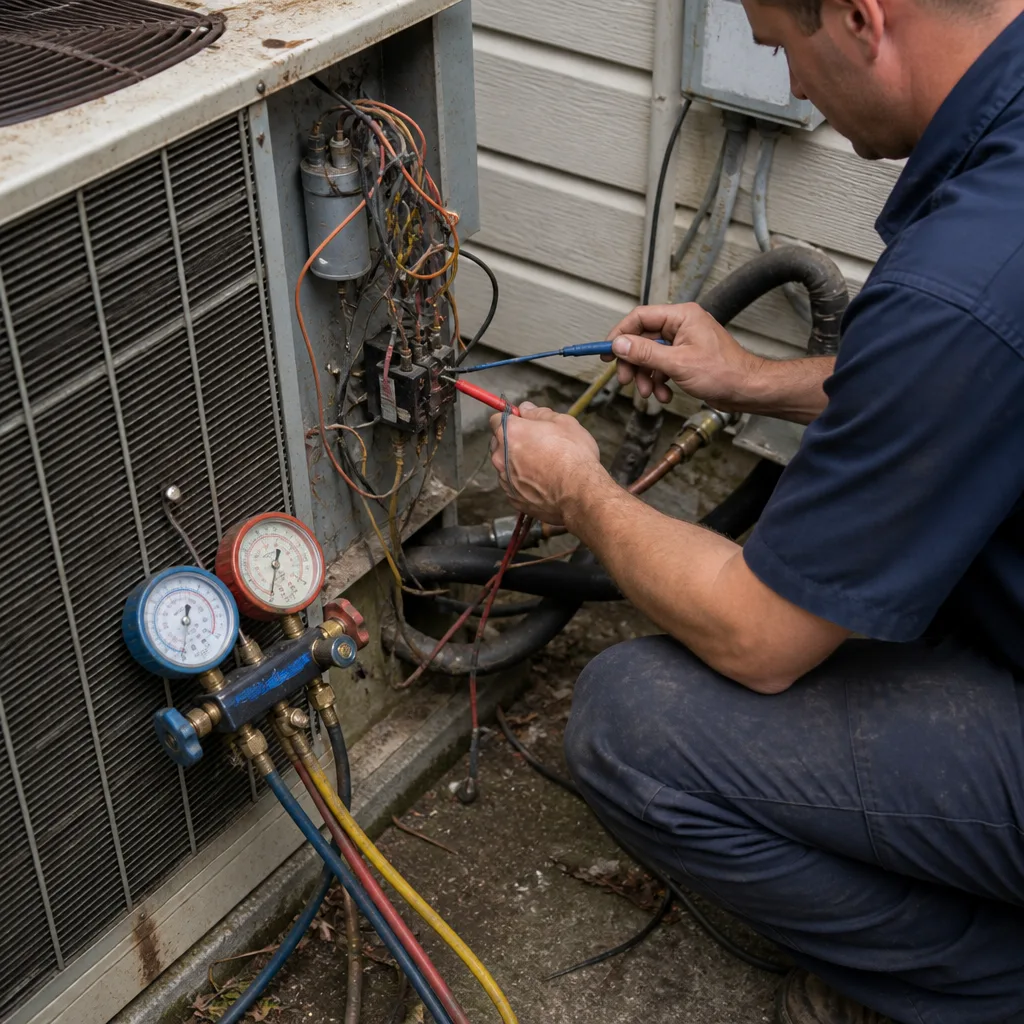 Before
 After
After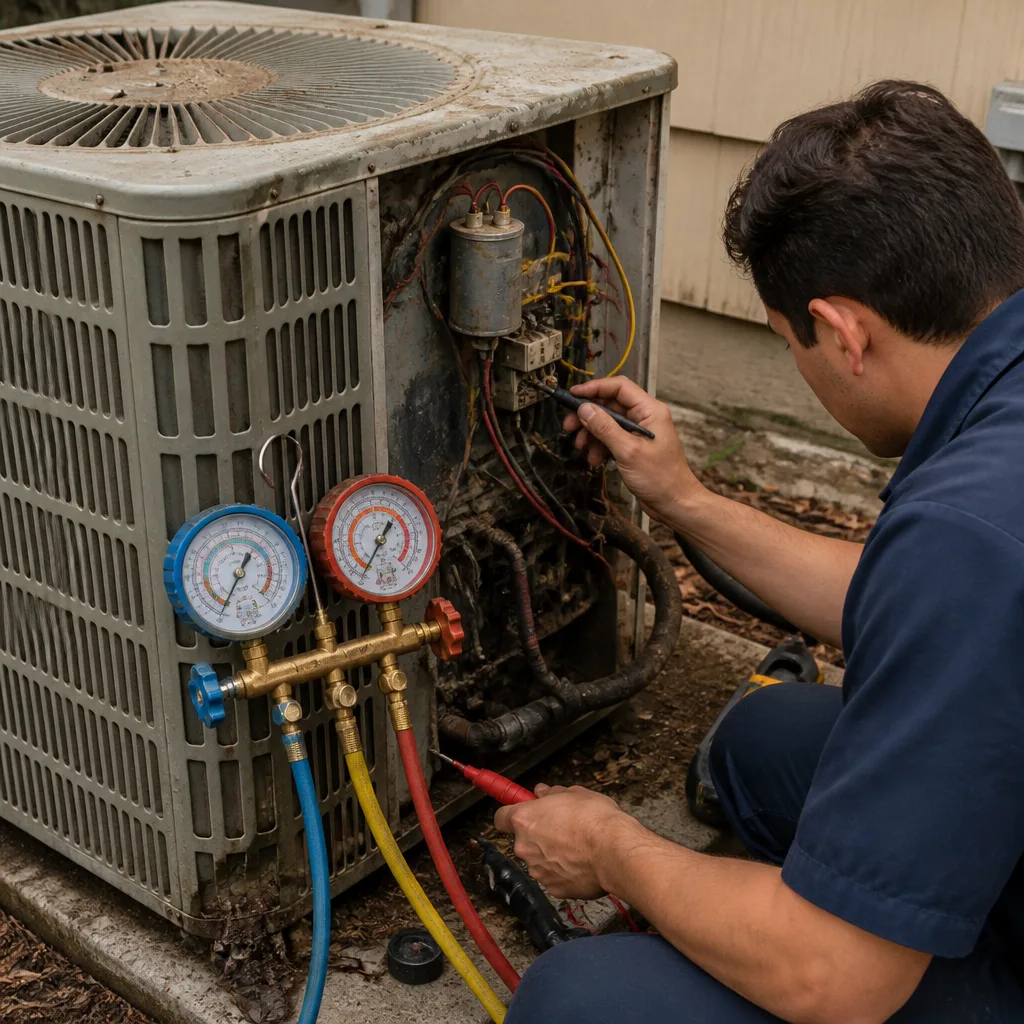 Before
 After
After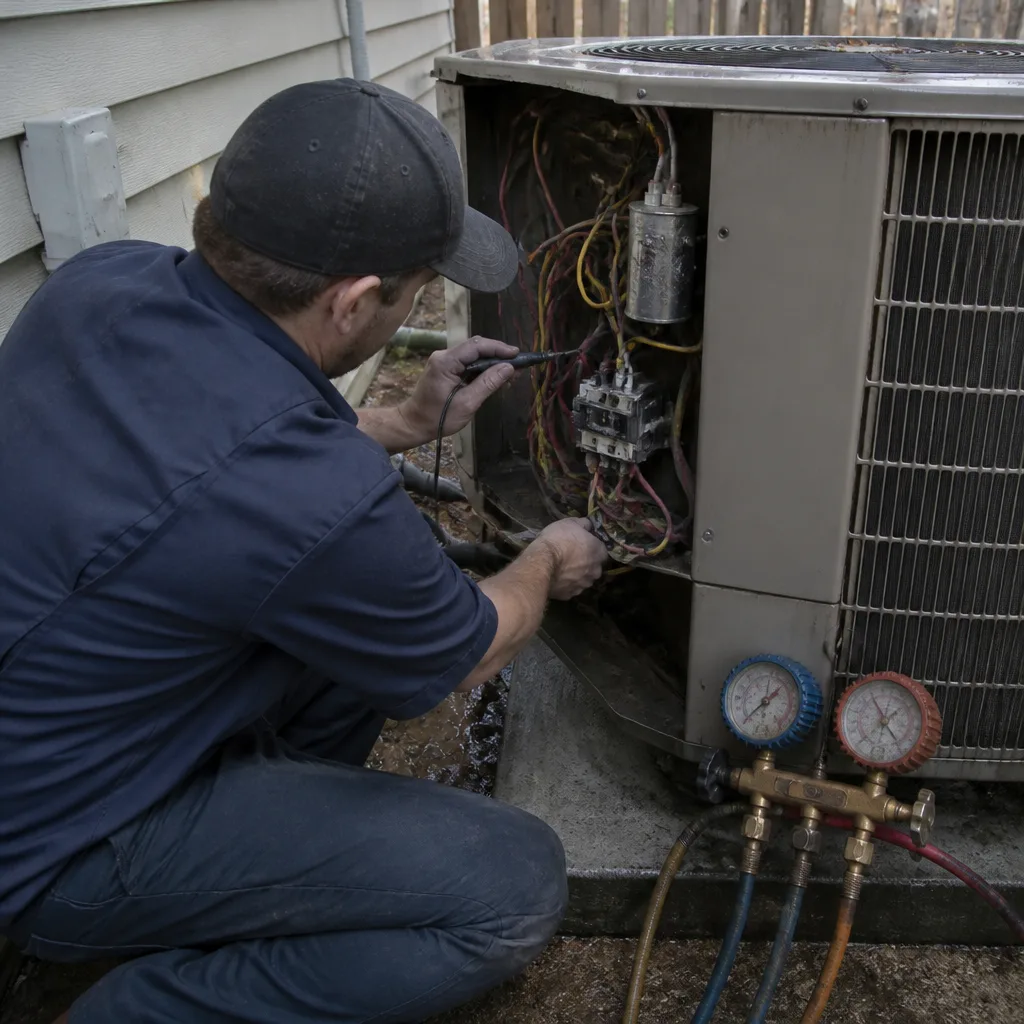 Before
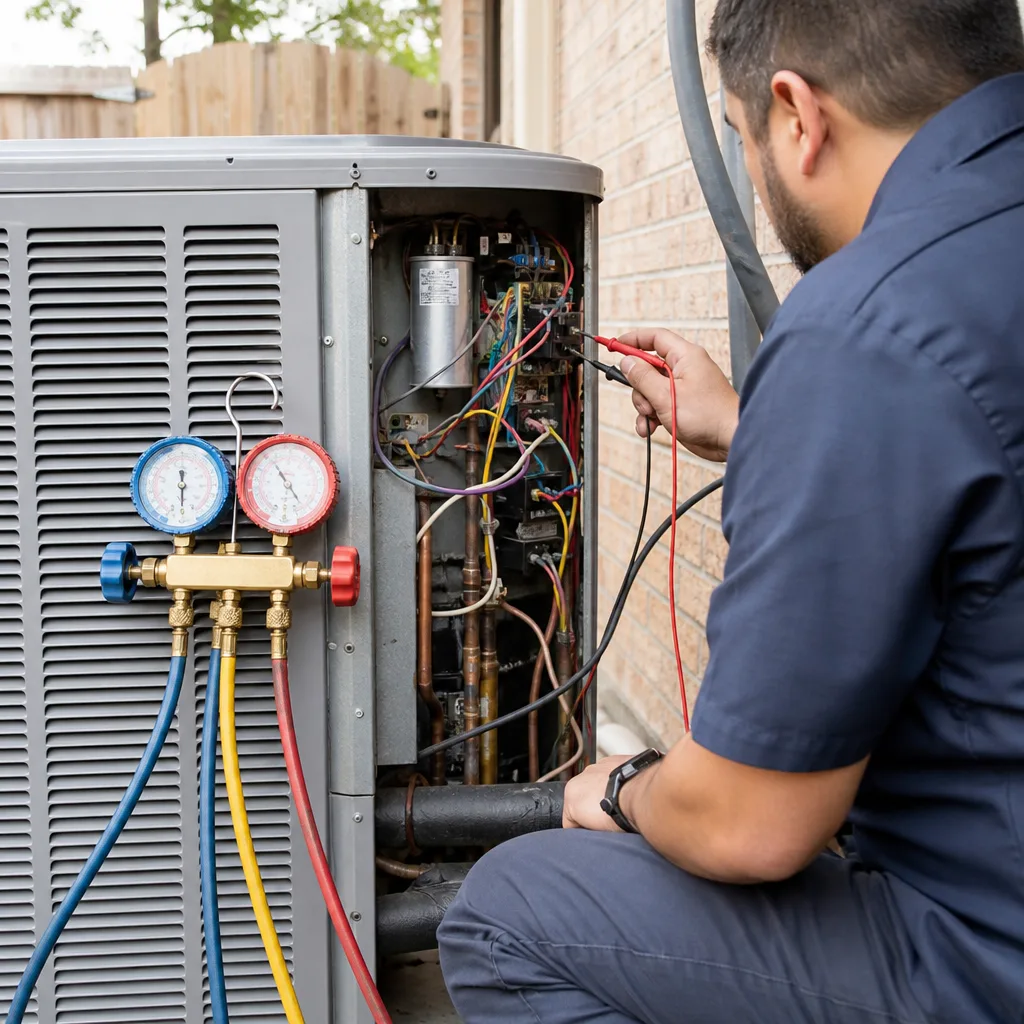 After
AfterReplacement Cost & What’s Included
In Austin, a Daikin capacitor replacement through us runs $180 to $340 installed. Here is the breakdown:
- Standard dual-run capacitor (35/5 to 50/5 µF): $180 – $260 installed
- High-capacity or start capacitor (larger µF, higher voltage): $260 – $340 installed
- What’s included in every price: the capacitor itself, the service call, labor, electrical testing of the new part, and a written 365-day guarantee on the repair
The price difference comes down to the specific spec Daikin calls for on your model and whether the capacitor is round or oval, 370V or 440V, single or dual-run. Before any work begins, you get a written price. Not a ballpark, not a verbal estimate. Written. If the repair fails inside 365 days, we come back and fix it at no charge. That is the Kingswell Guarantee, and we put it on paper every time. No overtime charge, no after-hours surcharge, no surprise line item.
DIY or Call Us?
Let’s be honest about the risk. A capacitor stores a meaningful electrical charge even after the breaker is off. If you touch the wrong terminal before discharging it properly, you can get a serious shock. That is not scare language; it is the reason capacitors are the one part we tell homeowners not to tinker with. The DIY route usually ends one of two ways: a homeowner buys the wrong spec capacitor online and the system still won’t run, or a homeowner gets a nasty surprise from a charged capacitor. What you can safely do is pull the disconnect by the condenser and visually check whether the capacitor is swollen or leaking. That tells you something is wrong. It does not tell you which spec to buy or how to safely swap it.
Our advice: call (361) 204-1605. We will ask a few questions, confirm the likely capacitor spec, and send a background-checked, uniformed technician who explains what they are doing in plain English. The written price is in your hand before a tool comes out.
FAQs
In the Texas heat, expect five to ten years, with five to seven being more realistic if your unit runs hard through long Austin summers. Heat and voltage spikes shorten capacitor life more than anything else.
No. A capacitor is a sealed, disposable part. There is no repair path once the internal dielectric breaks down or the casing swells. The correct move is replacement with a properly matched spec.
Most jobs are done in 30 to 60 minutes once the technician starts. The longest part is confirming the spec and discharging the old capacitor safely, both of which are non-negotiable.
Yes. We carry the most common Daikin dual-run and start capacitor specs in our Austin fleet, so most replacements are same-day, first-trip fixes. If the spec is unusual, we can usually have it by the next morning. Call (361) 204-1605 and we will confirm before we roll.
Cold Harbour Heating and Air Austin is an independently owned and operated HVAC company and a member of the Kingswell network. We are not affiliated with Daikin, but we service their equipment every week. One visit, one diagnosis, one fix, that is the only way this works.
If your Daikin outdoor unit is humming and not starting, or the fan is not spinning, call us now at (361) 204-1605. We will give you a straight answer, a written price, and a firm arrival window. Estimate is free.
Written by Victor Mancini, Owner & Lead HVAC Technician, Cold Harbour Heating and Air Austin at Cold Harbour Heating and Air Austin, serving Austin and nearby areas.