
 Furnace & heating
 AC repair
 Heat pumps
 Ductless mini splits
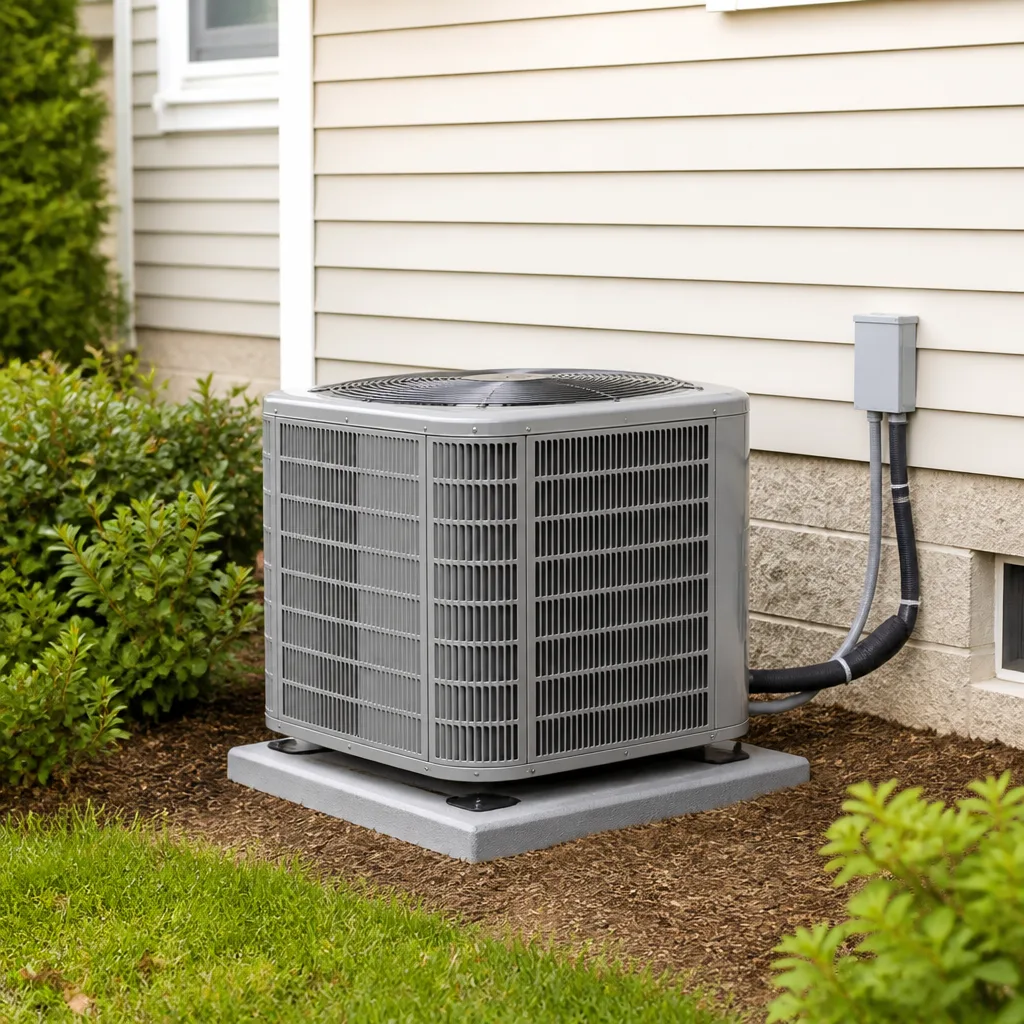 Carrier
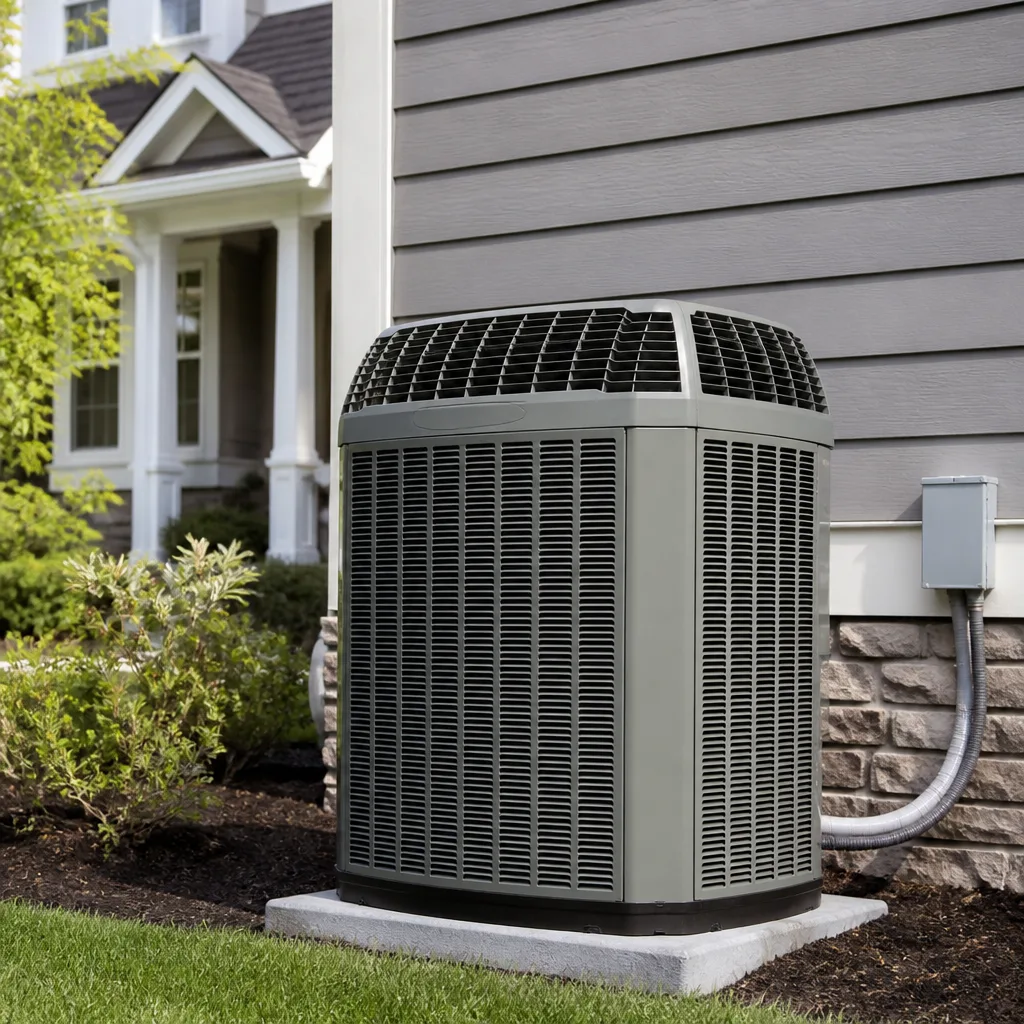 Trane
Trane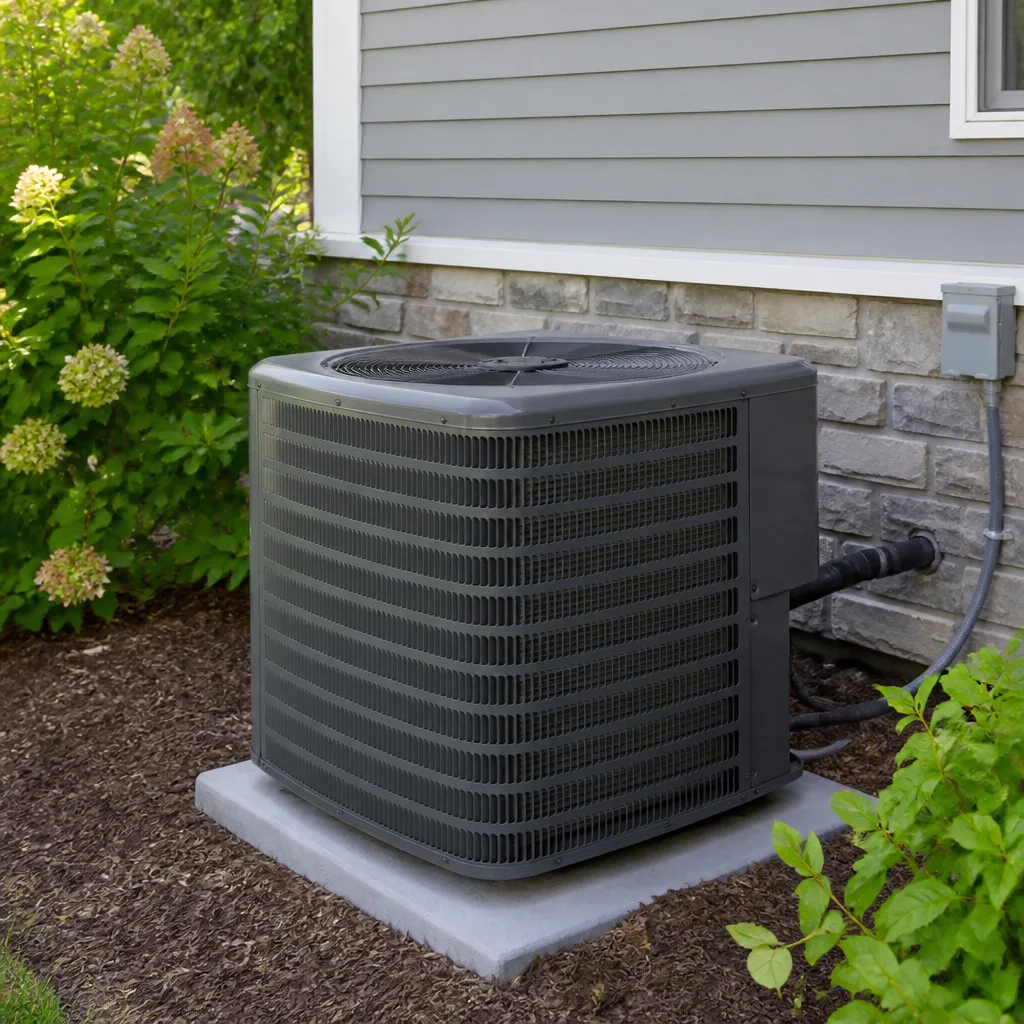 Goodman
Seasonal tune-up and full diagnostic on your Carrier, Trane, or Goodman system - readings shown to you before any repair is proposed
Diagnosis first, numbers second - you approve the repair price before a single part goes in.
Get your free estimateCarrier Capacitor Replacement: The Austin Owner’s Guide
We stock and install Carrier-compatible run capacitors for most residential Carrier systems, and a typical capacitor replacement in Austin runs $150 – $280 parts and labor included. Most calls come in as a same-day job because a failed capacitor shows up fast: the outside unit hums but the fan won’t spin, or the compressor tries to start and clicks off. Homeowners usually notice it first as warm air blowing through the vents or an AC that runs constantly without cooling. We keep common microfarad ratings on the truck, so if your Carrier condenser takes a standard 35/5 or 45/5 dual run capacitor, we can often have you back up and cooling the same afternoon.
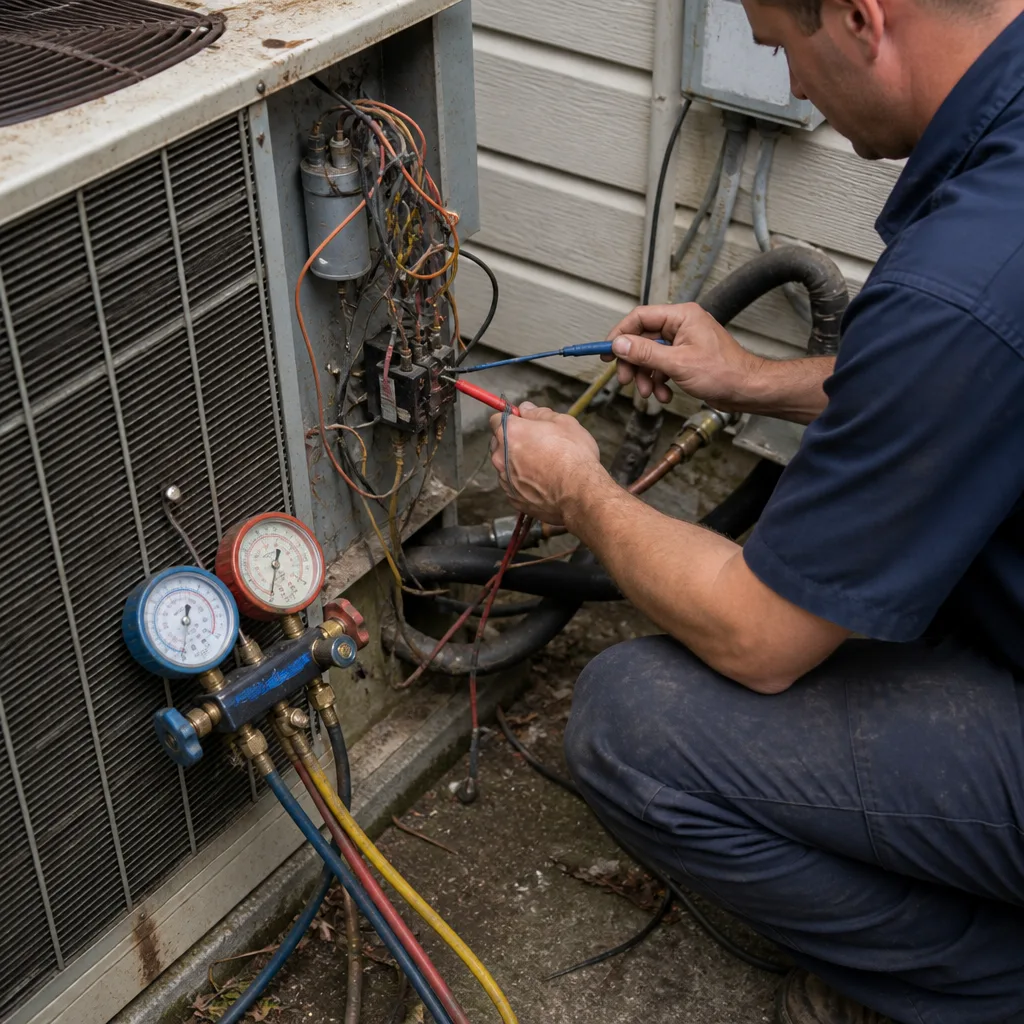
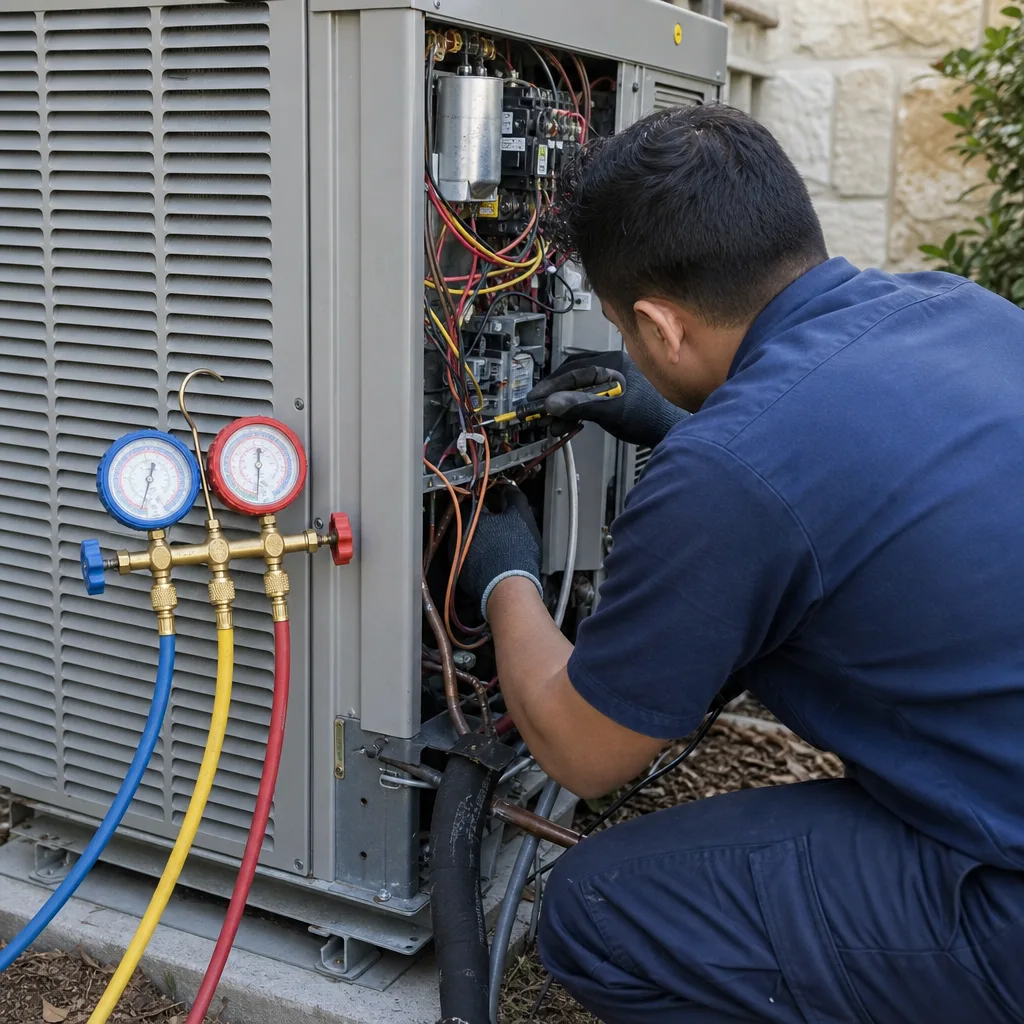
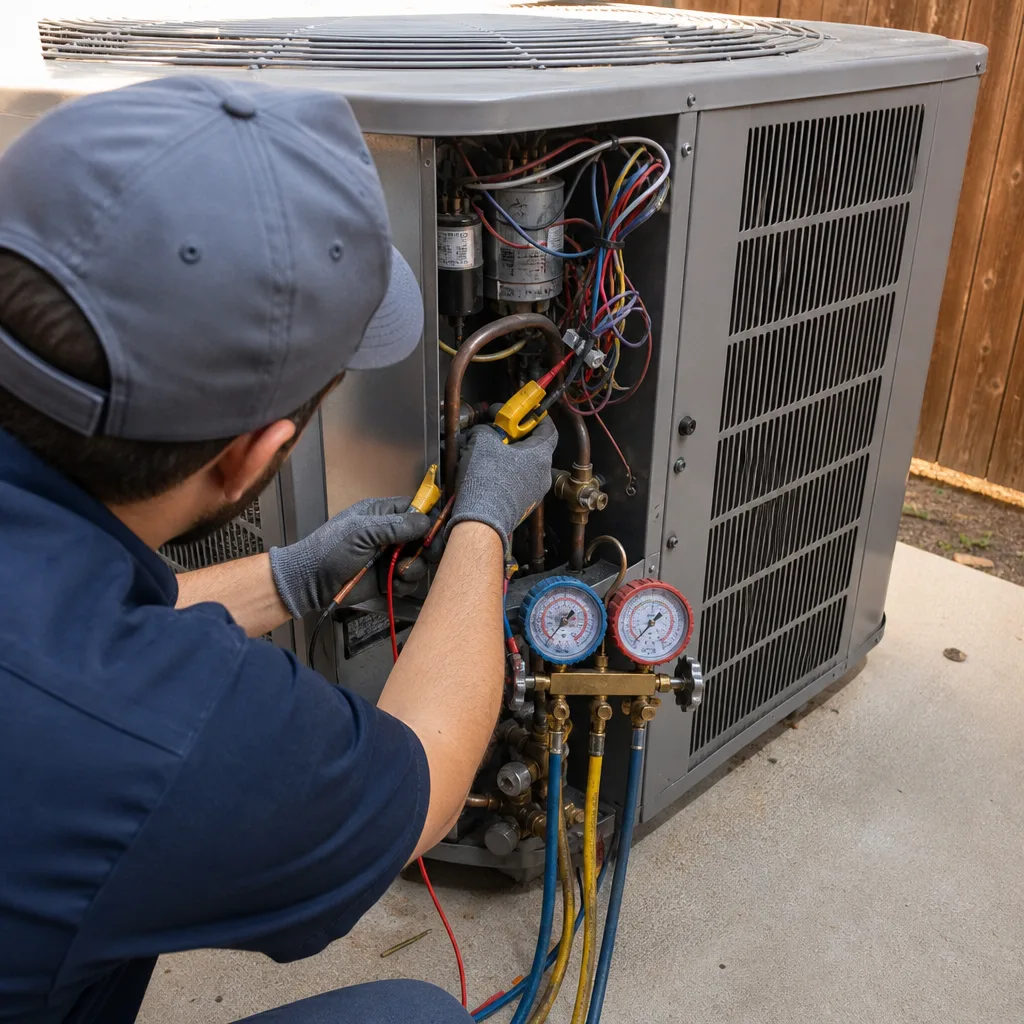
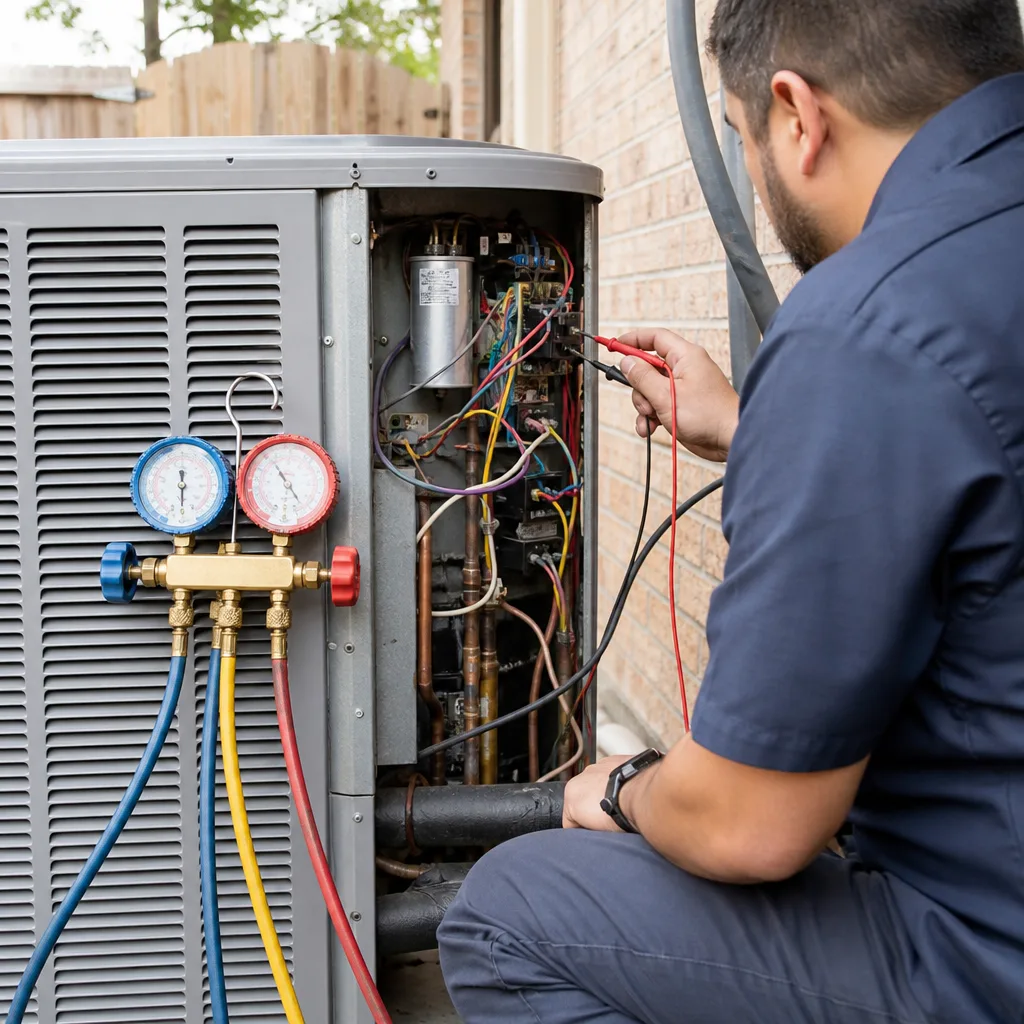
The capacitor is a small cylinder inside the outdoor condenser cabinet. It stores and releases the electrical jolt needed to start the compressor and the condenser fan motor. When it fails, the system either won’t start at all or it starts hard, runs hot, and shuts down on overload. In Austin’s July heat, a failing capacitor doesn’t limp along for weeks. It tends to quit outright, which is why so many of our repair calls between Memorial Day and Halloween start with a capacitor.
Which Carrier Models This Applies To
Most Carrier residential condensers built in the last 25 years use a dual run capacitor that serves both the compressor and the outdoor fan. That covers the Comfort, Performance, and Infinity series, including common model families like the 24ABC, 24ACC, 24APA, 24ANB, and the older 38CK and 38BR lines we still see in Austin homes around Hyde Park and Crestview. Single-capacitor setups exist on some older Carrier units, particularly pre-2000 models, and a few Infinity systems pair a run capacitor with a separate start capacitor and potential relay. We match the replacement to the exact model and serial number on the unit’s data plate, not just to what was bolted in before.
Here’s the compatibility gotcha that costs homeowners time: the capacitor’s microfarad (µF) rating must match the original spec, and the voltage rating has to meet or exceed it. A 35/5 µF capacitor at 440 volts is not interchangeable with a 35/5 at 370 volts just because the numbers look close. Carrier dual capacitors are typically rated at 370 or 440 VAC, and putting a 370-volt part where a 440-volt part belongs shortens its life in a hurry, especially under the sustained heat load Austin condensing units deal with from May through September. For the capacitor itself, we’re comfortable installing either genuine Carrier OEM parts or Turbox and Genteq aftermarket capacitors that meet Carrier’s published specifications. For most homeowners, a quality aftermarket capacitor is the smarter spend: same job, same 365-day written guarantee from us, and often $20 – $40 less than the Carrier box.
Styles & brands we work with
Signs Your Carrier Capacitor Replacement Is Failing
- Outdoor unit hums but the fan doesn’t turn. The capacitor has failed and can’t deliver the jolt the fan motor needs to start. You’ll hear the contactor click, then a low hum, then silence a few seconds later. This is the most common failure pattern we see on Carrier condensers in Austin.
- AC runs but blows warm or room-temperature air. The fan motor is getting by on a capacitor that’s lost much of its rated microfarads, or the compressor side has failed while the fan side still works. The compressor may be short-cycling on thermal overload while the fan spins normally, which reads at the thermostat as “it’s running but not cold.”
- The condenser fan starts only if you give it a push with a stick. This is a textbook weak capacitor: there’s enough stored energy to keep a spinning fan turning, but not enough to break the motor’s starting inertia. It buys you a day or two of cooling, but the strain shortens the fan motor’s life every hour you run it that way.
- Breaker trips or fuses blow when the AC comes on. A failed capacitor changes the electrical behavior of the start circuit. In a worst case, the start winding draws current it was never meant to pull continuously, and the breaker does its job. Austin neighborhoods with older panels see this more often than newer builds.
- Bulging, split, or leaking capacitor body. If you’re comfortable opening the condenser cabinet, a capacitor that looks swollen at the top, has a split seam, or shows oily residue has failed internally. That’s a visual confirmation, not a guess. But see the safety note in the DIY section before you open anything.
See the difference
 Before
 After
After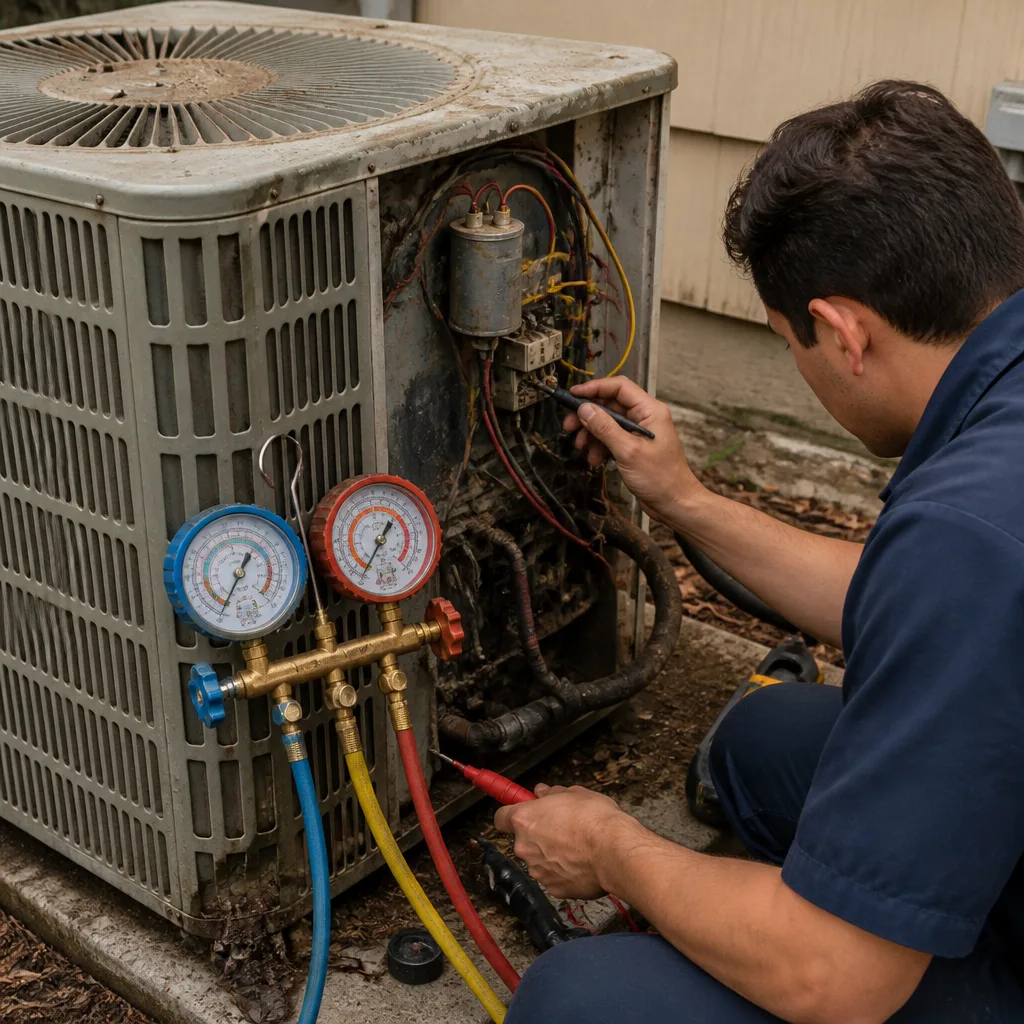 Before
 After
After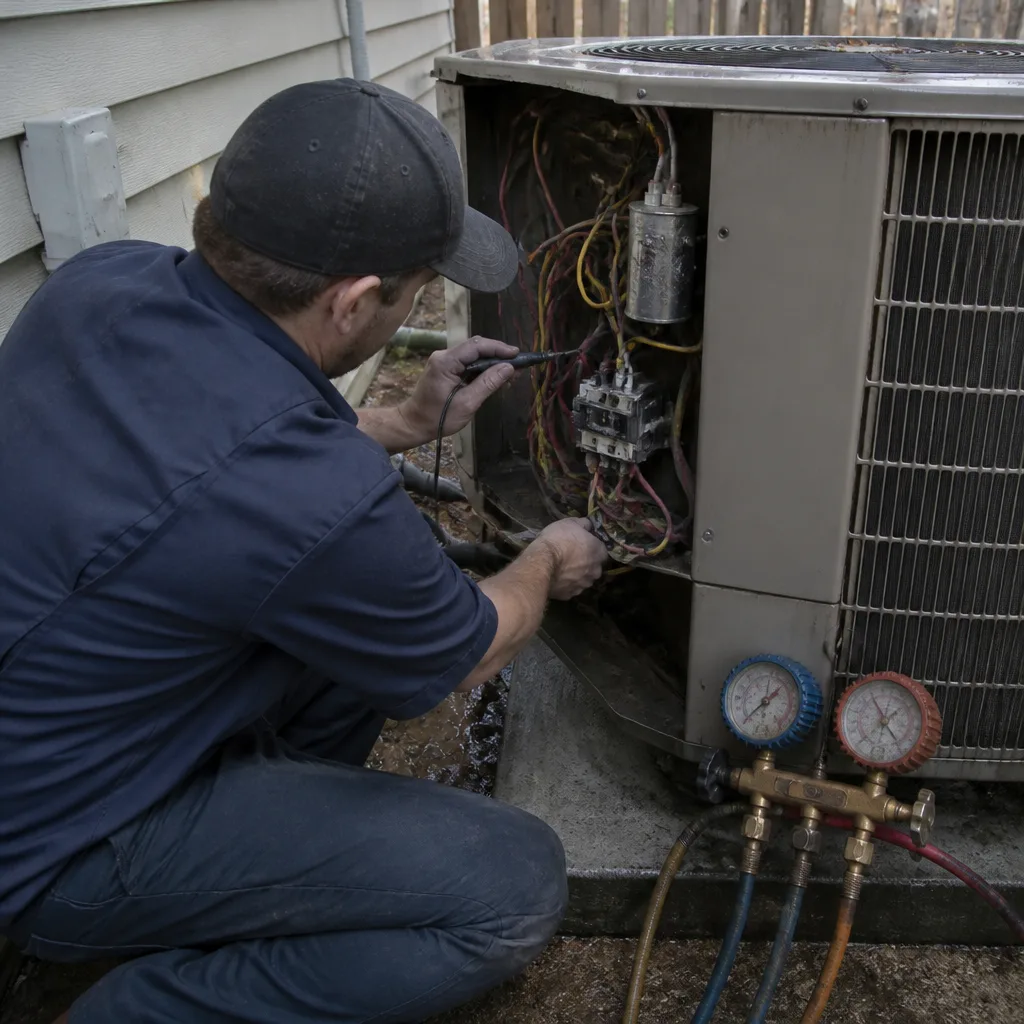 Before
 After
AfterReplacement Cost & What’s Included
In the Austin market, a Carrier capacitor replacement runs $150 – $280 installed. That’s the total number: the capacitor itself, the service call, labor, and a written 365-day guarantee from us. Most jobs land around $180 – $220. The range depends on the capacitor’s specs (a 440-volt dual run costs more than a 370-volt single), whether the system is easy to access or shoehorned behind a fence line in a Tarrytown or Rosedale lot, and whether you’re in a newer neighborhood near the Domain or an older home in Allandale where tight condenser clearances add a few minutes to the job.
When we arrive, you’ll get a written price before any tool comes out of the bag. The price we write down is the price you pay, whether the job takes us 45 minutes or two hours. Our 365-Day Done Right Promise covers the repair in writing: if that capacitor or our workmanship fails inside a year, we come back and fix it at no charge. That’s the Kingswell Way: say the price before the work, show up in the window we gave you, leave the site cleaner than we found it, and put the guarantee on paper. No handshake deals, no “we’ll see how it goes.”
DIY or Call Us?
We need to say this plainly, because the inside of a condenser cabinet is where a homeowner can get hurt: a capacitor stores an electrical charge even after the power to the unit is cut. It can discharge that charge into you if you touch the wrong terminal, and a charged capacitor is capable of delivering a serious shock. If you’re comfortable reading a multimeter and you understand how to release that stored charge safely, you can visually inspect the capacitor and even swap it yourself. If any part of that sentence made you pause, call us: (361) 204-1605. The same goes for handling a fan start assist stick trick: it works, but it’s a diagnostic move, not a fix, and you should never consider it anything more than a temporary bridge to a proper repair.
The honest split is this: you can look in the cabinet for a bulging capacitor, write down the microfarad and voltage specs from the data plate, and call us with that information so we bring the right part on the first trip. What you shouldn’t do is guess at a capacitor’s rating, swap in whatever the hardware store has on the shelf, or attempt a live electrical diagnosis. Carrier condensers in Austin already run at the edge of their design temperature eight months a year. The part that starts them deserves a clean installation and a working discharge path, every time.
FAQs
Plan on 5 to 12 years, with Austin’s sustained summer heat pushing most capacitors toward the shorter end of that range. A capacitor that sees 100°F-plus ambient temperatures on a shaded Tarrytown patio may last eight seasons; one bolted to a west-facing condenser in full Round Rock sun might fail at five. The heat degrades the internal dielectric faster than anything else we see in the field.
If your capacitor is more than six years old and your system is already on the truck schedule, ask us to test it during the visit. A capacitor that’s lost 10% of its rated microfarads is a capacitor that will strand you on the hottest Saturday of August. Call (361) 204-1605 to schedule a diagnostic check.
A failed capacitor is always replaced, never repaired. The internal plates and dielectric degrade chemically, and there’s no rebuild, no component swap inside, and no “reconditioning” that makes sense. We dispose of the old capacitor and install a new one matched to the Carrier spec. Anyone who claims to repair a capacitor is selling you time, not a fix.
For a replacement done once and done right, call us at (361) 204-1605. You’ll get a written quote before the tools come out, and the repair is covered by our written 365-day guarantee.
Most capacitor replacements take 45 to 90 minutes from arrival to a running, cool system. The actual swap is 15 to 20 minutes: disconnect power, confirm the capacitor is discharged, remove the old part, install the matched replacement, verify the microfarad reading with a meter, and test the system through a full start cycle. The rest of the visit is the diagnostic that confirms the capacitor was the actual problem, not the symptom of a failing compressor or fan motor. One visit, one diagnosis, one fix, that is the only way this works. Call (361) 204-1605 and a live person picks up, any hour, any day.
Yes. Our trucks carry the common dual-run ratings Carrier uses across the Comfort, Performance, and Infinity lines: 35/5, 40/5, 45/5, and 50/5 microfarad units at both 370 and 440 volts. We also carry single run capacitors for older Carrier condensers and start capacitors used on some Infinity systems. If your unit needs an uncommon spec, we can usually have it in hand the same day through our local supply partners. Either way, you’ll know the price before the work starts. For fast same-day service, call (361) 204-1605.
Victor Mancini has kept Cold Harbour Heating and Air Austin running on the same promises since taking the helm: answer the phone, show up on time, write the price down, and fix the problem the first time. We’re an independent shop, not affiliated with Carrier, and we’re trained to service all nine major residential HVAC brands including Carrier, Trane, Lennox, Goodman, Rheem, York, Daikin, Bryant, and American Standard. Cold Harbour Heating and Air Austin has served Austin homes since 2003 as part of the Kingswell network of independently owned and operated HVAC businesses. When your Carrier needs a capacitor or anything else, call (361) 204-1605 for a free estimate and a written price before we touch the equipment.
Written by Victor Mancini, Owner & Lead HVAC Technician, Cold Harbour Heating and Air Austin at Cold Harbour Heating and Air Austin, serving Austin and nearby areas.