
 Furnace & heating
 AC repair
 Heat pumps
 Ductless mini splits
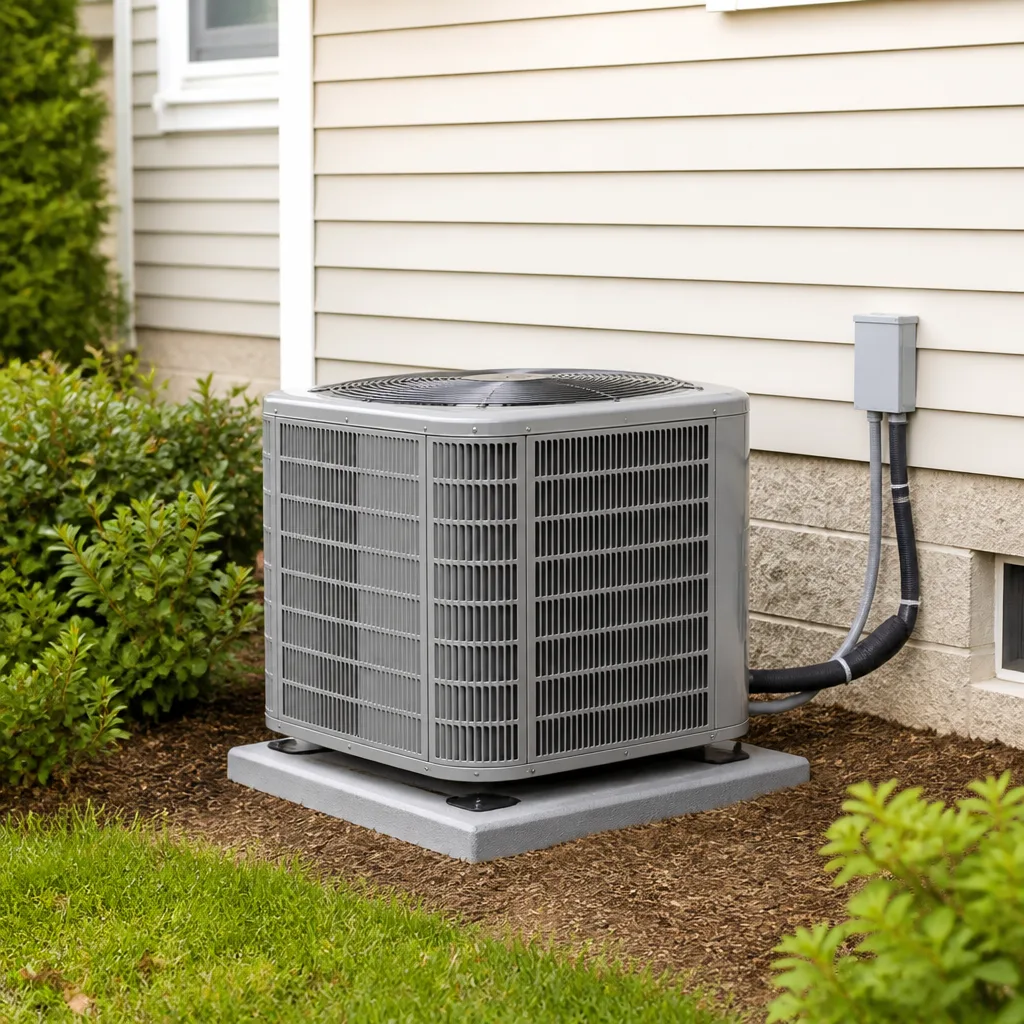 Carrier
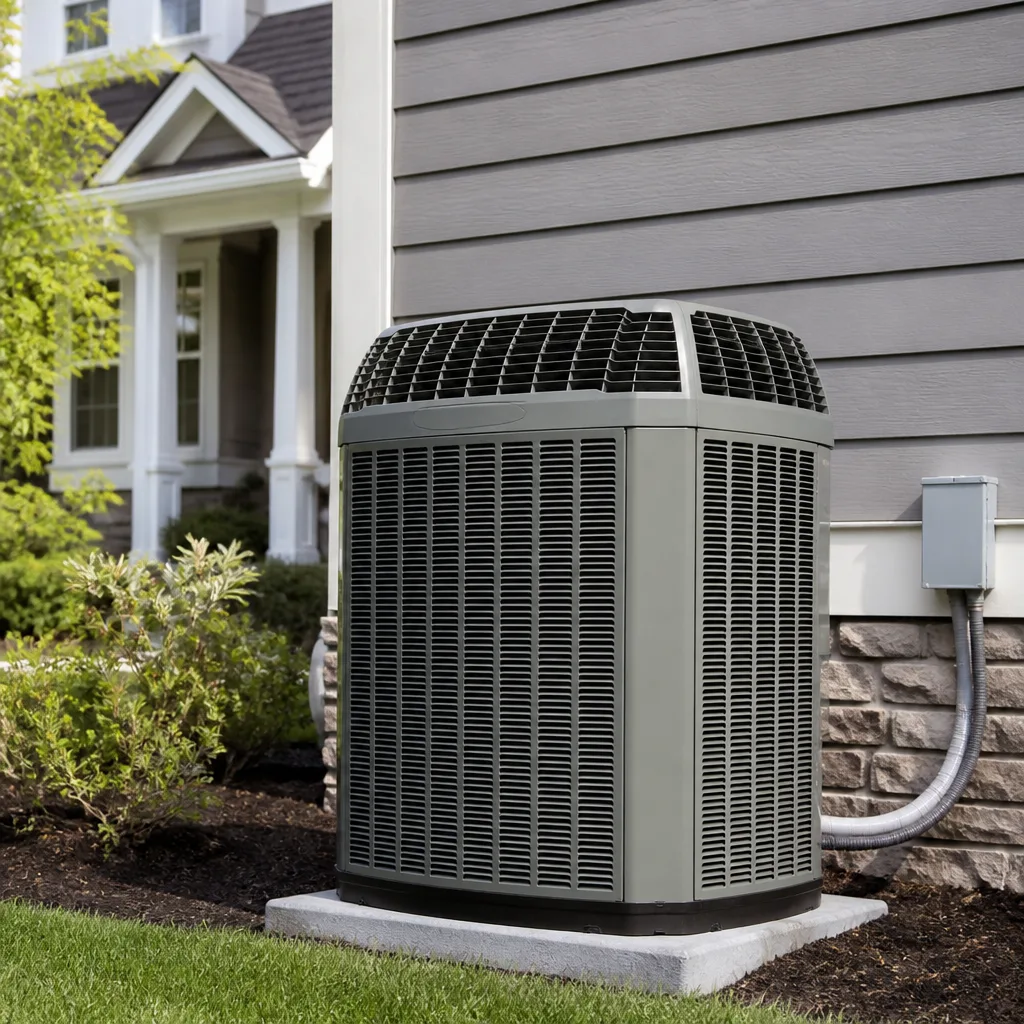 Trane
Trane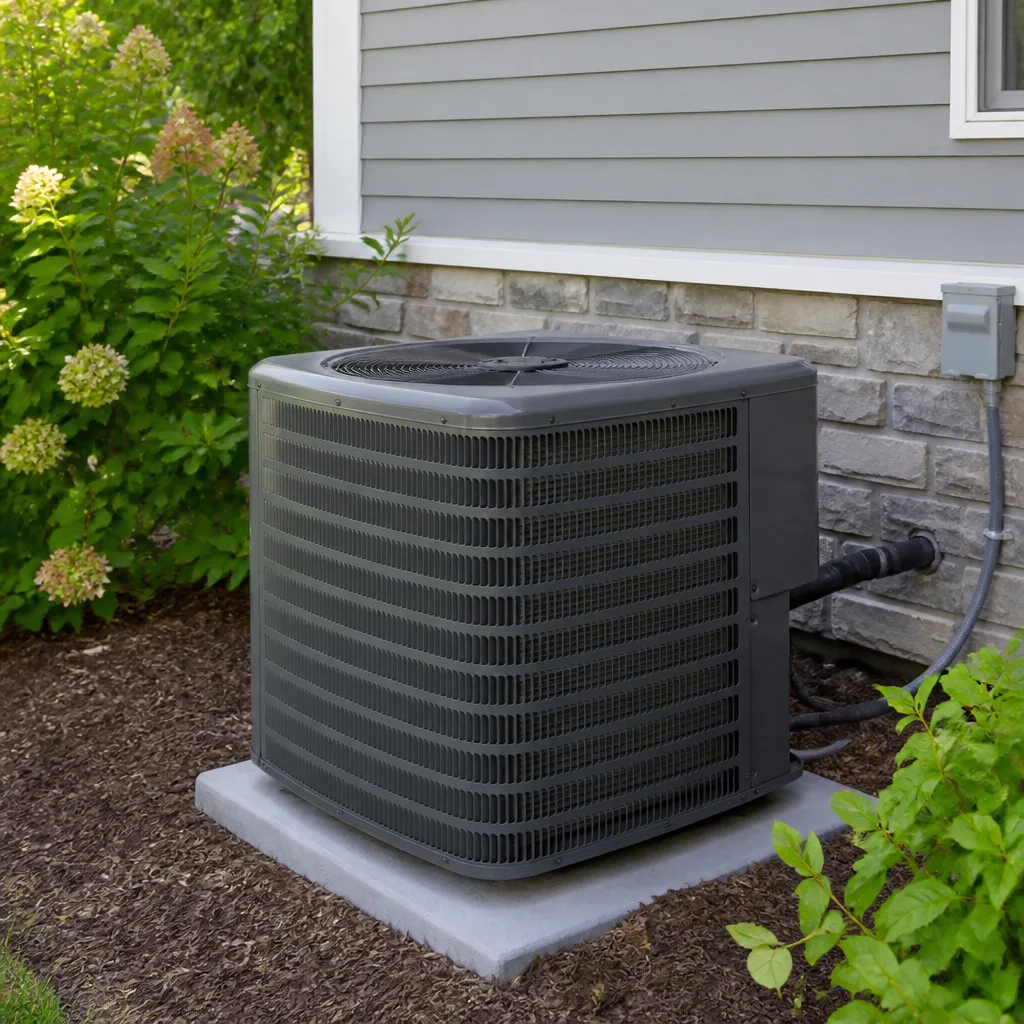 Goodman
Seasonal tune-up and full diagnostic on your Carrier, Trane, or Goodman system - readings shown to you before any repair is proposed
Diagnosis first, numbers second - you approve the repair price before a single part goes in.
Get your free estimateAmerican Standard Capacitor Replacement: The Austin Owner’s Guide
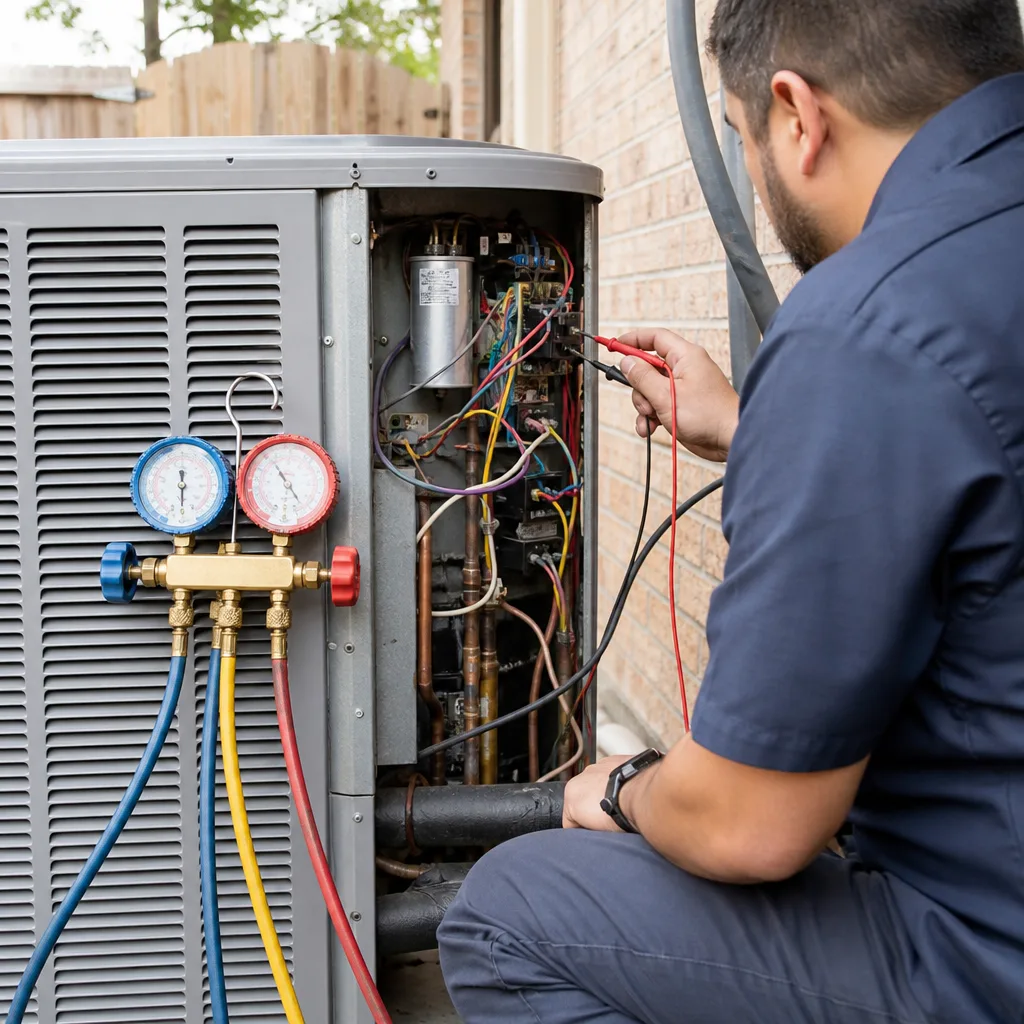
A failed capacitor is one of the most common reasons an American Standard air conditioner stops cooling in Austin, and we replace them every week during the summer. Typical installed price runs $150 – $320, parts and labor included, and our truck carries the common American Standard capacitor sizes so we can often handle the swap the same day you call. You’ll usually notice it first as a system that hums but won’t start, a condenser fan that won’t spin, or a unit that kicks off after running for only a few minutes.
The capacitor is the small cylinder inside your outdoor condenser that gives the compressor and fan motor the jolt they need to start up and the steady flow they need to keep running. When it fails, the whole system stalls even though it’s getting power. Here’s what an Austin homeowner needs to know about matching the right American Standard capacitor replacement, what the job costs, and why a bad one should be handled carefully.
Which American Standard Models This Applies To
American Standard residential condensers and heat pumps built since the late 1990s use capacitors in standardized voltage and microfarad (µF) ratings, but the exact part depends on your unit’s model and age. We commonly replace capacitors on American Standard Allegiance, Heritage, Gold, and Silver series systems, along with newer Platinum and AccuComfort models. The name on the cabinet says American Standard, but the capacitor inside was almost certainly manufactured by a third-party component supplier like GE, AmRad, or Packard and then spec’d to American Standard’s requirements. That matters because it means a quality aftermarket replacement with matching ratings performs just as reliably as an OEM box at a meaningfully better price.
Here’s what to look for before you call. Open the condenser panel and read the side of the existing capacitor: it will show a voltage rating (typically 370 or 440 volts), a microfarad rating (often 35µF, 40µF, 45µF, or a dual-rated 45/5 or 35/5), and sometimes a tolerance like ±5%. We can also cross-reference the exact numbers from the data plate on the condenser unit. One compatibility gotcha we run into often in Austin: a unit that calls for a 370V capacitor can safely run a 440V replacement (the voltage is a ceiling, not a target), but never go the other direction. And always match the microfarad rating within 5%, because an undersized capacitor makes the compressor run hot and an oversized one can burn out the winding.
We’re an independent Austin service company, not affiliated with American Standard, which means we recommend the right part for the job rather than the one with the most brand markup. We frequently install the AmRad Turbo200 universal capacitor on older American Standard units where the original dual-rated cap is discontinued, because it covers the full common range and carries a five-year manufacturer warranty.
Styles & brands we work with
Signs Your American Standard Capacitor Replacement Is Failing
- The outdoor unit hums but won’t start. You hear a low buzzing from the condenser, but the fan and compressor never kick on. That hum is usually the compressor trying to draw current through a dead capacitor.
- The condenser fan is not spinning while the system runs. American Standard units that have a separate fan capacitor can run the compressor while the fan sits still, which sends head pressure soaring and triggers a safety shutdown. If the fan blade is loose by hand when the unit is off, stop running it and call us.
- The system starts and stops in a few minutes. The capacitor can still hold a partial charge, enough to start the compressor but not keep it running under load. This is the fastest way to damage a compressor, and we see it regularly in older Hyde Park and Allandale homes with 15-plus-year-old systems.
- The capacitor itself looks swollen, cracked, or is leaking oil. Texas heat is brutal on capacitors. The dielectric fluid inside degrades and expands over years of 100-degree afternoons, and eventually the metal housing bulges or splits at the seam.
- Your AC runs but cools poorly. A weak capacitor can let the fan spin at a lower speed than rated, reducing airflow across the coil. The system runs longer, cools less, and your July electric meter climbs past your neighbors’.
See the difference
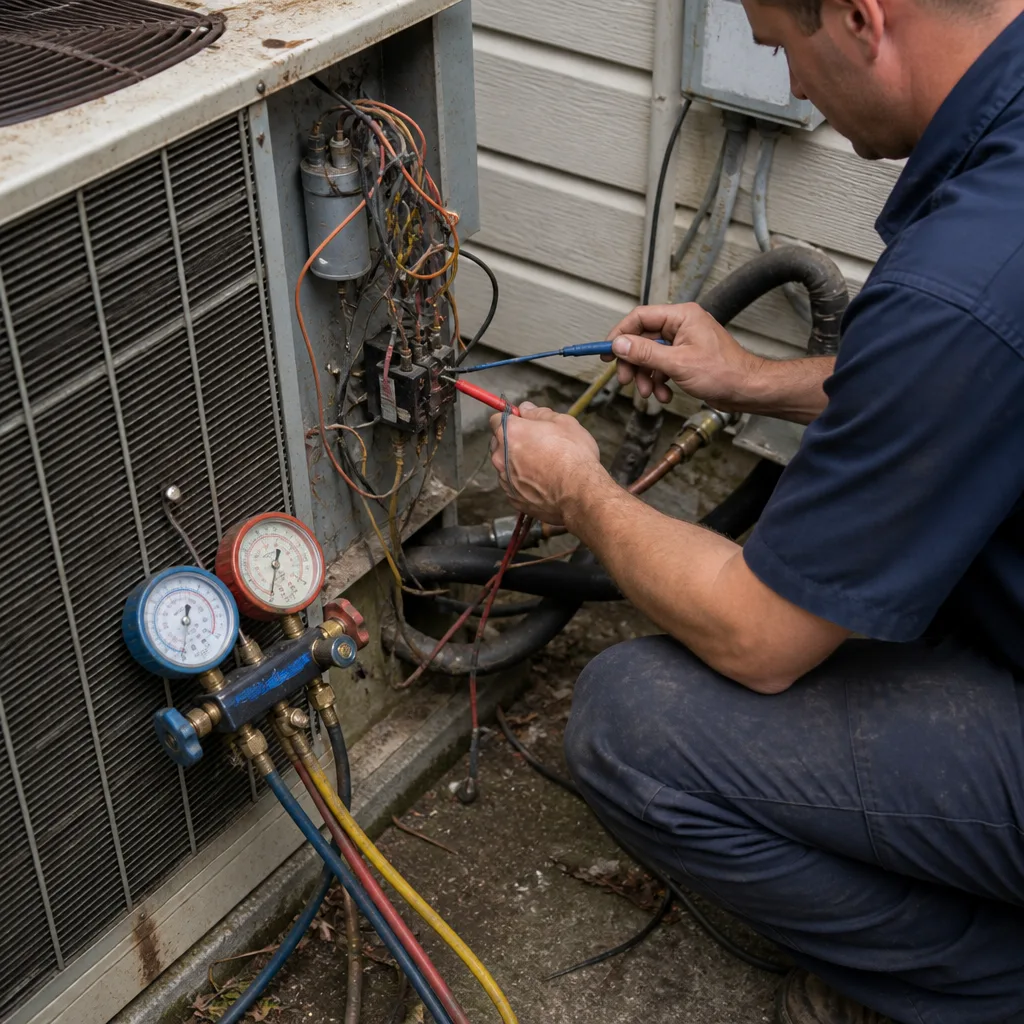 Before
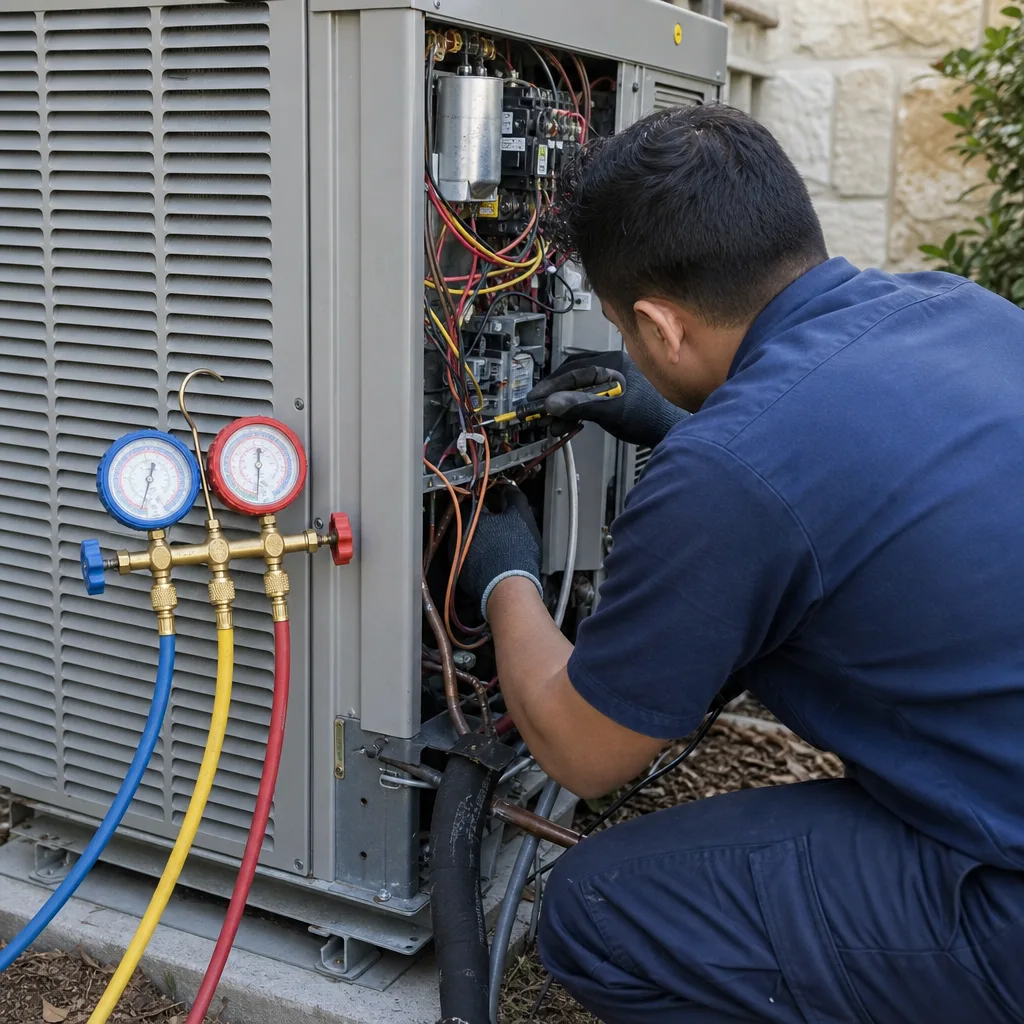 After
After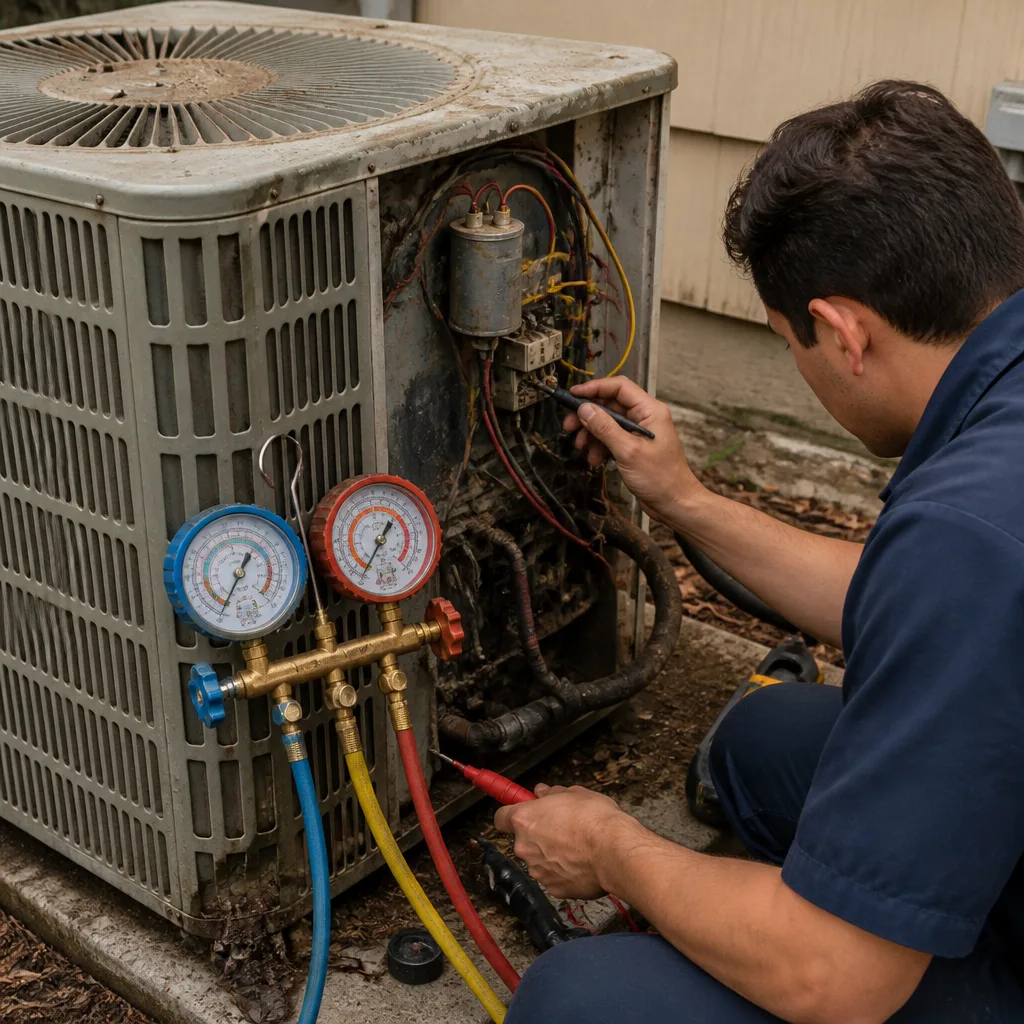 Before
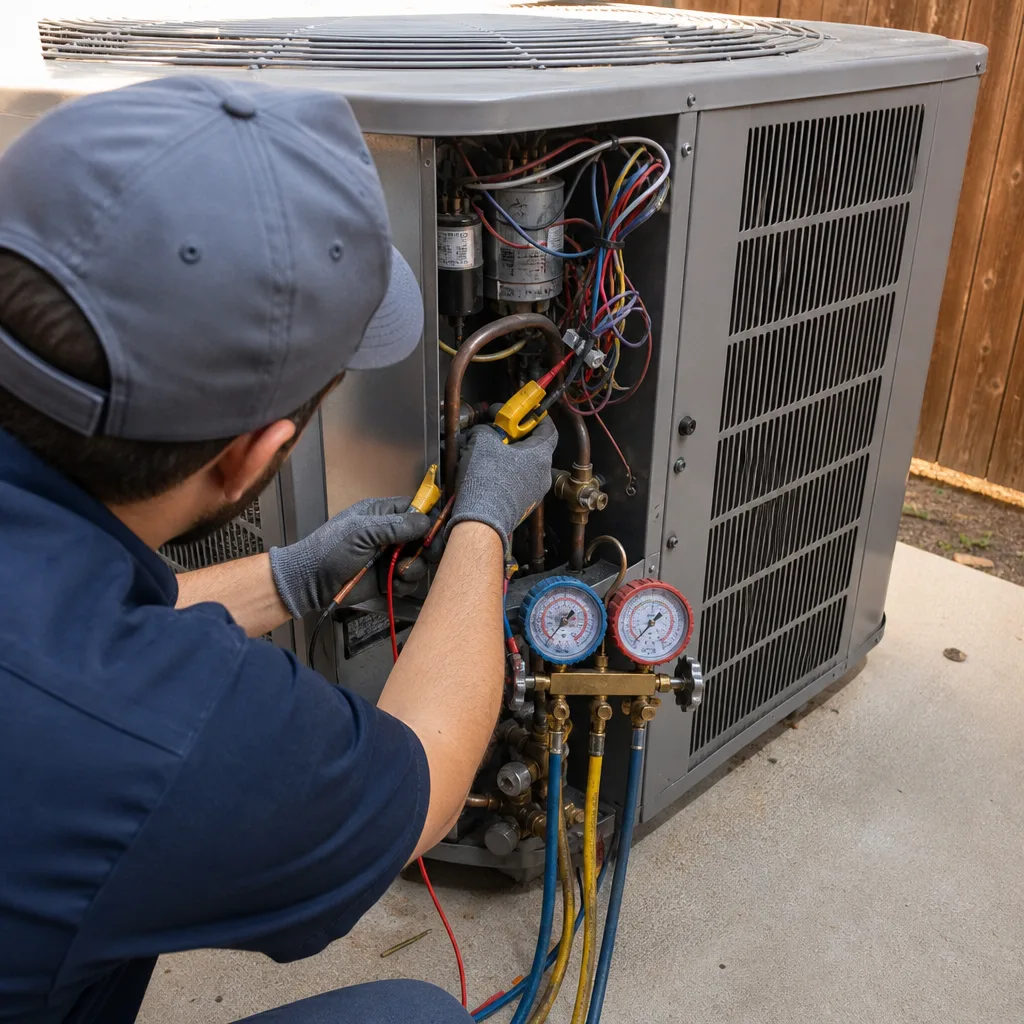 After
After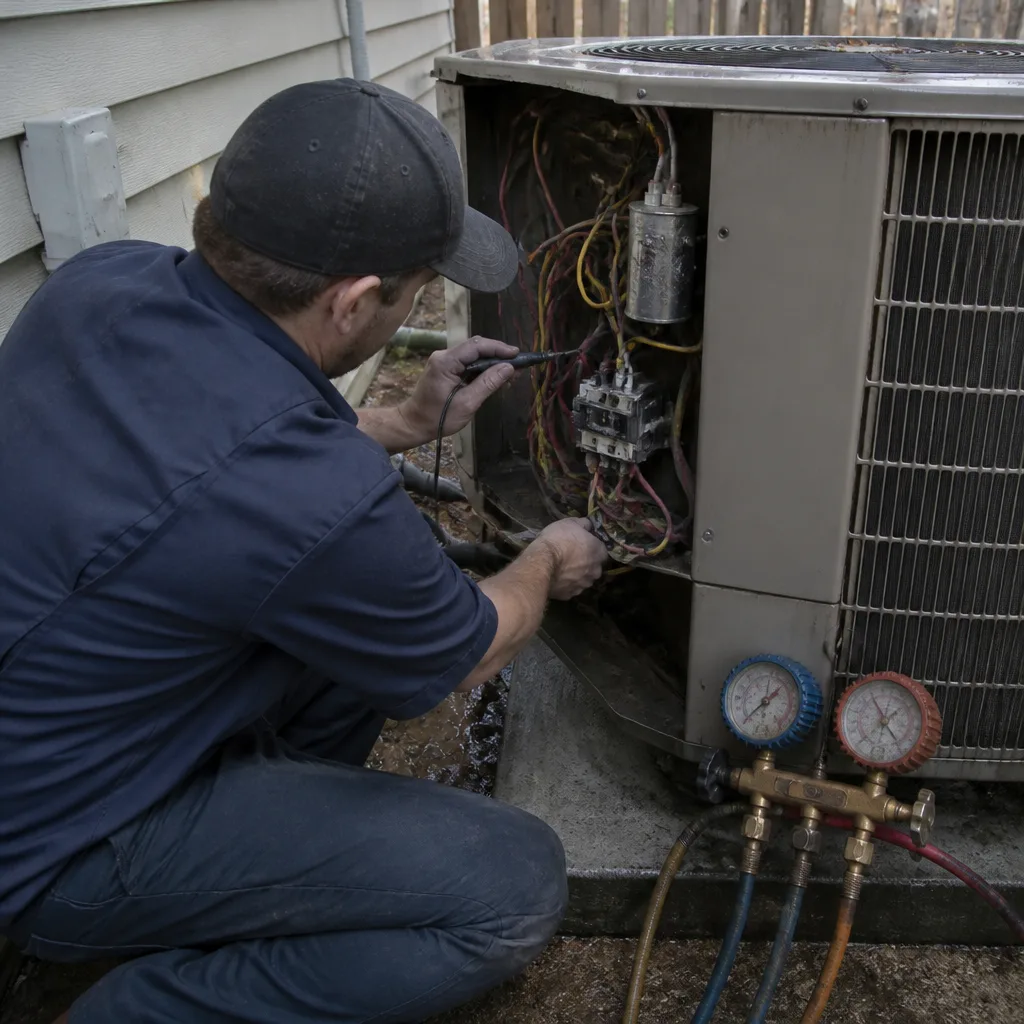 Before
 After
AfterReplacement Cost & What’s Included
In Austin, an American Standard capacitor replacement runs $150 – $320 including the part, the service call, and the labor. The part itself is typically $25 – $70 depending on whether it’s a single-run or dual-run capacitor and the spec range. The rest of the cost is for a technician who actually tests the capacitor under load rather than just eyeballing it, which is what separates a real diagnosis from a guess. Every capacitor we replace gets the written price before we touch a tool, and the repair itself is covered by our 365-Day Done Right Promise. If that capacitor fails inside a year, we come back and replace it at no charge.
A note on what drives the range: a single 35/5 dual capacitor on an accessible condenser is quick and on the lower end. A unit where the capacitor is buried behind control boards, or an older American Standard system that needs a universal replacement with wiring adapters, lands higher. We never pad the bill with mystery fees. The price we hand you before the work starts is the price you pay.
DIY or Call Us?
Capacitors store a charge even after the power is off, and a miswired capacitor can send 440 volts through your body or short out a compressor that costs $3,500 to replace. We say plainly: the safest owner-level move is to kill the breaker, remove the condenser panel, and take a clear photo of the capacitor label so you can confirm the spec before we arrive. If you see a bulging can or oil stains, you know it failed and the job is straightforward.
Where DIY goes sideways in Austin is when owners buy a cheap capacitor online with the wrong tolerance, or wire a dual capacitor backward and fry the fan motor. That’s a $300 capacitor job turned into an $1,800 motor and capacitor replacement in about six seconds. We make the same trip for $150 to $320, and the work is guaranteed in writing. Call (361) 204-1605 if you’d rather not find out how many ways a capacitor can bite.
FAQs
In Austin’s heat, plan on five to seven years for the original capacitor and often two to four for cheaper aftermarket ones. Our summers run the condenser every afternoon for months, and sustained high head pressure ages capacitors faster than the national average.
A capacitor can’t be repaired. The dielectric inside degrades chemically, and once the can swells or the microfarad reading drifts more than 5%, the only correct fix is replacement with a properly matched part. Call (361) 204-1605 for a quick confirmation and a free estimate.
The actual replacement takes 30 to 45 minutes on most American Standard units. We test the new capacitor’s microfarad reading before installation, test it under load afterward, and check the contactor while we’re in the cabinet since capacitor and contactor failures often appear together.
We stock the common American Standard capacitor sizes on our trucks, including 35/5, 40/5, 45/5 dual-run and 35µF, 45µF single-run units. Uncommon specs might require a same-day trip to the supply house, but we tell you that before you commit.
Written by Victor Mancini, Owner & Lead HVAC Technician, Cold Harbour Heating and Air Austin at Cold Harbour Heating and Air Austin, serving Austin and nearby areas.