
Last updated October 16, 2026
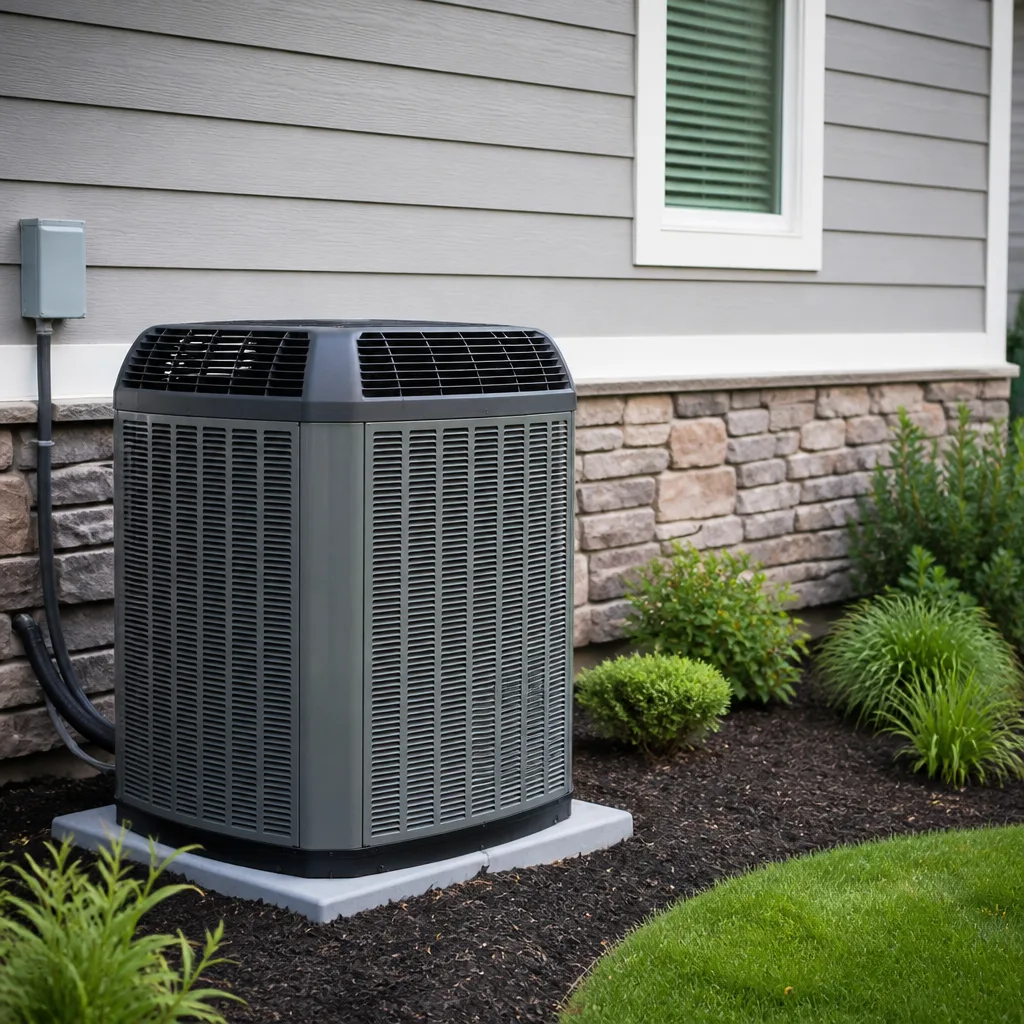 AC repair
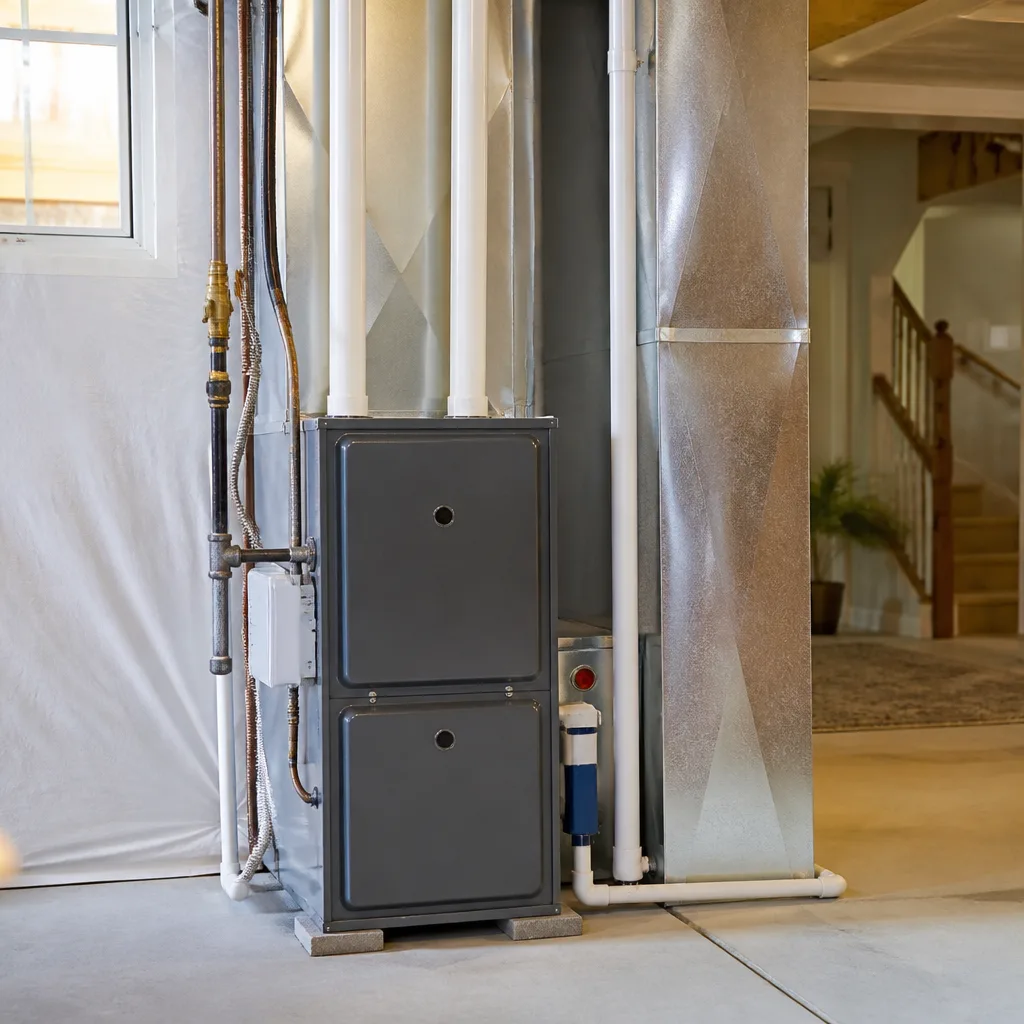 Furnace & heating
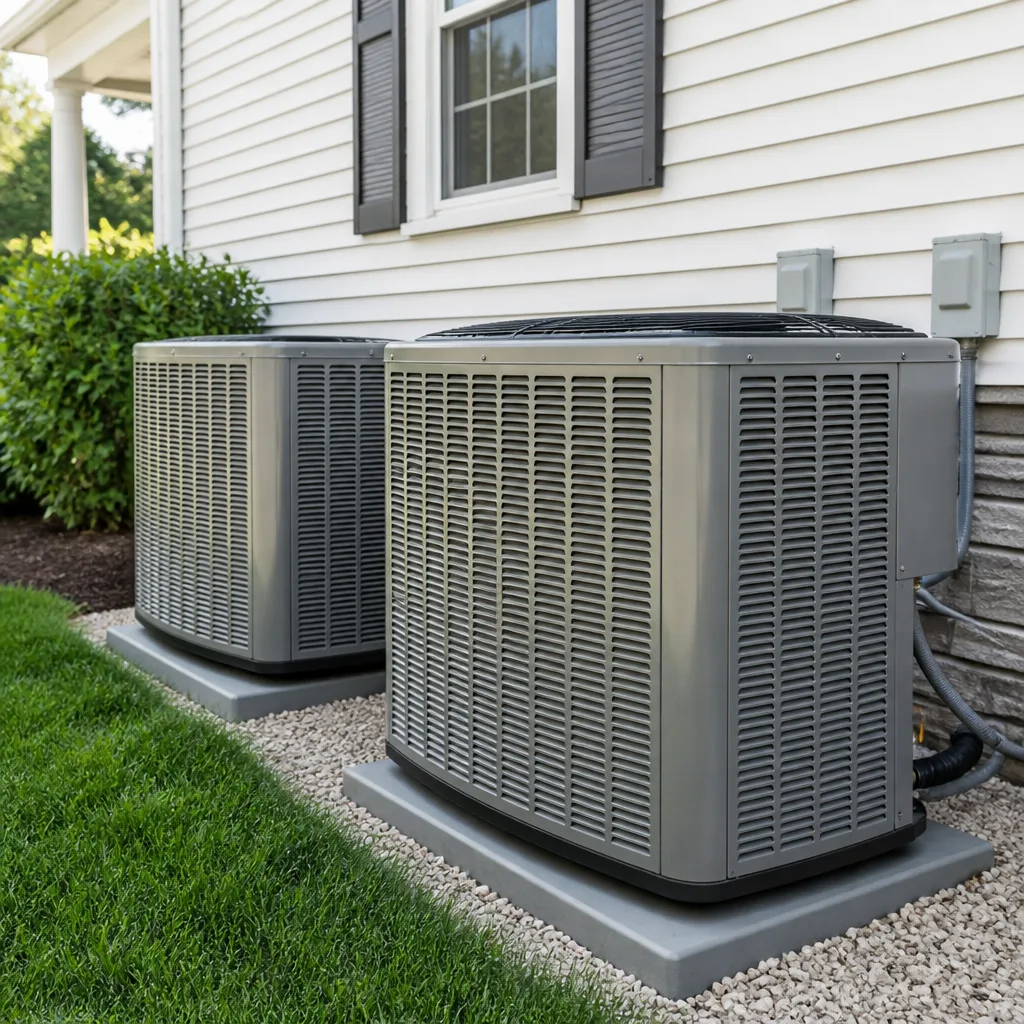 Heat pumps
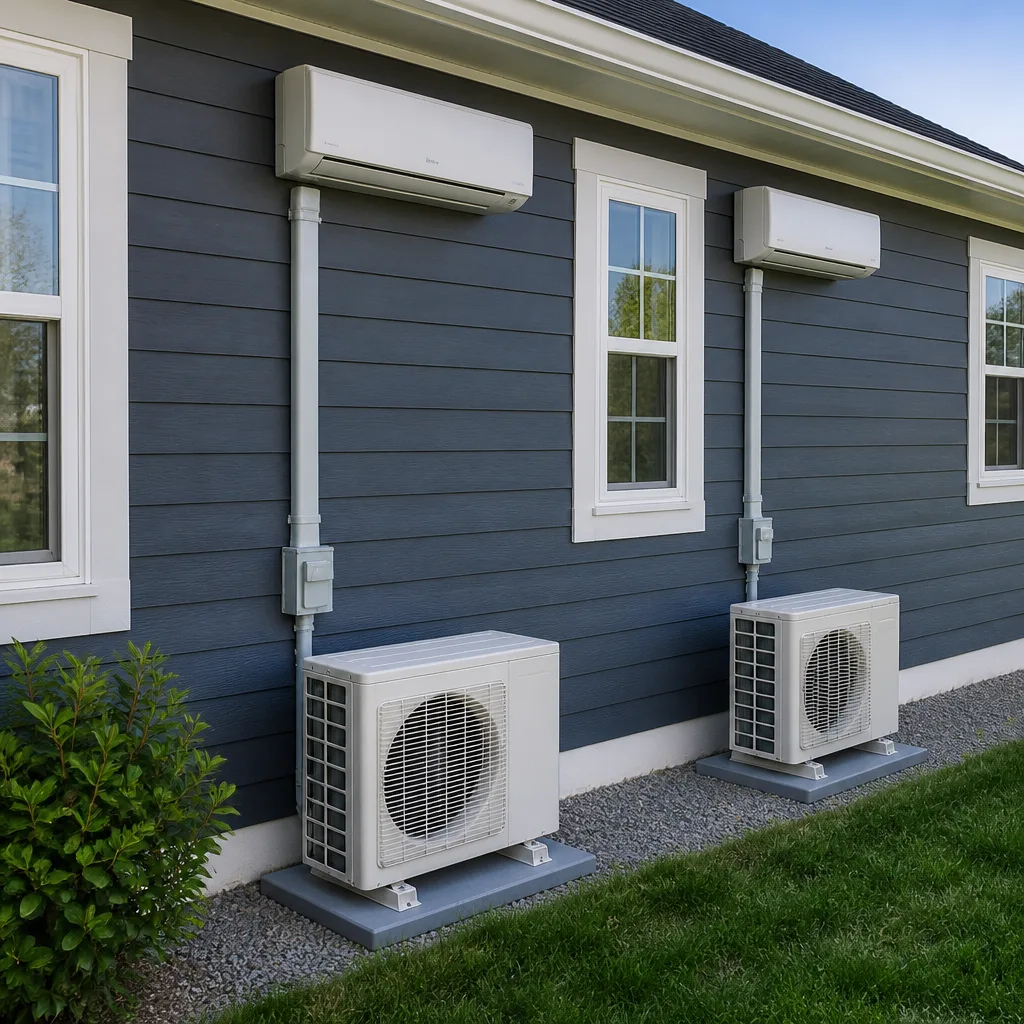 Ductless mini splits
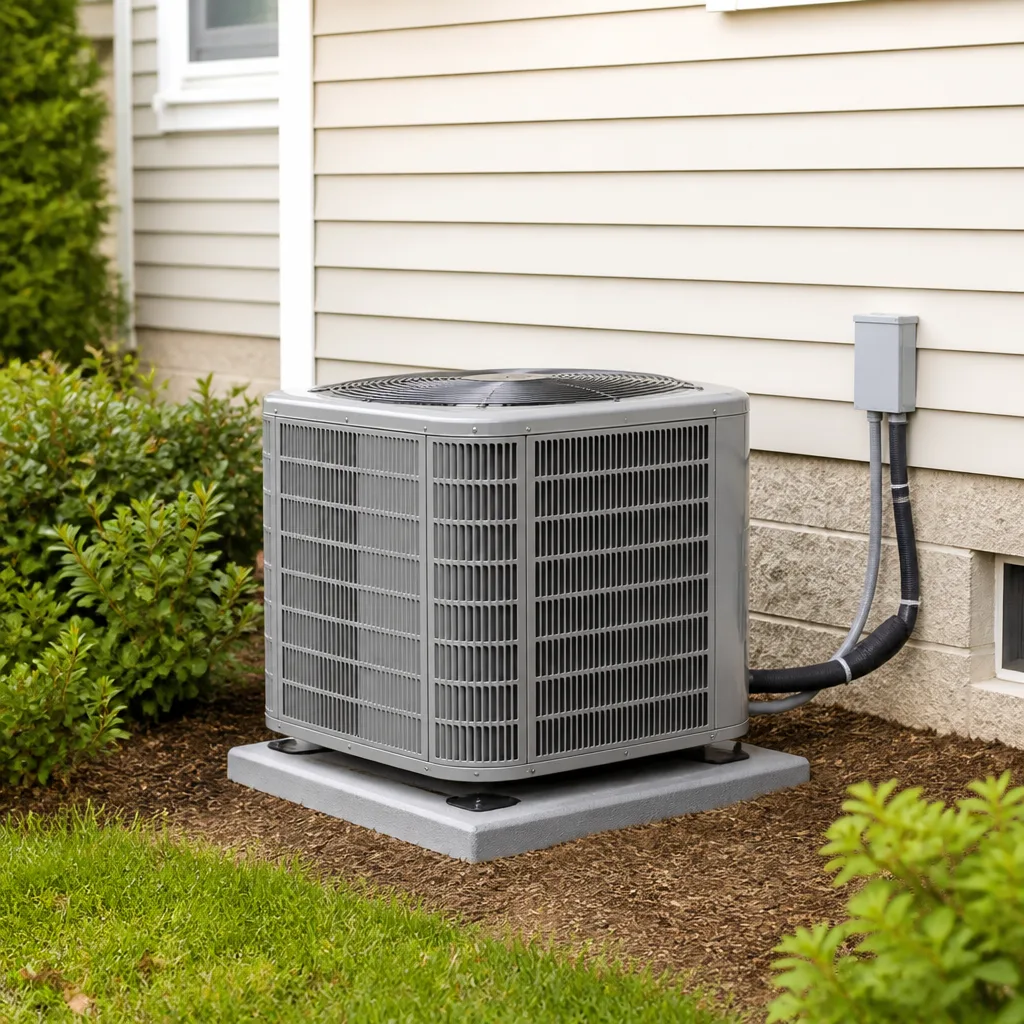 Carrier
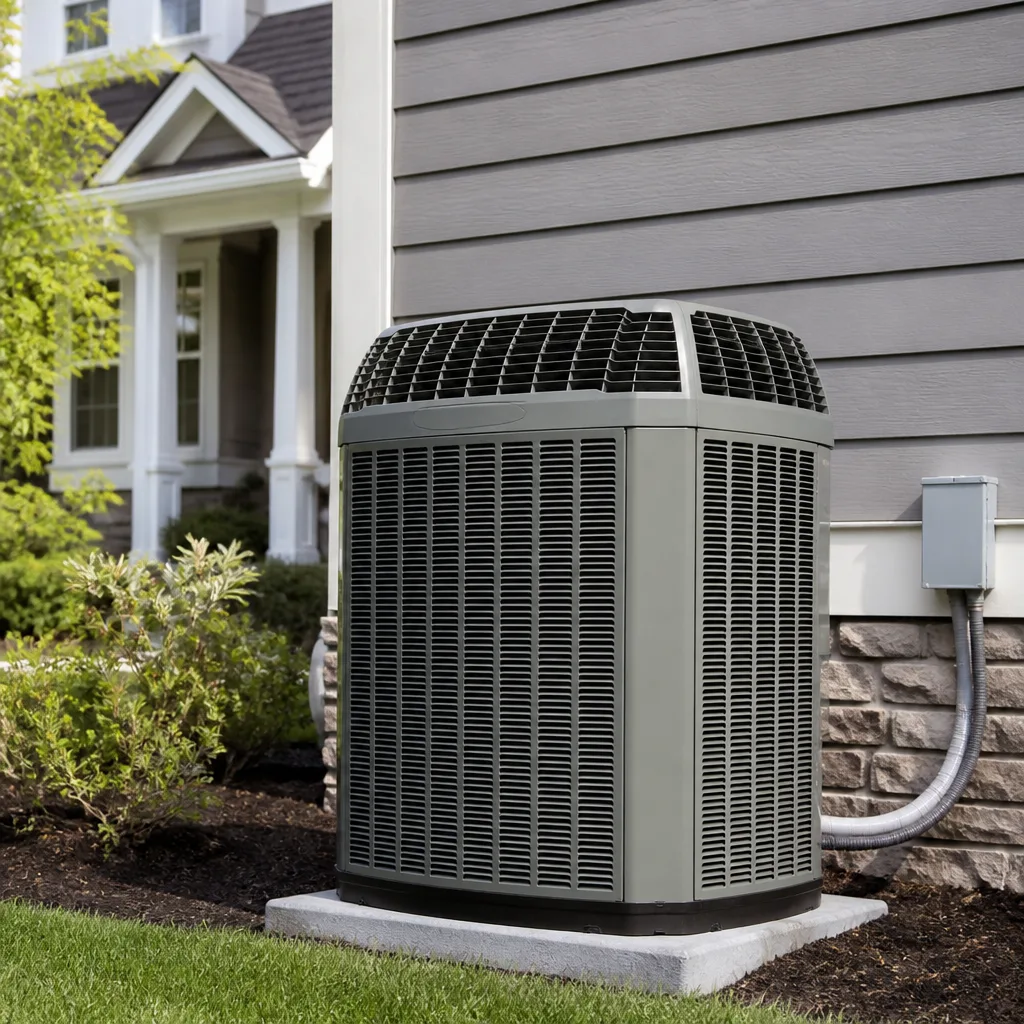 Trane
Trane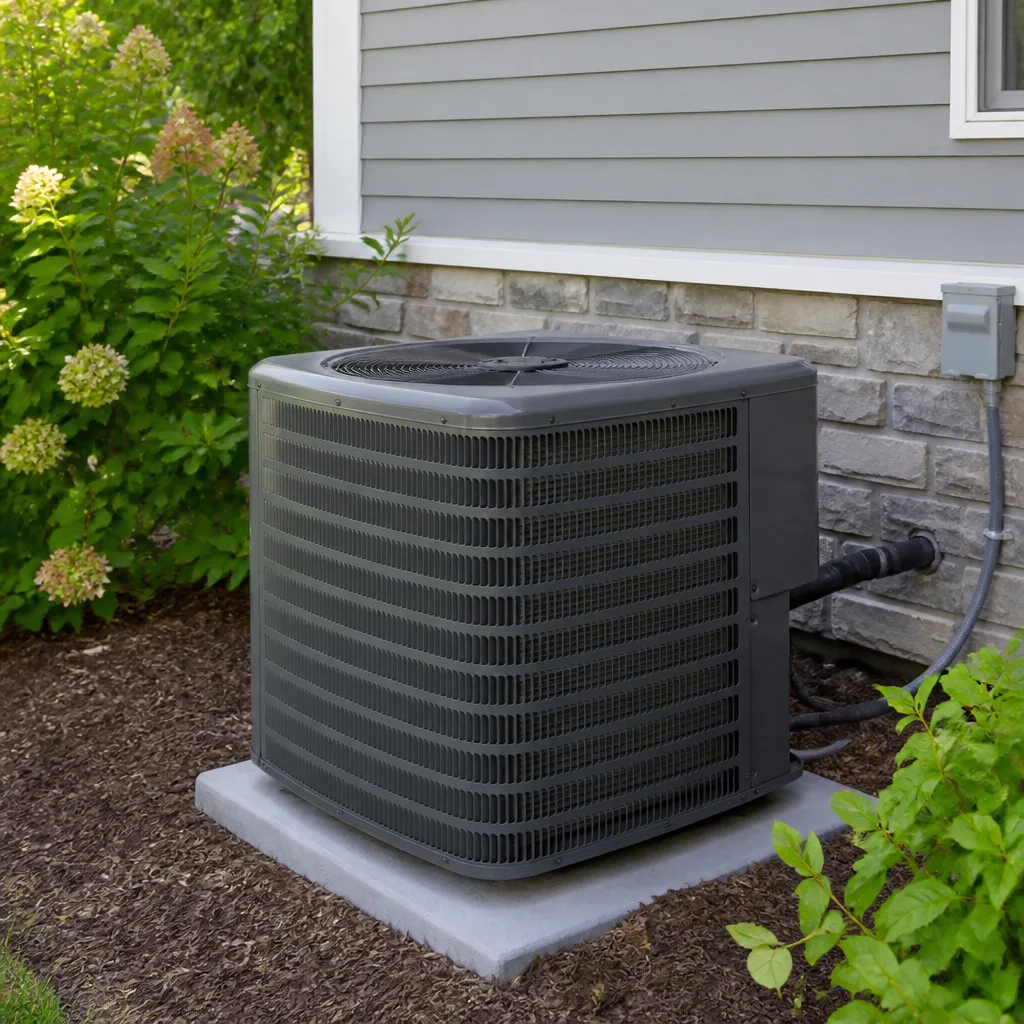 Goodman
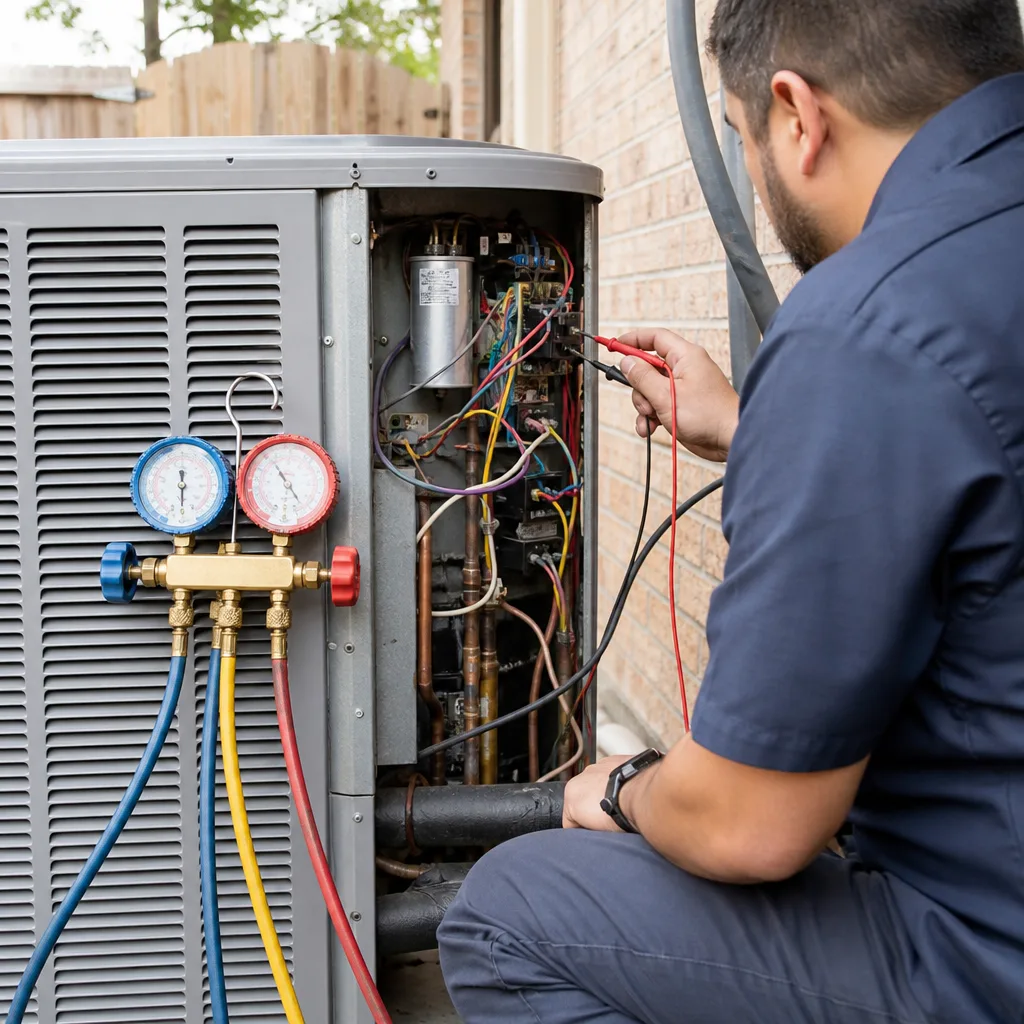
Seasonal tune-up and full diagnostic on your Carrier, Trane, or Goodman system - readings shown to you before any repair is proposed
Diagnosis first, numbers second - you approve the repair price before a single part goes in.
Get your free estimateThe Complete Guide to HVAC in Austin
Austin averages more than 100 days above 90°F every year, yet most HVAC manufacturers’ sizing tables were built on climate data from cities that rarely crack 85. That mismatch is one reason so many Austin systems short-cycle, struggle with humidity, and wear out five years early. This guide covers everything a Central Texas homeowner needs to know: what to pay, when to repair versus replace, how Austin’s soil and humidity change the rules, and what written guarantees actually protect you when a repair fails. If you’ve ever wondered why your AC runs constantly in May or why your August electric bill doubled, this is the guide for you.
Quick Answer
HVAC in Austin is different from anywhere else: the equipment you choose, the way it’s sized, and the guarantees you get in writing matter more here than in most of the country because of extreme heat, high humidity, and clay-heavy soil. A quality AC repair in Austin typically runs $180 – $650 depending on the part, while a full system replacement usually lands between $7,000 and $14,000. Your best protection is a written repair guarantee and a load calculation that accounts for Austin’s humidity, not just its temperature.
Styles & brands we work with
Table of Contents
- Why Austin’s Climate Breaks the National HVAC Playbook
- Manual J Load Calculations: What They Are and Why Austin Needs Them Done Differently
- Caliche, Clay, and Ductwork: Why Your Slab Foundation Affects Your Airflow
- The Difference Between Labor Warranties, Parts Warranties, and Repair Guarantees
- SEER2 Ratings and the Real Payback Math at Austin Electricity Rates
- Austin Energy Rebates: What the Paperwork Actually Looks Like
- Repair or Replace: How to Make the Call on an Aging System
- What a Real Maintenance Visit Should Include (and What It Should Cost)
Why Austin’s Climate Breaks the National HVAC Playbook
Here’s what national HVAC guidelines get wrong about Austin: they treat cooling as a temperature problem. Austin’s real challenge is latent heat load, which is the energy required to remove moisture from the air. A humid 88°F afternoon in Austin can demand nearly as much cooling work from your system as a dry 98°F afternoon in Phoenix, because your AC has to condense water out of the air before it can meaningfully lower the temperature. When a contractor sizes equipment using rules of thumb built for drier climates, the result is a system that satisfies the thermostat quickly but never runs long enough to dehumidify. Homeowners feel that as cold-but-clammy air in July, or worse, they run the thermostat down to 68°F chasing comfort the equipment was never sized to deliver.
We’ve also seen how Austin’s shoulder seasons create a unique strain. March through May and late September through November bring 30-degree temperature swings within a single day. Your system cycles between heating and cooling in the same week, sometimes the same day. That switching demands clean electrical connections, a drain pan that isn’t cracked, and a blower motor that isn’t covered in a year of dust and pet hair. The strain doesn’t cause failures immediately; it accumulates and then lands on the hottest afternoon of the year so far, which is exactly when every HVAC company in the city is already booked solid.
Austin homeowners who get the longest service life out of their equipment tend to follow one pattern: they size for humidity, they service before the first 95-degree day, and they don’t defer small repairs because the system “still works.” A weak capacitor in February becomes a dead compressor in July if it’s ignored long enough.
Manual J Load Calculations: What They Are and Why Austin Needs Them Done Differently
A Manual J load calculation is the industry-standard method for figuring out exactly how much heating and cooling capacity a house needs. It accounts for square footage, window orientation, insulation levels, air leakage, ceiling height, and the number of people living in the home. Done correctly, it tells you whether you need a 3-ton system, a 4-ton system, or something in between, and it’s the only defensible way to size equipment. Guessing based on square footage alone is how homeowners end up with oversized systems that short-cycle or undersized systems that run nonstop from June through September.
In Austin, a proper Manual J has to account for two local factors that generic software defaults often miss. First is the latent load from our humidity. A Manual J that only looks at dry-bulb temperature will undersize the cooling coil for the moisture removal Austin demands. Second is the orientation and construction style: a 1970s ranch in Crestview with original single-pane windows behaves nothing like a 2015 build in Mueller with spray foam and low-E glass, even if both are 2,100 square feet. The load calc has to be run on the actual house, not a template.
What a Load Calculation Should Include for an Austin Home
- Measured window area and orientation, not an estimate. West-facing windows in Austin pick up brutal evening heat from March through October.
- Actual insulation values in the attic and walls. A house built before 1980 may have R-11 in the attic when current Austin code expects far more, and that changes everything about the heat load.
- Air leakage assessment. Older Austin homes often have leaky ductwork and unsealed penetrations that can add 20 – 30% to your effective load.
- Latent heat adjustment. Your contractor should be able to tell you the grains of moisture they’re designing for. If they can’t explain latent load in plain English, that’s a red flag.
When we run load calculations for Austin homes, we routinely find systems that were oversized by half a ton or more on the original install. The previous owner’s contractor sized it with a simple square-footage chart designed for a national average, not for a house sitting at 30°17’N where the dew point in July sits comfortably in the low 70s. Oversized equipment costs more up front, uses more electricity, and ironically leaves the house less comfortable because it never runs long enough to pull humidity out of the air.
If you’re getting quotes for AC installation in Austin and one contractor wants to replace your 4-ton unit with another 4-ton unit without ever measuring your windows or asking about insulation, get a second opinion. The right answer might be a 3.5-ton system with a whole-home dehumidifier, which often costs about the same as the oversized unit and delivers dramatically better comfort.
Caliche, Clay, and Ductwork: Why Your Slab Foundation Affects Your Airflow
Most of Austin sits on a soil profile that expands when wet and contracts when dry. This is the same expansive clay that cracks sidewalks and shifts slab foundations, and it does the same thing to ductwork. In pier-and-beam homes, the issue is visible: ducts sag between joists as the structure settles and shifts. In slab-on-grade homes, which make up a huge share of Austin’s housing stock, ducts run through the foundation or in the attic, and settling can quietly separate joints, compress flex duct, or create tears that leak conditioned air into the dirt or the attic.
What does that mean for homeowners? Leaky ductwork is one of the most common and least discussed reasons Austin systems underperform. The Department of Energy has estimated that typical duct systems lose 20 – 30% of conditioned air to leaks, and in Austin’s clay soil, that number can be worse as seasons of wet-dry cycling pull connections apart. You’ll feel it as a bedroom that never gets cool, a hall that’s always drafty, or a system that runs fine but can’t hold 74°F on a 102-degree day.
Signs Your Ductwork Is Leaking
- Some rooms stay 5 – 8 degrees warmer than others, even with all vents open
- Dust builds up unusually fast on furniture, even with a clean filter
- Your summer electric bill is 25% higher than neighbors with similar homes
- The system trips the high-limit switch or freezes the coil in peak heat
- You can hear air hissing from supply boots or see disconnected flex in the attic
Our team has pulled flex duct out of Austin attics that was never properly connected in the first place, or had been chewed through by rodents, or had simply slipped off the boot after years of settle-and-shift cycles. Duct inspection isn’t glamorous work, but it’s often the difference between a 14-SEER system that keeps up and a 16-SEER system that can’t. If you haven’t had the ductwork looked at in five years, start there before replacing equipment. The fix might be $400 in duct sealing and reconnection, not an $11,000 system swap.
The Difference Between Labor Warranties, Parts Warranties, and Repair Guarantees
There are three different types of protection that get called a “warranty” in HVAC, and they cover completely different things. Knowing the difference can save you thousands and a lot of frustration.
- Parts warranty: This comes from the manufacturer and covers a failed component, like a compressor or blower motor, usually for 5 – 10 years. It does not cover the labor to diagnose the problem, remove the old part, and install the new one. Labor can be 40 – 60% of the total repair bill.
- Labor warranty: This is typically offered by the installing contractor and covers the workmanship for a limited window, often one year. If the install was done wrong and that causes a failure, this protects you. If the part just fails on its own after year one, it doesn’t help.
- Repair guarantee: This is a written promise from the company that performed a repair, stating that if the same repair fails within a set period, they’ll come back and fix it at no charge. This is the one that actually protects you when a fix fails at month 11.
Most Austin homeowners we meet can’t tell us what their current protection actually covers. They have a 10-year parts warranty on a compressor, which sounds great, until the compressor fails at year 8 and they learn the labor to replace it is $2,100. The parts warranty covered the part, but the parts warranty didn’t cover the refrigerant, the filter-drier, the evacuation, the brazing, or the eight hours of labor required to handle a compressor burnout properly.
This is where the Kingswell Way comes in. Every repair we complete at Cold Harbour Heating and Air Austin includes the 365-Day Done Right Promise: a written guarantee that if the repair fails within a full year, we return and correct the work at no additional charge. The guarantee is on paper before the technician leaves, not verbal, not conditional. You’ll know exactly what’s covered and for how long. That’s not a parts warranty and not a generic labor warranty. It’s a repair guarantee, and it’s the one that matters most when a capacitor fails in August, three weeks after you paid to have it replaced.
SEER2 Ratings and the Real Payback Math at Austin Electricity Rates
SEER2 is the updated efficiency rating system that replaced SEER in 2023. It measures cooling output per watt of electricity consumed, but under more realistic test conditions than the old standard. A 15-SEER2 unit is roughly equivalent to a 14-SEER unit under the old testing protocol. The minimum for new installations in Texas is now 14.3 SEER2 for split systems, but that’s a floor, not a recommendation.
Here’s the math that matters in Austin. Austin Energy’s residential rate structure means many customers pay between 10 and 14 cents per kilowatt-hour once you include all fees and riders. A 3-ton system in an Austin summer can easily run 2,000 – 2,500 hours per year. Going from a 15-SEER2 system to a 19-SEER2 system might save 800 – 1,200 kWh per year. At 12 cents per kWh, that’s $96 – $144 per year. If the high-efficiency system costs $2,500 more up front, the simple payback is 17 – 26 years, which means you’d likely never recover the premium before the equipment needs replacement.
That doesn’t mean efficiency doesn’t matter. It means you should run the numbers at your actual electricity rate and your actual usage. Some Austin homes run AC from April through October and see 3,000+ cooling hours per year. For those homes, higher SEER2 pays off meaningfully faster. For a house with heavy tree cover, good insulation, and a programmable thermostat, the extra efficiency might be wasted money.
| Scenario | Annual Cooling Cost at 12¢/kWh | 5-Year Savings vs. 15 SEER2 |
|---|---|---|
| 15 SEER2, 2,000 cooling hours | $960 | – |
| 17 SEER2, 2,000 cooling hours | $847 | $565 |
| 19 SEER2, 2,000 cooling hours | $758 | $1,010 |
| 15 SEER2, 3,000 cooling hours | $1,440 | – |
| 19 SEER2, 3,000 cooling hours | $1,137 | $1,515 |
The practical takeaway: if your Austin home runs the AC heavily and you plan to stay in the house for a decade, a 17 – 18 SEER2 system with a variable-speed blower is a sweet spot. It delivers real comfort benefits, including better dehumidification at low speeds, and it will pay you back. If you’re in a shaded, modest house and you run the AC moderately, a 15 – 16 SEER2 system installed correctly will serve you fine. Proper sizing and duct sealing save more energy per dollar than chasing a higher SEER2 number on the brochure.
We work on all major residential brands including York, Daikin, and American Standard, so we can advise on efficiency across manufacturers without a sales bias toward one nameplate.
Austin Energy Rebates: What the Paperwork Actually Looks Like
Austin Energy runs one of the more homeowner-friendly rebate programs in Texas, but the ads can oversimplify what qualifies. Rebates for high-efficiency AC and heat pump installations are typically issued as a bill credit or a check after the equipment is installed and verified, not as an instant discount at the point of sale. That matters because the rebate amount doesn’t reduce your upfront out-of-pocket cost. You need to plan for the full invoice amount, then wait for the rebate to land.
What Actually Qualifies
- Equipment efficiency thresholds. Austin Energy requires equipment to meet specific SEER2 and EER2 ratings. A 15-SEER2 unit usually won’t qualify for anything. The rebate typically kicks in at 16 SEER2 or higher, with higher tiers earning more.
- Contractor participation. The installing contractor must be on Austin Energy’s approved list and must submit documentation on your behalf. A homeowner can’t install the unit themselves and claim the rebate.
- AHRI certification match. The indoor coil, outdoor unit, and any furnace or air handler must be matched and certified through AHRI (Air-Conditioning, Heating, and Refrigeration Institute). An unmatched coil can void the rebate even if both components individually meet the efficiency ratings.
- Post-install verification. Some rebates require a verification visit or performance test. Don’t throw away any paperwork you receive after the install until the rebate shows up on your bill.
The rebate amount varies by program year, but we’ve seen Austin homeowners receive $300 – $1,500 depending on equipment tier and whether they’re installing a straight AC or a heat pump. Heat pumps often carry higher rebates because Austin Energy wants to encourage electric heating over gas. If you’re considering a furnace replacement, it’s worth pricing a heat pump instead and factoring in both the rebate and the lower operating cost during Austin’s three mild months of winter.
One more caveat: rebates are not the same as the manufacturer incentives you see advertised, and they’re not the same as a good installation price. A contractor who inflates the install price by the rebate amount isn’t doing you any favor. Get the written price first, then discuss rebates separately.
Repair or Replace: How to Make the Call on an Aging System
Austin kills equipment faster than most climates because of the run-hours. A system in Minneapolis might run 500 cooling hours per year. In Austin, it might run 2,500. That means a 10-year-old Austin AC has seen as much wear as a 25-year-old system in a mild-climate city. The decision to repair or replace should be made against that backdrop.
When Repair Makes Sense
- The system is under 10 years old and the repair is under $600
- The failed part (capacitor, contactor, igniter, pressure switch) is a wear item that doesn’t indicate broader system decline
- The compressor is under manufacturer warranty and the system has no history of refrigerant leaks
- The repair comes with a written guarantee, so you’re not gambling the repair cost
When Replacement Is the Smarter Money
- The compressor is out of warranty and the repair quote exceeds $2,500
- The system uses R-22 refrigerant, which is being phased out and priced accordingly
- There’s a refrigerant leak in the evaporator coil and the system is 12+ years old (you’ll likely pay for the coil replacement and later for the compressor, and you’ll wish you had replaced both at once)
- The system is oversized or the ductwork is failing, and you’re already spending money on a band-aid fix
- Repair costs over the last two years have exceeded 40% of a new system’s installed price
The “repair or replace” question is almost never an emergency decision, even though it always feels that way in August. The smart play is to get a written repair quote, a written replacement quote, and the recommendation from a technician who isn’t paid on commission. For help deciding, see our DIY vs Professional HVAC: The Austin Homeowner’s Decision Guide. We’ve told Austin homeowners to repair a 9-year-old system and we’ve told homeowners to scrap a 13-year-old system that was nickel-and-diming them. The math changes based on refrigerant type, system age, and what the repair guarantee covers.
For furnace repairs specifically, the calculation is different. Austin furnaces run relatively few hours per year compared to northern climates, so they often last longer than the AC paired with them. A furnace repair in Austin might make sense on a 15-year-old unit if the heat exchanger checks out, because the furnace simply hasn’t seen the runtime that would justify replacement. Get the inspection done and make the call from there.
What a Real Maintenance Visit Should Include (and What It Should Cost)
Austin homes need two maintenance visits per year: one in early spring before the cooling season kicks in, and one in early fall before the first real cold snap. That schedule keeps the system ready for the two stretches of the year that actually stress it.
But not all maintenance visits are equal. A “tune-up” that costs $39 and takes 20 minutes often doesn’t include much beyond changing a filter and checking refrigerant pressures. Here’s what a real maintenance visit should include:
- Capacitor testing under load, not just a visual check. Weak capacitors are the number one cause of early-summer failures we see in Austin.
- Refrigerant charge verification against manufacturer spec. An undercharged system runs hot and inefficient; an overcharged one is worse.
- Condensate drain clearing and pan inspection. Austin humidity means a lot of water moves through that drain. A clogged drain in July will put water through your ceiling in August.
- Electrical connection tightening at the contactor, disconnect, and breaker. Loose connections cause heat, and heat causes failures.
- Temperature split measurement across the coil, confirming the system is doing what the thermostat says it’s doing.
- Duct inspection for sagging, disconnection, or tears, especially in the attic.
- Written report of what was found, what was corrected, and what’s likely to fail in the next 12 months. This is the document that helps you plan for replacement before you’re forced into it.
Expect to pay $120 – $250 per visit for a real maintenance inspection from a company that does all of the above. If you’re not sure how to choose one, read How to Hire a HVAC Contractor in Austin: A Step-by-Step Guide. The cheap tune-up specials are loss-leaders designed to get a technician in the door to sell you something. We don’t play that game, and our technicians aren’t paid on what they sell. The Kingswell Way says: say the price before the work, show up in the window given, leave the place cleaner than found, put the guarantee in writing, and come back if it fails.
Common Mistakes to Avoid
- Ignoring humidity. Setting your thermostat to 72°F in a house that’s still humid means your system is working hard and you’re still uncomfortable. Address dehumidification with proper sizing and possibly a whole-home dehumidifier.
- Deferring small repairs because the system still runs. A failing capacitor or a clogged drain won’t necessarily shut the system down, but it will strain the compressor and shorten its life. We see this pattern constantly in Austin.
- Replacing equipment without checking the ductwork. A new 18-SEER system connected to leaking, sagging ducts won’t deliver the efficiency you paid for. Seal and inspect ducts first.
- Choosing a contractor based on the lowest bid. A $400 difference on an install might mean the difference between a load calculation and a guess, between a matched AHRI system and a mismatched coil, and between a written guarantee and a handshake.
- Waiting until August to service the AC. Every HVAC company in Austin is booked in August. The time to catch a weak compressor is March or April, when schedules are open and the part is in stock.
- Assuming the parts warranty covers labor. It doesn’t. A compressor under a 10-year parts warranty can still cost you $2,000+ in labor if it fails at year 9. Know what your coverage actually includes.
- Oversizing the replacement system. Bigger is not better. An oversized system short-cycles, leaves humidity in the air, and wears out faster. Insist on a Manual J load calculation.
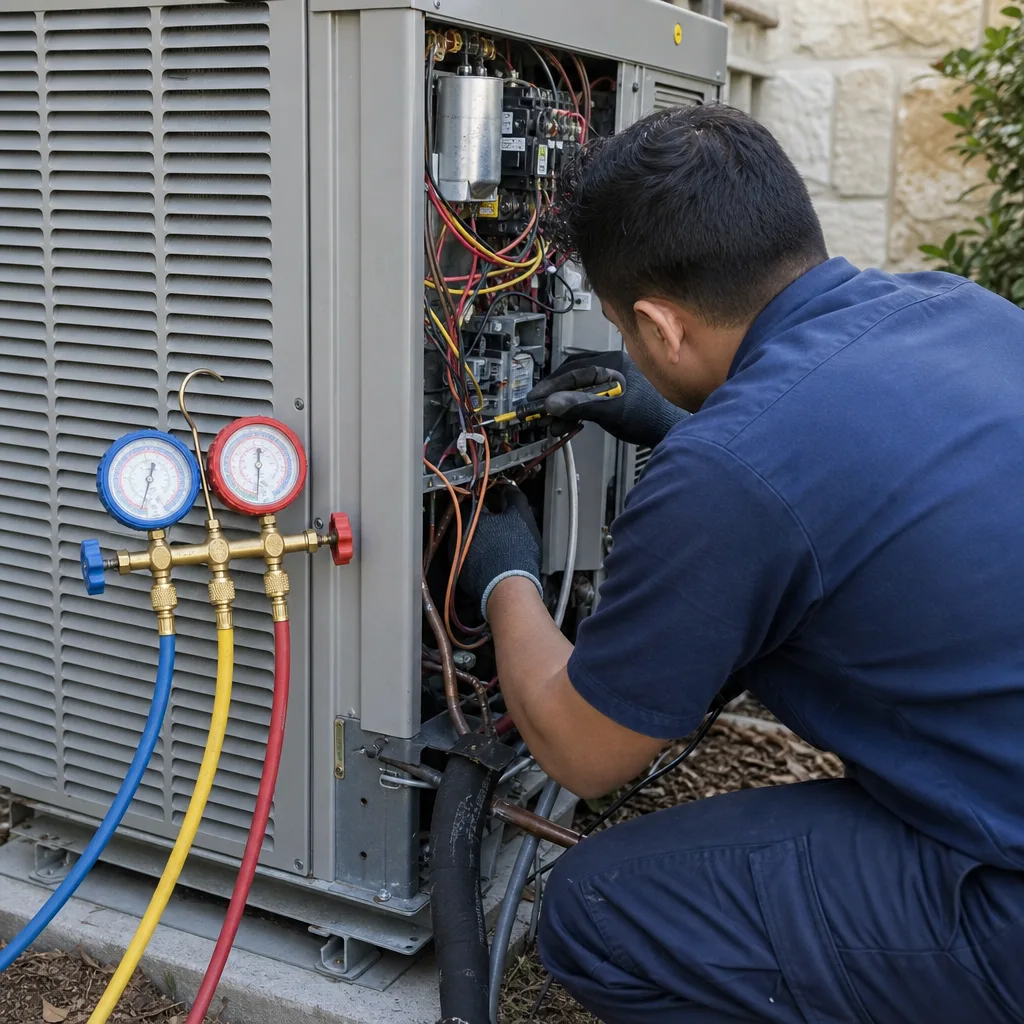
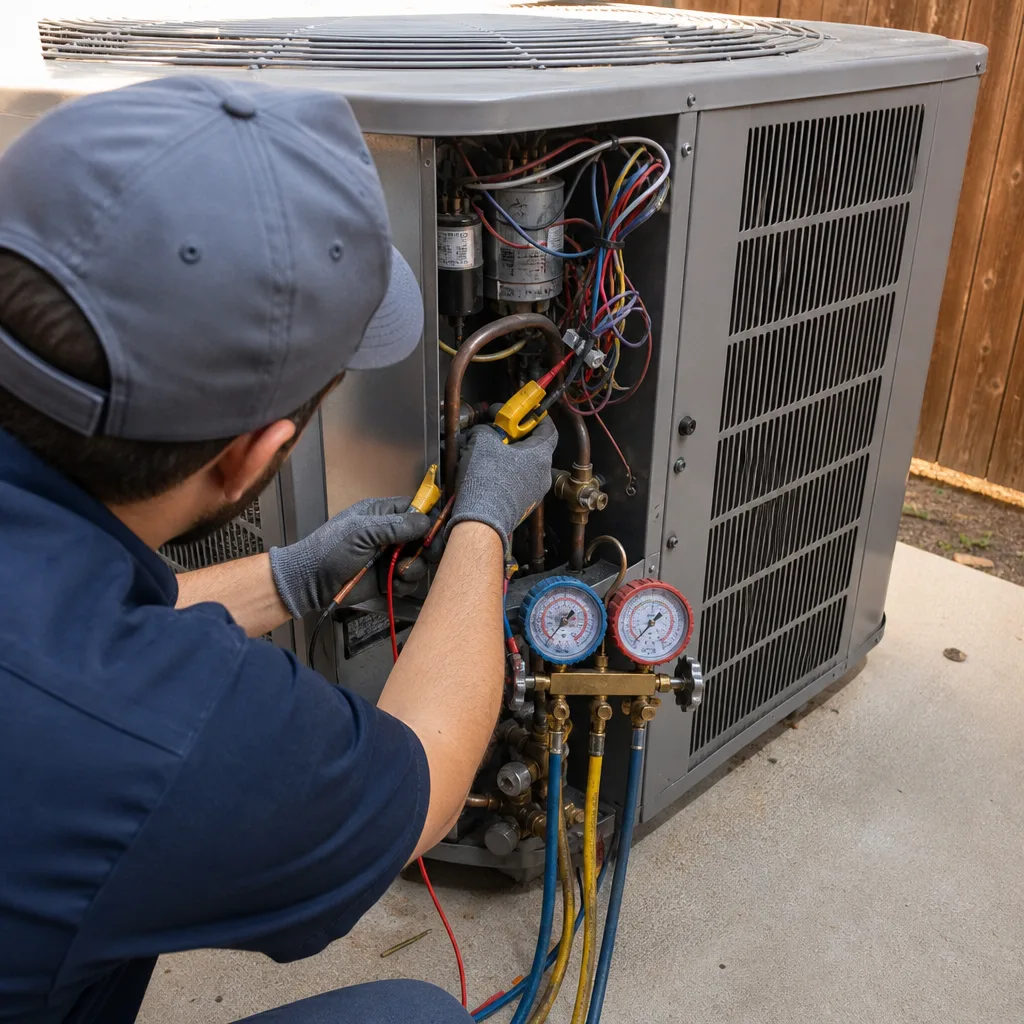
See the difference
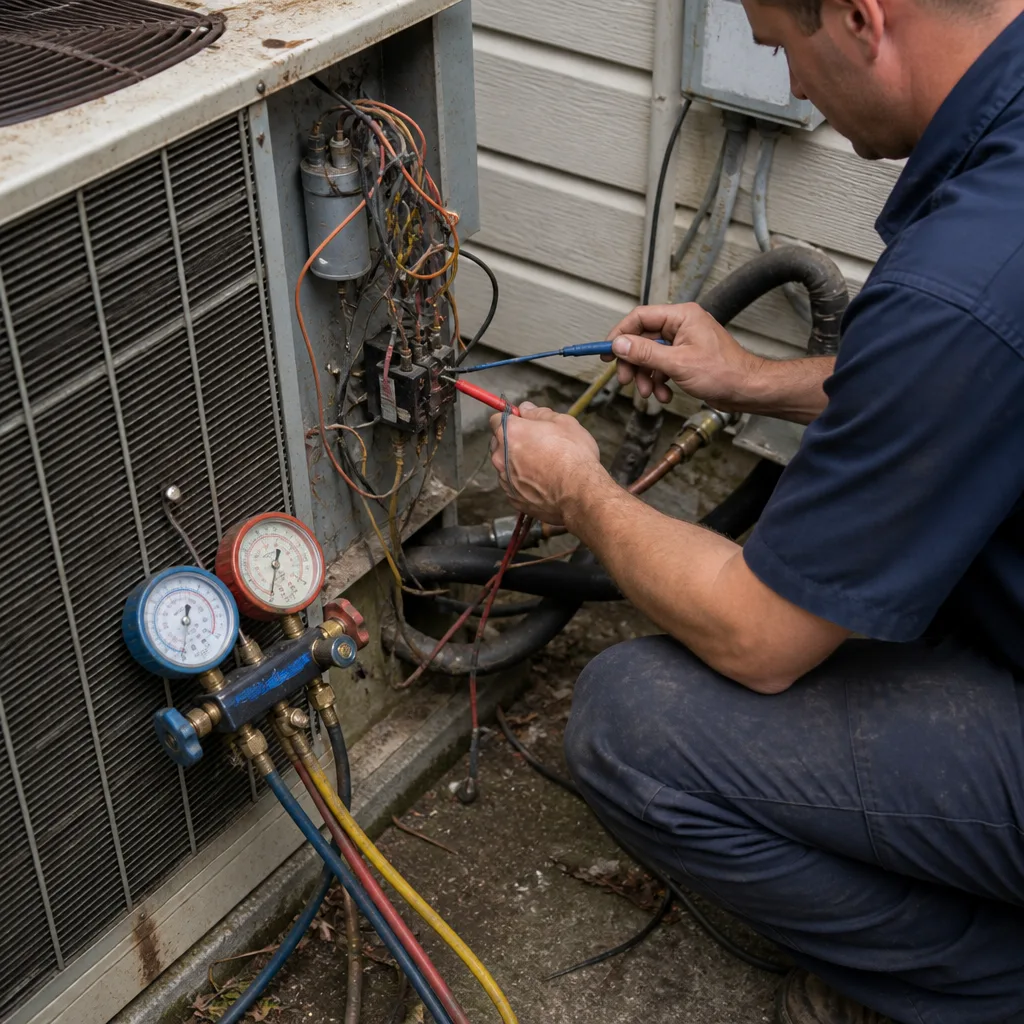 Before
 After
After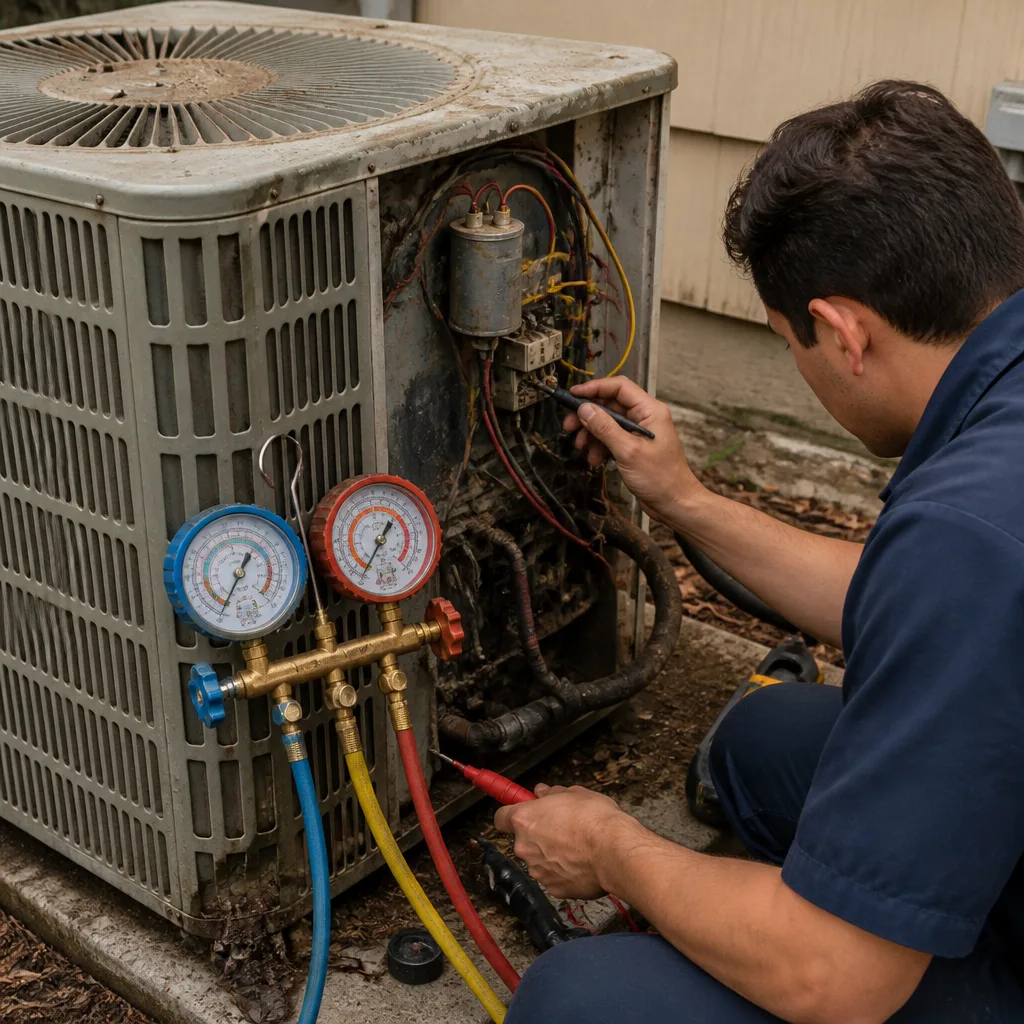 Before
 After
After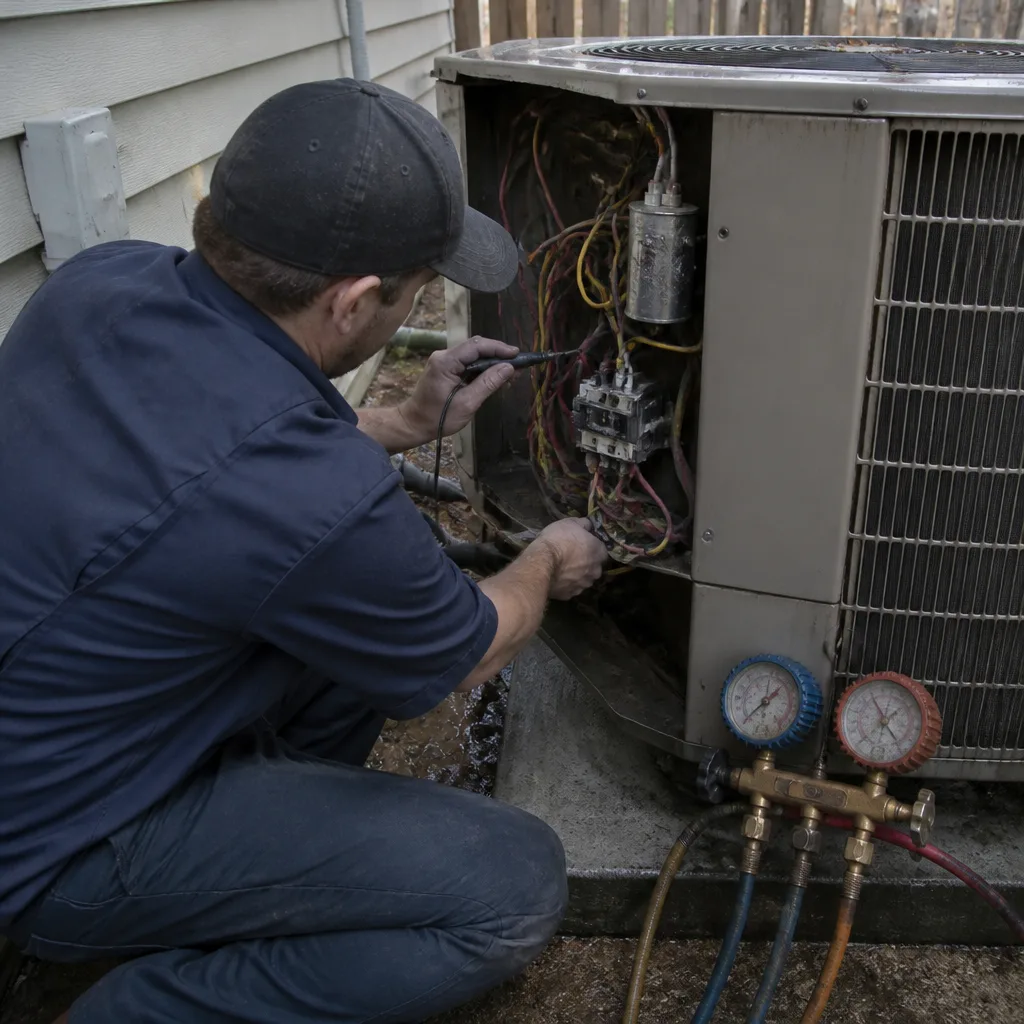 Before
 After
AfterWhen to Call a Professional
Some things are safe to handle yourself: changing filters monthly, keeping the outdoor unit clear of leaves and debris, checking that vents aren’t blocked by furniture. But if you notice warm air blowing while the thermostat calls for cooling, ice forming on the refrigerant lines, water pooling around the indoor unit, a burning smell from the vents, or a system that runs constantly without holding temperature, call a professional. Electrical troubleshooting and refrigerant handling are not DIY territory, and in Austin’s heat, a failed system is more than an inconvenience; it’s a health risk for household members who can’t tolerate extreme heat. Cold Harbour Heating and Air Austin offers free estimates in Austin. Call (361) 204-1605 and a live person will answer, day or night.
Frequently Asked Questions
Most AC repairs in Austin run between $180 and $650, with common items like capacitor replacement at $180 – $280 and more involved jobs like coil replacement running higher. The final price depends on the part, the refrigerant involved, and whether a written guarantee is included. Call (361) 204-1605 for an exact quote; estimates are free.
Repair makes sense if the system is under 10 years old, the repair is under $600, and the compressor is still under warranty. Replacement makes sense if the system is 12+ years old, the repair exceeds $2,500, or you have a refrigerant leak in the coil. We’ll give you written quotes for both and let you decide without pressure.
Realistically, a properly maintained AC system in Austin lasts 12 – 15 years, compared to 15 – 20 in milder climates, because the system runs 2,000 – 2,500 hours per year. A furnace often lasts longer, 15 – 20 years, because it runs far fewer hours in Austin’s short winters.
For most Austin homes, 17 – 18 SEER2 offers the best balance of upfront cost and long-term energy savings at Austin electricity rates. If you run your AC heavily and plan to stay in the home for 10+ years, higher efficiency pays off. If your home is shaded and well-insulated, a 15 – 16 SEER2 system is plenty.
Yes, Austin Energy offers rebates for high-efficiency AC and heat pump installations, typically $300 – $1,500 depending on the equipment tier. The rebate comes after installation and verification, not as an upfront discount. Your contractor must be on Austin Energy’s approved list, and the equipment must meet specific SEER2 thresholds with an AHRI-certified match.
The 365-Day Done Right Promise is a written repair guarantee from Cold Harbour Heating and Air Austin: if a repair fails within 365 days of the original visit, we return and correct the work at no additional charge. The guarantee is put in writing before the technician leaves, and it covers the repair itself, not just the part. It’s the protection that matters when a repair fails at month 11.
The Bottom Line
HVAC in Austin is a different game than it is in Chicago, Phoenix, or anywhere else. The humidity changes how equipment should be sized. The clay soil changes how ductwork ages. The 100-plus days above 90°F change how long systems last and how quickly small problems become big ones. The homeowners who get the best results are the ones who ask for a Manual J load calculation, inspect their ductwork before replacing equipment, understand the difference between parts warranties and repair guarantees, and service their systems in the spring and fall rather than waiting for failure. Cold Harbour Heating and Air Austin has been doing this work since 2003, and every job we do comes with a written price before the work starts and a written guarantee that brings us back if the repair fails within 365 days. If you’re dealing with an HVAC issue in Austin, call (361) 204-1605 and talk to a real person. For more guides & resources, visit our blog.on, any hour of any day.
Written by Victor Mancini, Owner at Cold Harbour Heating and Air Austin, serving Austin since 2003.