
 Furnace & heating
 AC repair
 Heat pumps
 Ductless mini splits
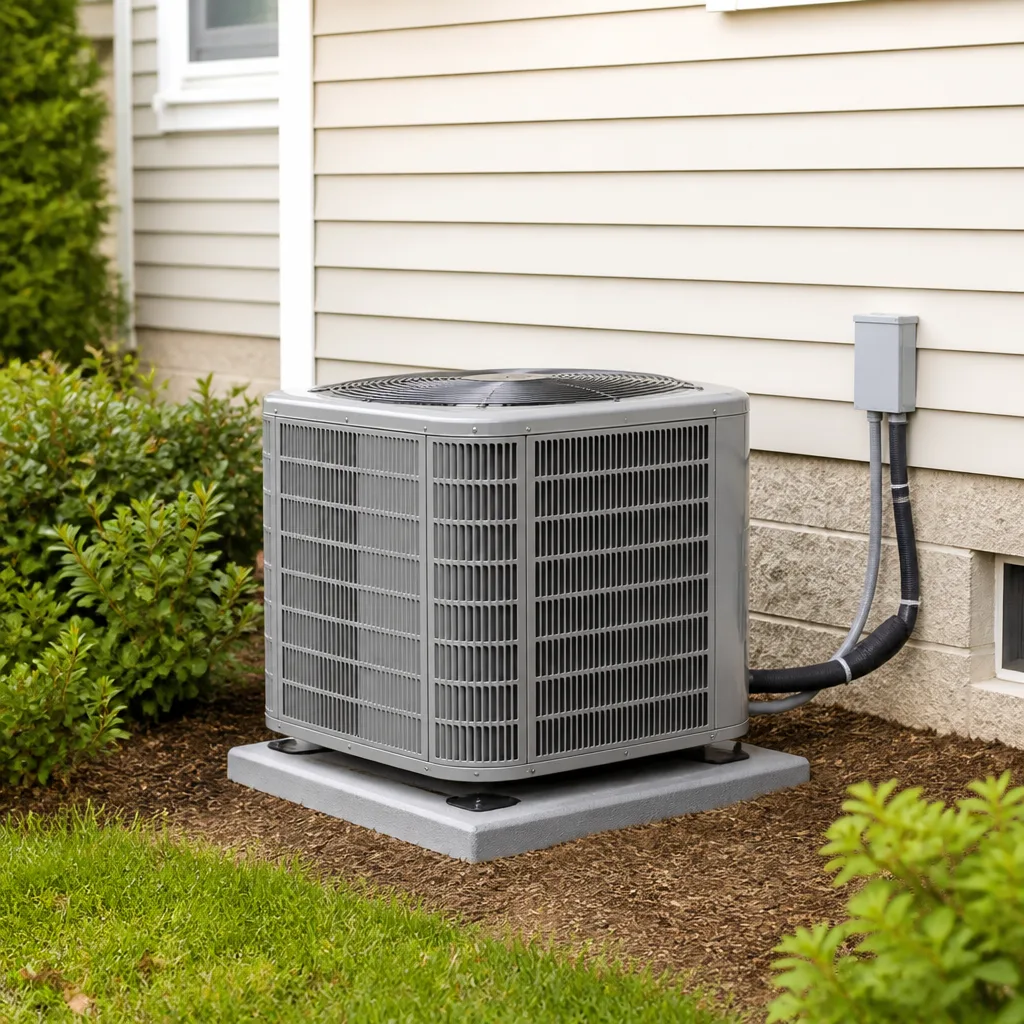 Carrier
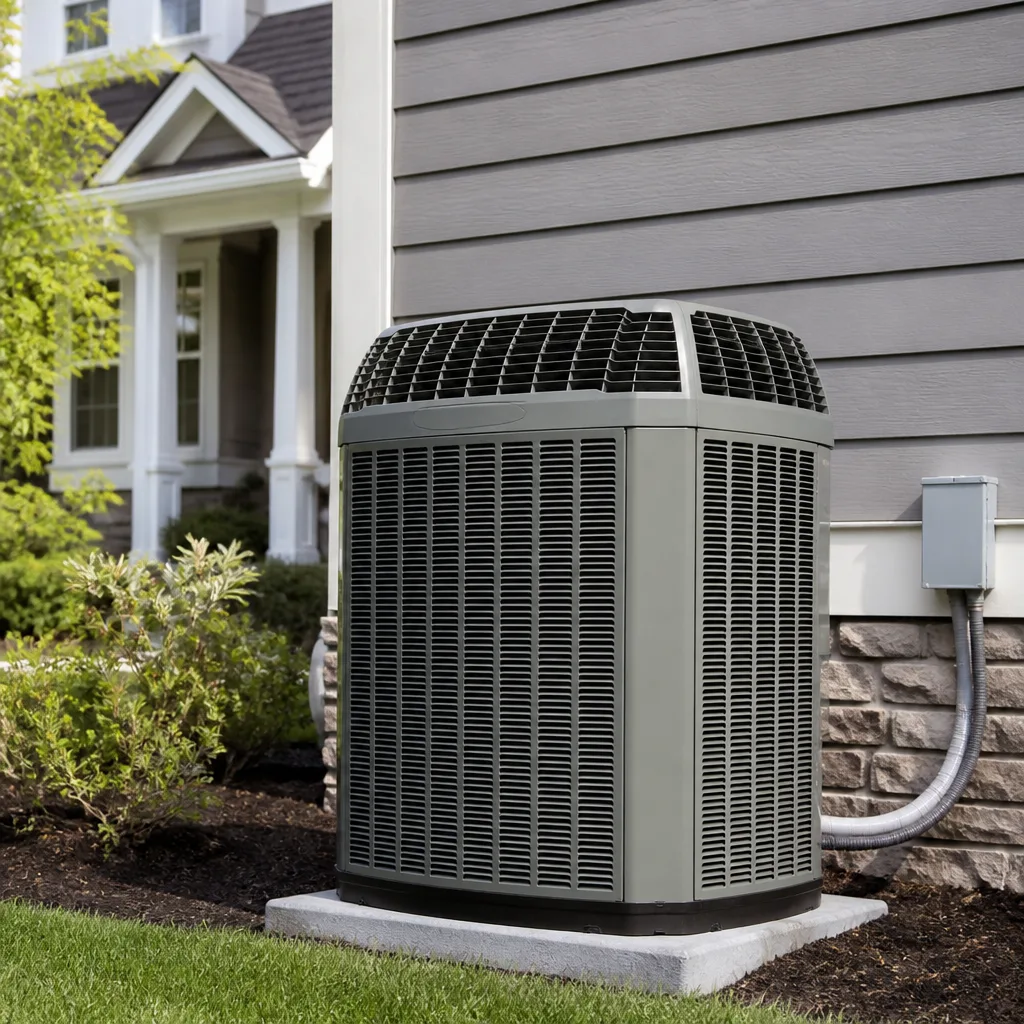 Trane
Trane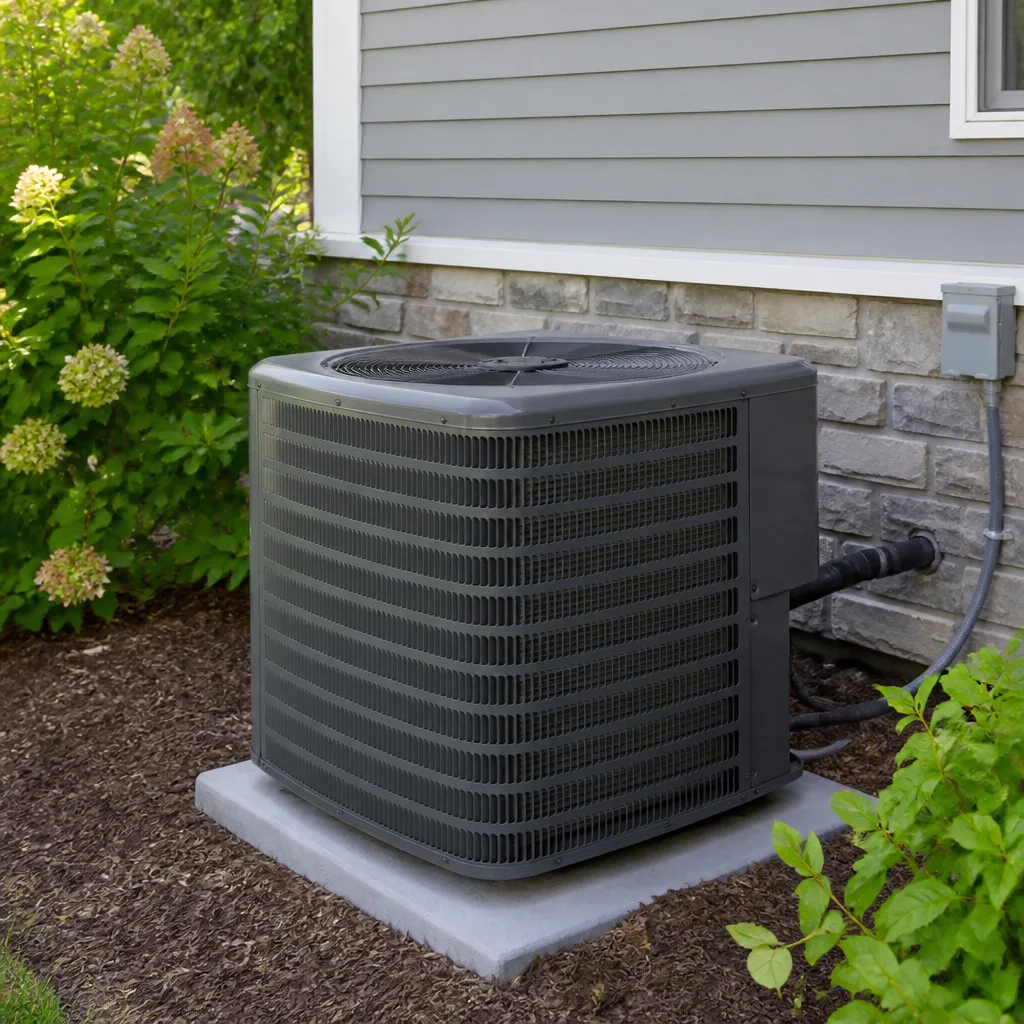 Goodman
Seasonal tune-up and full diagnostic on your Carrier, Trane, or Goodman system - readings shown to you before any repair is proposed
Diagnosis first, numbers second - you approve the repair price before a single part goes in.
Get your free estimateBryant Capacitor Replacement: The Austin Owner’s Guide
We stock Bryant-compatible dual-run and start capacitors on our trucks across Austin, and the typical installed price for a capacitor replacement runs $150 – $280 parts and labor included. Most Bryant capacitor swaps are done same-day when we’re already in your neighborhood, and we carry the common 370V and 440V ratings Bryant systems use, so we rarely have to leave and come back. The way most Austin homeowners discover a capacitor has failed is pretty consistent: the outside unit hums but the fan won’t spin, or the compressor tries to start and gives up after a few seconds. It’s a specific, fixable failure, but it mimics other problems, so getting the diagnosis right on the first visit matters.
Which Bryant Models This Applies To
Bryant has used capacitor-driven motors across its residential AC and heat pump lines for decades, so this applies broadly to the Evolution, Preferred, and Legacy series condensers, plus Bryant gas furnace blower motors that use run capacitors on the indoor side. The three main Bryant-compatible types you’ll run into are the dual-run capacitor (one can serving both the compressor and the condenser fan, usually stamped with three terminals labeled HERM, FAN, and C), the separate start capacitor that gives the compressor an extra shove at startup, and the smaller blower motor capacitor inside the furnace or air handler cabinet.
Here’s the compatibility gotcha we see regularly in Austin attics: Bryant dual-run capacitors are rated by microfarads (µF), commonly 35/5, 40/5, 45/5, or 50/5 for the compressor and fan respectively, and by voltage tolerance, typically 370V or 440V. You can’t read the spec off a tripped breaker; you have to open the unit and read the label on the capacitor itself. And while a 440V capacitor can be substituted for a 370V in a pinch because it’s rated higher, you should never go the other direction. As for OEM versus aftermarket: Bryant doesn’t manufacture its own capacitors; it sources them from suppliers like GE, Mars, Titan, and AmRad. A quality American-made aftermarket capacitor from AmRad or Mars will routinely outlast the factory-installed one, especially in a Texas summer where roof-installed units bake at 140+ degrees for months.
Styles & brands we work with
Signs Your Bryant Capacitor Replacement Is Failing
Capacitors seldom fail without warning; the warning just isn’t obvious until you know what you’re looking at. Here are the five most common symptoms we run into on Austin service calls:
- The outside unit hums but the fan isn’t turning. The capacitor is what gets the fan motor started. When it’s dead, the motor just sits there drawing locked-rotor current and humming. If you catch it quickly, you usually avoid damaging the fan motor itself, which is a much more expensive fix.
- You hear a click, then a hum, then a hard stop from the condenser. The compressor tries to start, can’t get the phase shift the capacitor provides, and the thermal overload trips. Bryant compressors are tough, but repeated failed starts will cook one eventually, and a compressor replacement isn’t a bill anyone in Austin wants in late July.
- The capacitor case is bulging, domed at the top, or leaking oil. Heat and voltage spikes degrade the dielectric fluid inside the can. When it expands, the top of the capacitor rounds out; eventually the can splits. If you can see this from outside the unit, the capacitor is done, not dying.
- The AC starts sometimes and fails other times, especially in the afternoon. A weak capacitor might still have enough charge for a cooler morning start, but by 4 p.m. on a 100-degree day, it can’t deliver. Intermittent starts are a classic weak-capacitor signature, and Austin’s afternoon heat is when you’ll notice it first.
- Your energy bill climbed for no obvious reason. A degraded capacitor doesn’t always stop the motor, it just makes it run inefficiently, with the motor drawing more current than it should. You won’t feel this one as a comfort problem, but the utility meter notices it.
See the difference
 Before
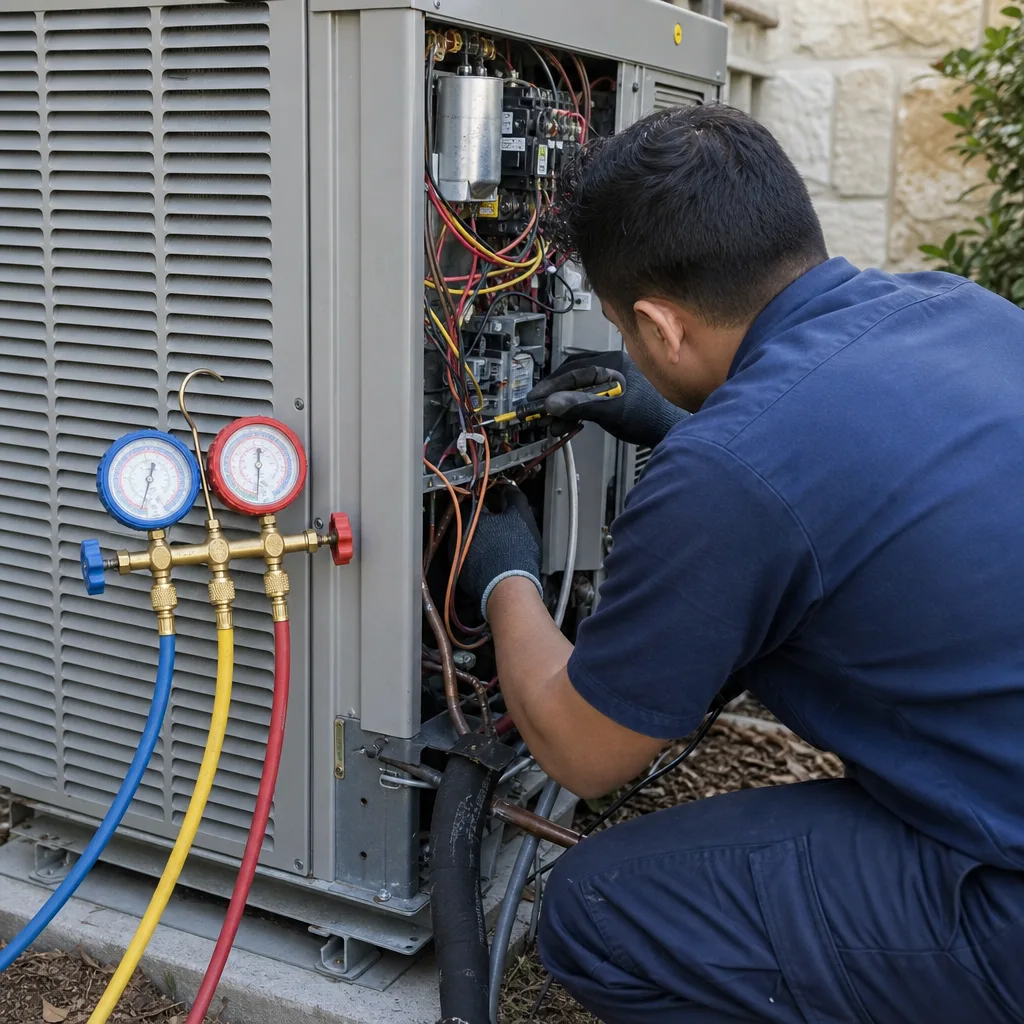 After
After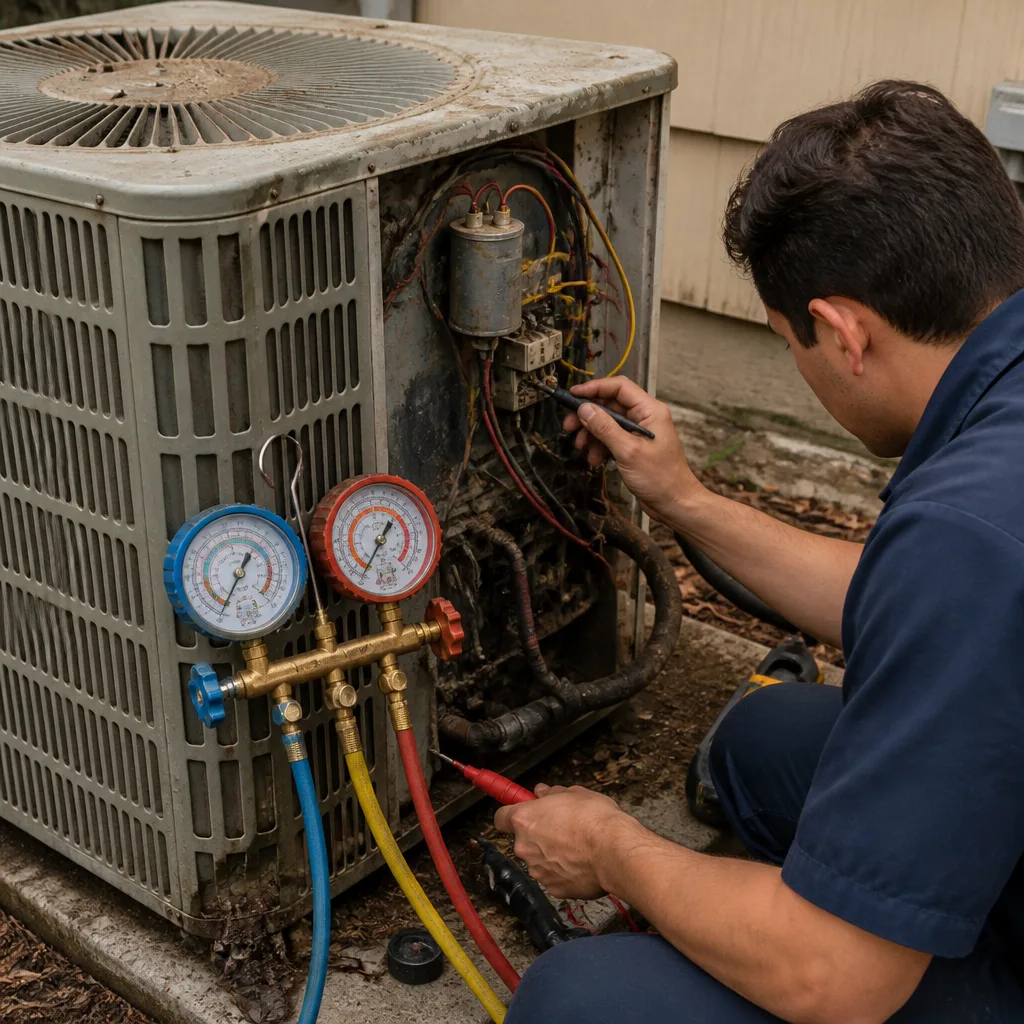 Before
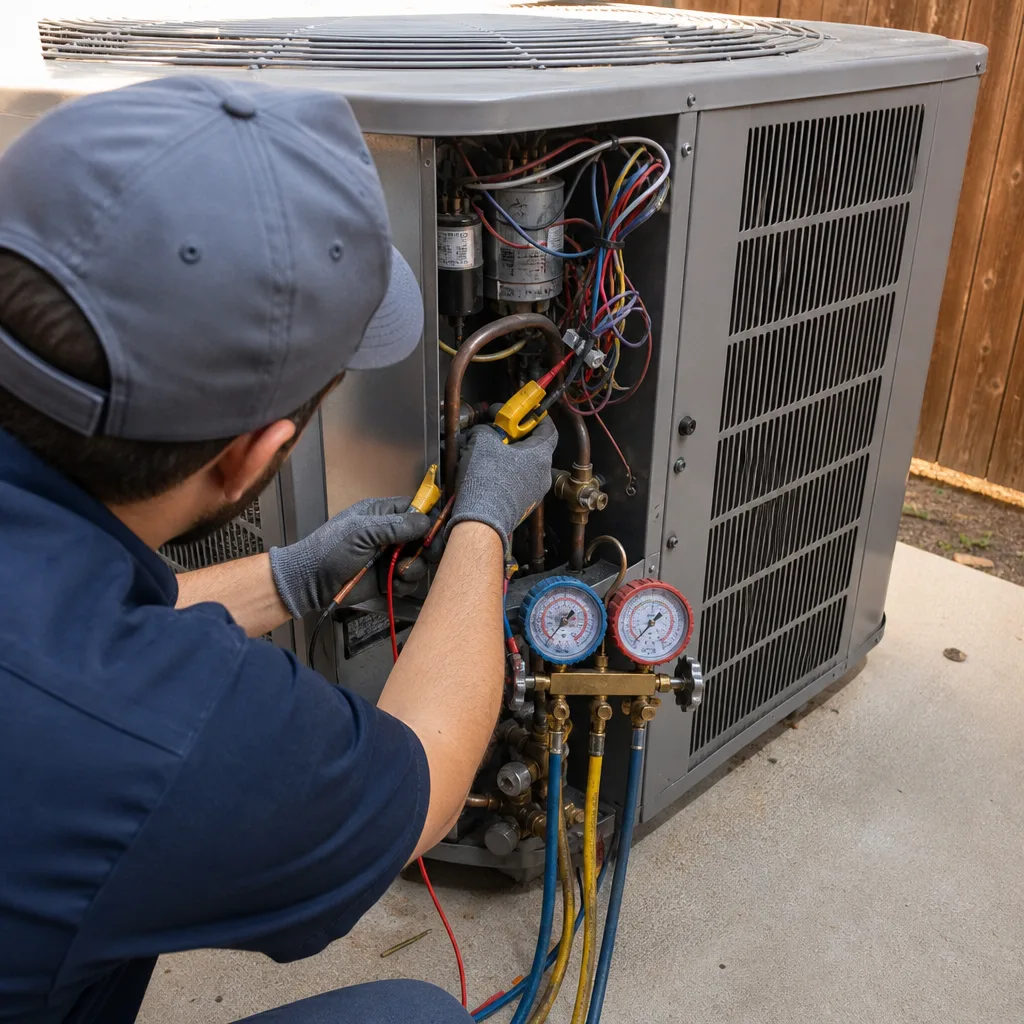 After
After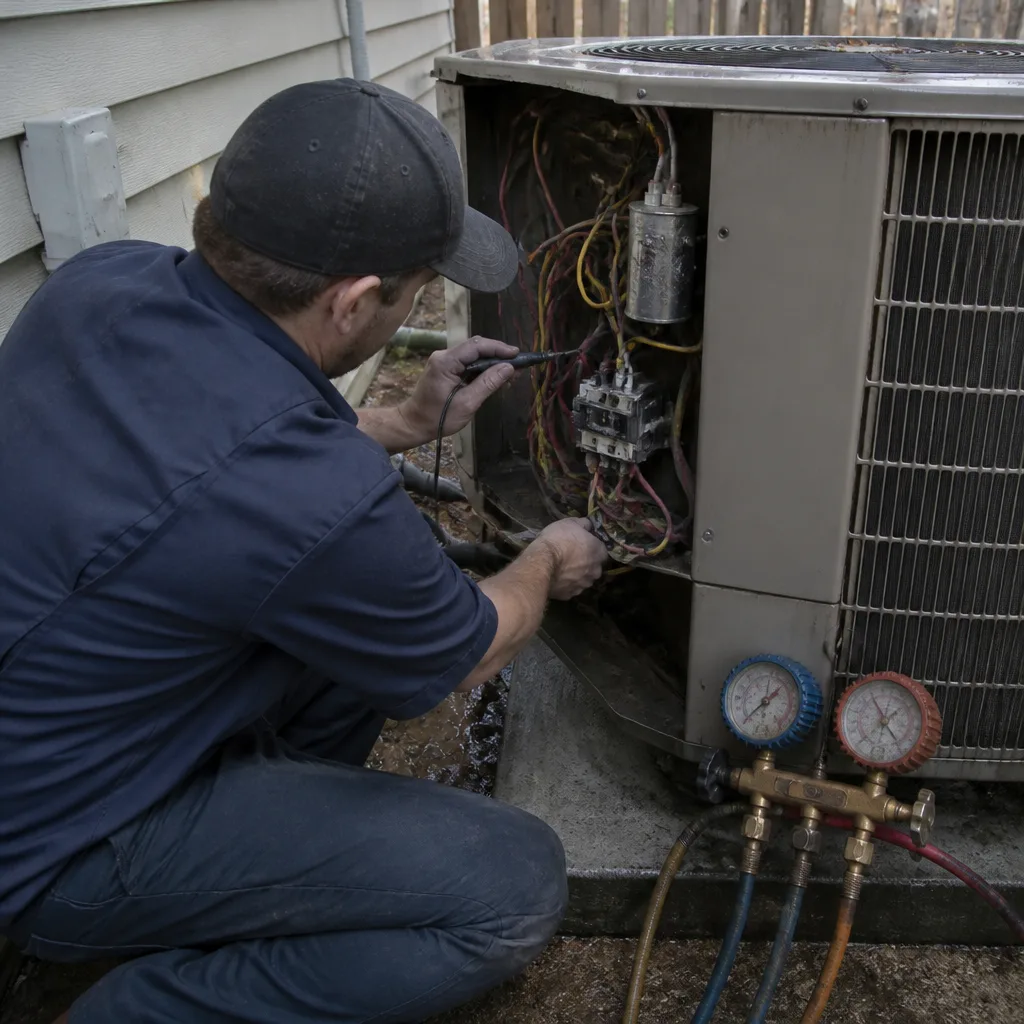 Before
 After
AfterReplacement Cost & What’s Included
For Bryant systems in Austin, a capacitor replacement typically lands between $150 and $280 installed, with the part itself usually running $15 – $60 depending on the microfarad rating and whether it’s a dual-run or start capacitor. The rest is labor, diagnosis, and the trip fee, which is why the spread exists: a simple dual-run swap on a ground-level condenser is on the lower end, while a capacitor buried in an attic air handler in a Hyde Park house with a pull-down stair takes longer and lands higher.
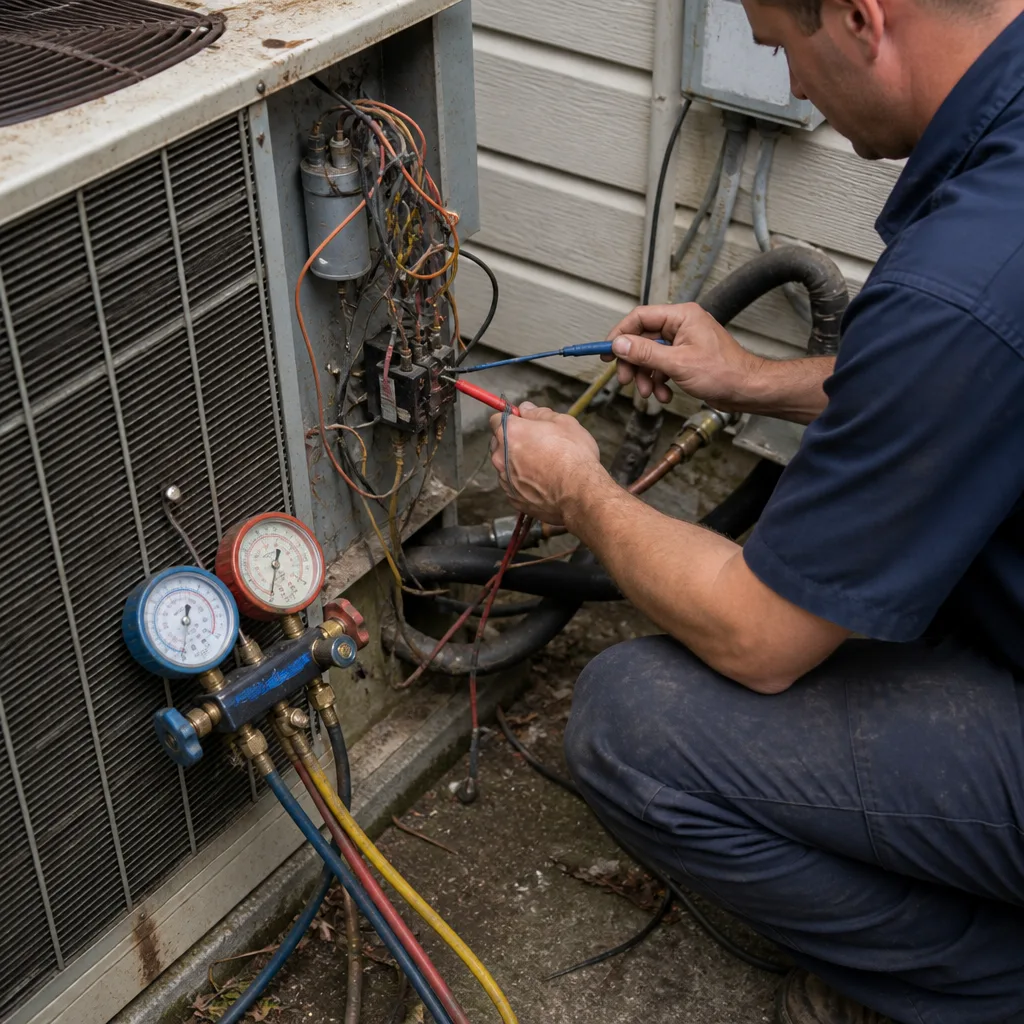
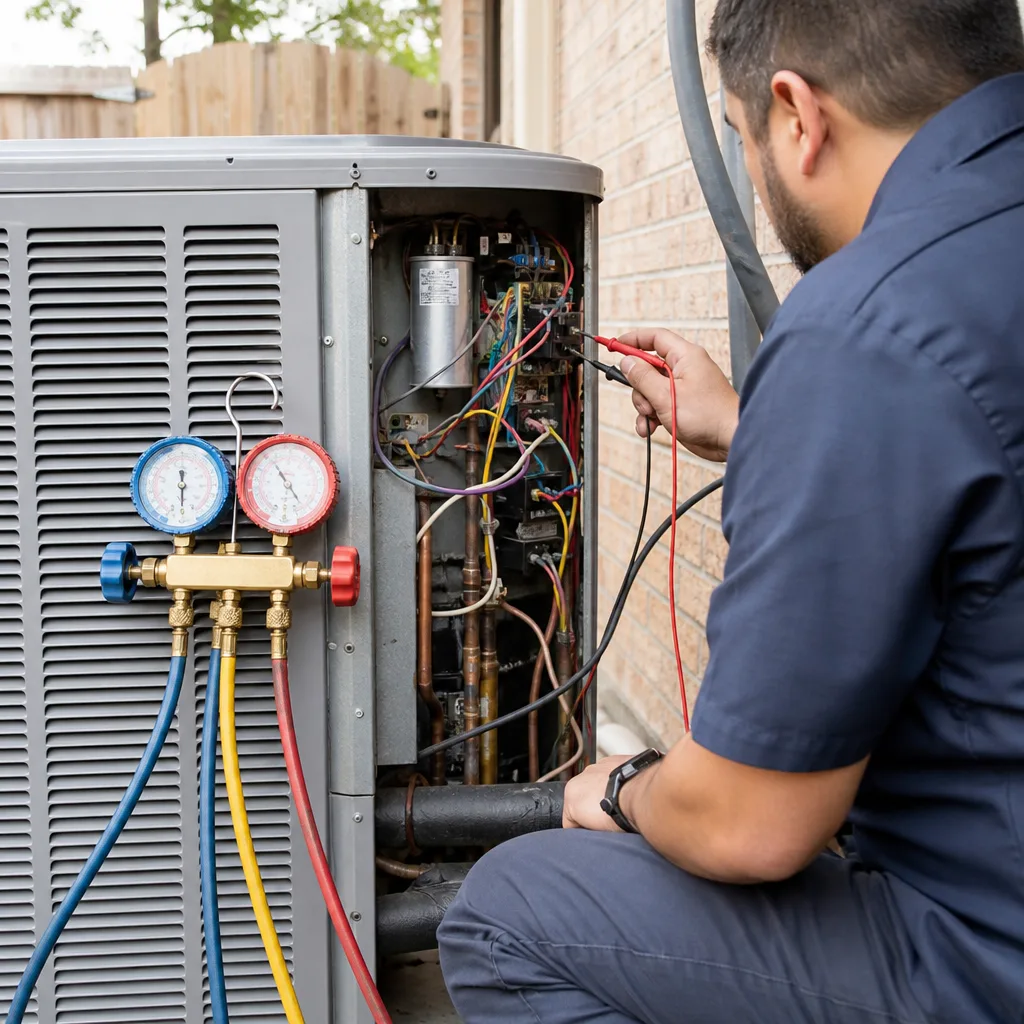
What that price includes, every time: we diagnose the capacitor with a multimeter before we touch anything, show you the reading, hand you a written price before the first tool comes out, replace the part with a quality unit, test the full startup sequence, and check the contractor contactor and wire connections while we’re in there because those fail alongside capacitors more often than most people realize. And like every repair we do, the work is covered by our 365-Day Done Right Promise: if that capacitor or our workmanship fails inside a year, we come back and make it right at no charge. You get that in writing, not as a verbal promise.
DIY or Call Us?
I’ll be blunt here, and this is coming from someone who has been doing this work since trade school in Los Angeles and on Austin rooftops now for well over a decade: a capacitor holds a stored electrical charge even after the disconnect is pulled, and it can discharge that charge into you if it’s not properly drained. A dual-run capacitor in a Bryant system is typically charged to 370 or 440 volts. That’s not a static-electricity zap; that can cause a serious injury, and a capacitor that’s still holding a charge can sit there live for days after the unit was turned off. We drain them with a proper discharge resistor before handling them, every single time.
What you can safely do yourself: confirm the symptom (humming, no fan, bulged case), note your Bryant model and serial number from the data plate, and call us at (361) 204-1605. One thing you shouldn’t do is order a capacitor online based on a guess and try to wire it in. The terminals are labeled HERM, FAN, and C for a reason, and crossing a wire while there’s still charge in the can is exactly how a $200 repair becomes a trip to urgent care plus a $200 repair. We carry the common Bryant ratings on the truck, so we can usually have your system back up and running on the first visit rather than leaving you to sweat out a shipping window on an August afternoon.
FAQs
A Bryant capacitor in the Austin climate typically lasts 5-10 years, but on rooftop units exposed to direct sun, you may only get 3-5 years, since sustained heat is the main thing that degrades the dielectric fluid inside the capacitor. Ground-level units in the shade routinely make it past a decade, which is why we see two identical Bryant systems with very different capacitor lifespans.
No, a capacitor can’t be repaired; once the dielectric breaks down or the can bulges, it’s a sealed component that has to be swapped for a new one. What can be repaired are the things that tend to fail around it, like a pitted contactor or a loose wire, and we check those in the same visit.
A standard dual-run capacitor swap on a Bryant condenser takes about 30-45 minutes once we’re on site, plus the time needed for a full startup test and safety check. If you’re also getting a tune-up while we’re there, plan on about 90 minutes total for everything.
Yes, we stock the common Bryant-compatible dual-run and start capacitor ratings on our trucks, including the 35/5, 40/5, and 45/5 microfarad sizes, in both 370V and 440V configurations, which covers the majority of Bryant systems in Austin service today. We also keep a supply for the carrier brands folks in older Austin neighborhoods run, including Carrier, Trane, and Lennox units, since many of those share the same GE or Mars capacitor families.
Written by Victor Mancini, Owner & Lead HVAC Technician, Cold Harbour Heating and Air Austin, serving Austin and nearby areas.