
 AC repair
 Furnace & heating
 Heat pumps
 Ductless mini splits
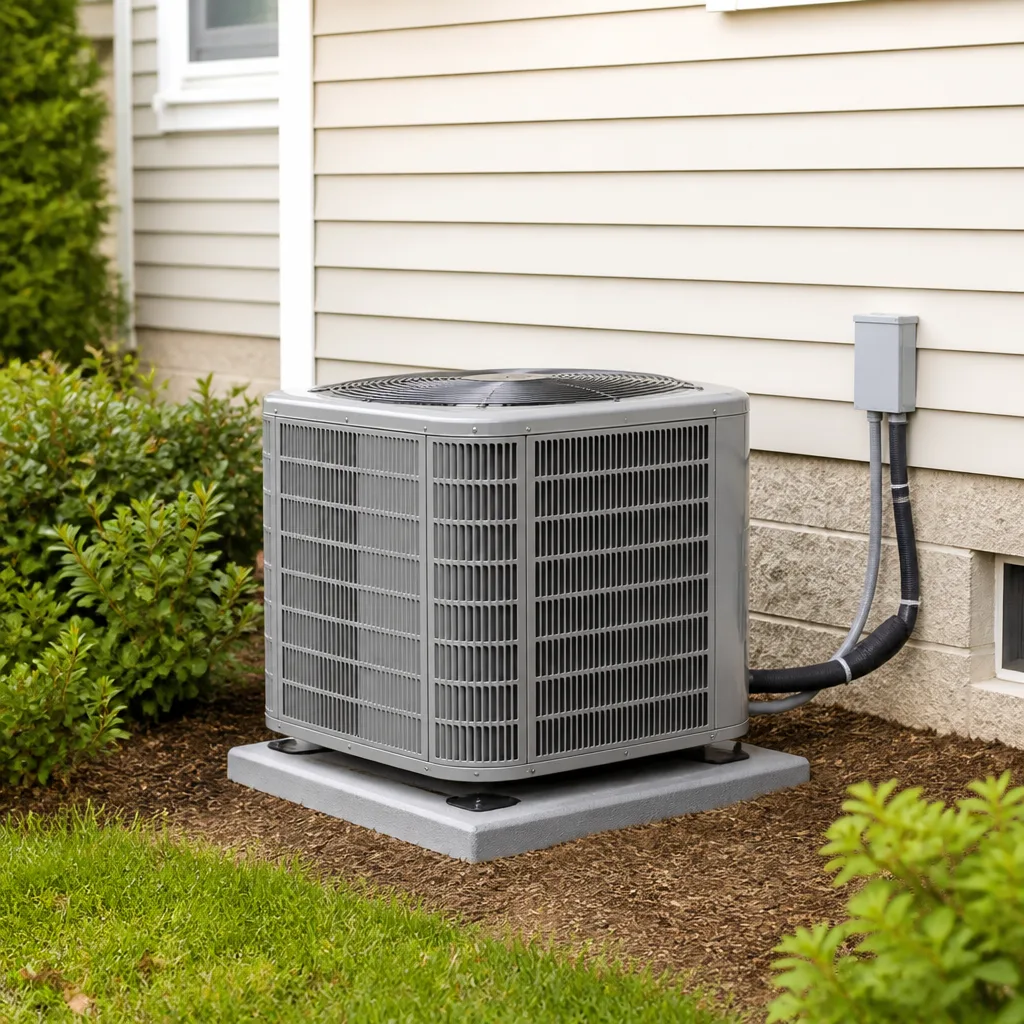 Carrier
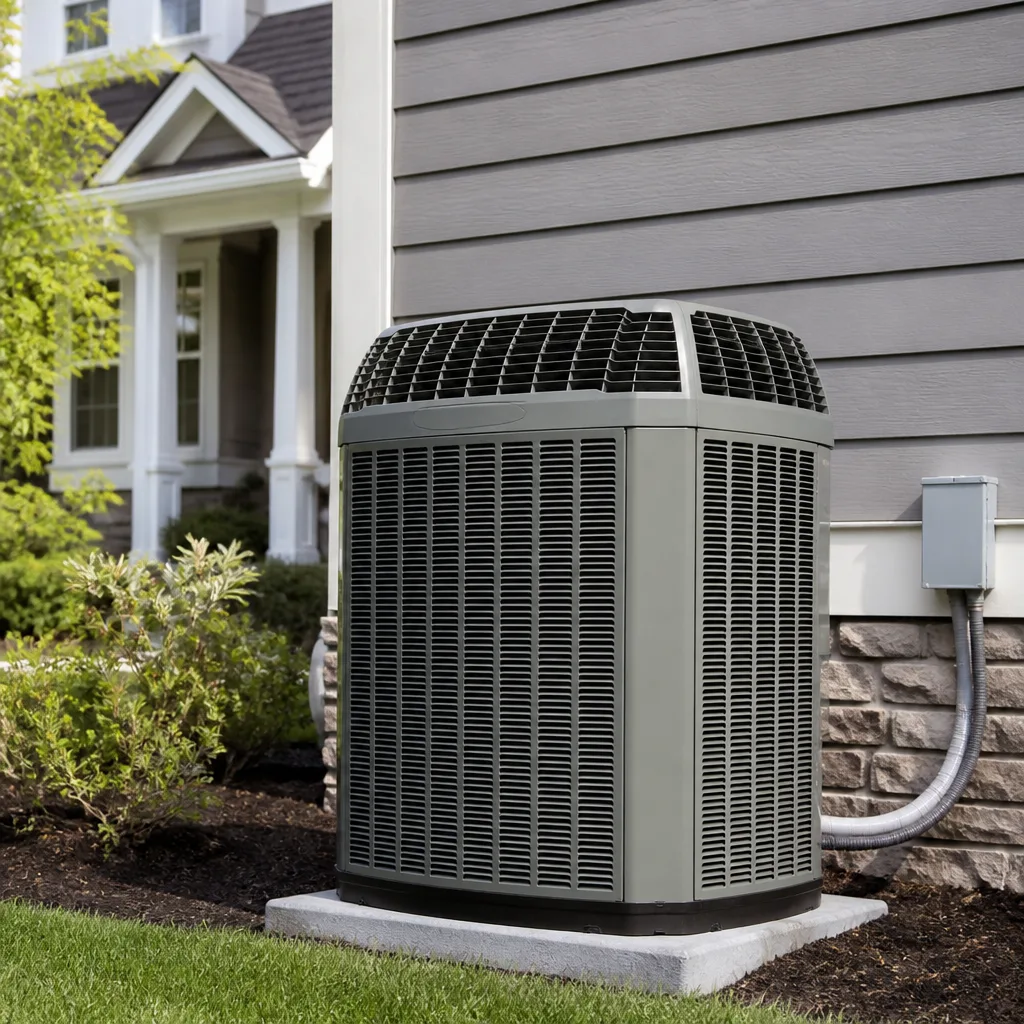 Trane
Trane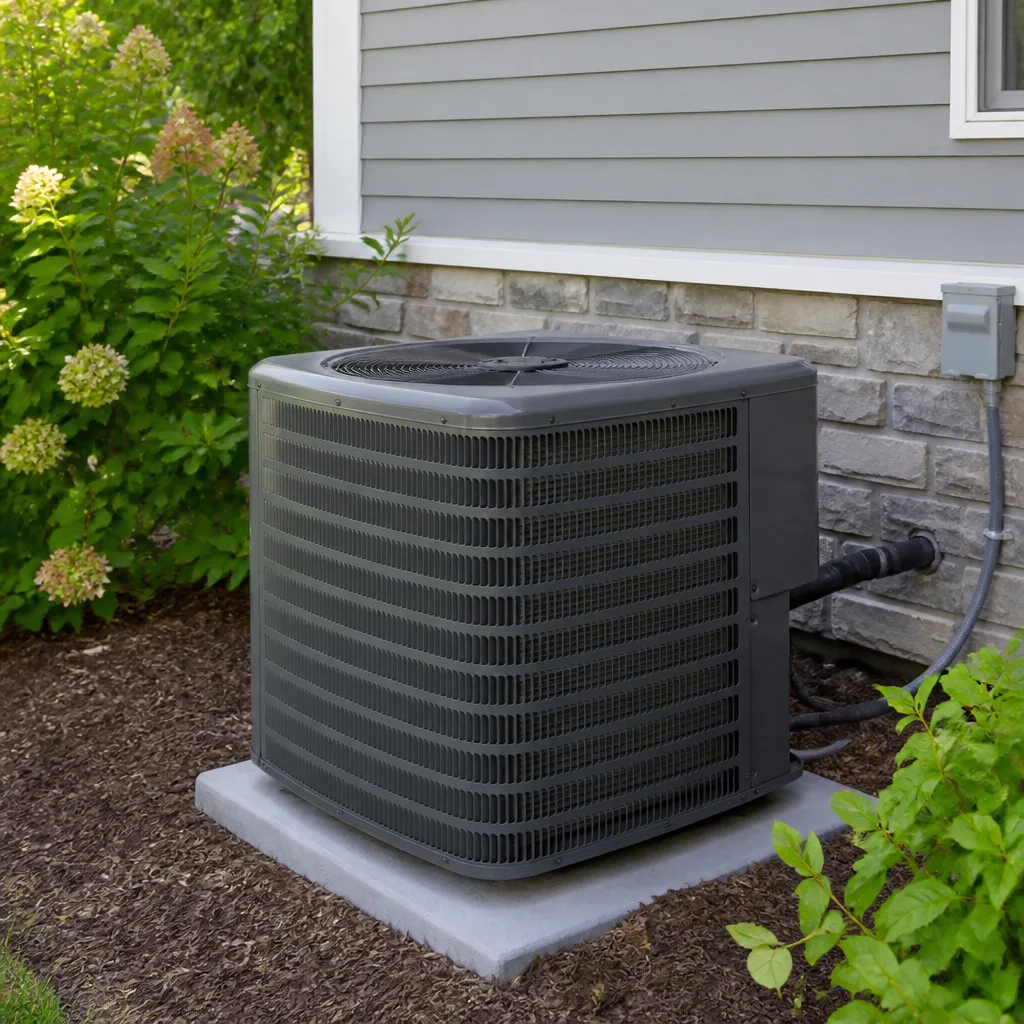 Goodman
Seasonal tune-up and full diagnostic on your Carrier, Trane, or Goodman system - readings shown to you before any repair is proposed
Diagnosis first, numbers second - you approve the repair price before a single part goes in.
Get your free estimateLennox Ductwork Repair: The Austin Owner’s Guide
If your Lennox system is moving air through leaking, torn, or disconnected ductwork, you’re losing cooled or heated air into your attic or crawlspace before it ever reaches a room. Ductwork repair in Austin typically runs $350 – $1,200 depending on how much of the run is compromised, whether we’re sealing joints, replacing a flex section, or rebuilding a plenum connection. We keep Lennox-compatible duct materials, mastic, and collars on the truck, so most repairs are finished same day in a single visit.
How homeowners usually find us: a room that never cools right, a utility bill that climbed for no obvious reason, or a musty smell coming through the vents. Sometimes it’s the classic Austin one – the upstairs bedroom stays ten degrees warmer than the living room, and the thermostat keeps running. The problem isn’t always the Lennox unit itself. A lot of the time it’s the ductwork quietly leaking into an attic that hits 140°F in July. Victor Mancini has pulled more than a few flex ducts apart in North Austin attics and found them hanging like a deflated balloon, blowing conditioned air at the rafters.
We’re an independent service provider, not affiliated with Lennox. What that means for you: we stock duct repair parts sized to work with Lennox systems as well as Carrier and Trane, and we’re not tied to any manufacturer’s schedule for getting them to your house.
Which Lennox Models This Applies To
Ductwork is not model-specific the way a control board or an igniter is. What matters is the diameter of the duct run, the type of duct, and the connection at the plenum or supply box. If you have a Lennox Merit, Elite, or Dave Lennox Signature Collection system, the repair approach is determined by the duct dimensions and layout – not the condenser model sitting outside.
That said, there is one Lennox-specific gotcha worth knowing: higher-end Lennox variable-speed air handlers, like the SL280 and EL296 lines, push air at lower static pressure over longer runtimes. Undersized or leaky ducts hurt these systems more than they hurt a basic single-stage unit. A variable-speed blower will ramp up trying to overcome a restriction, use more power, and still underdeliver to the far rooms. If your Lennox is a two-stage or variable-speed model and your far bedroom has always been warm, the duct sizing or leakage is very often the culprit – not the equipment.
For flex duct, the common sizes we match are 6″, 8″, 10″, and 12″ diameter runs. Metal trunk lines in older Austin homes are usually rectangular – 14×8, 16×8, or 20×8 – and need custom transitions if a section is rusted through. OEM duct components exist, but in practice, quality aftermarket flex duct, mastic, and metal collars from suppliers like Atco or Snappy are what we use on the truck. The material spec (R-6 insulation, UL 181 listed) matters more than whose name is stamped on the box.
Styles & brands we work with
Signs Your Lennox Ductwork Is Failing
- Rooms that never reach the thermostat setting. A duct that has separated at a collar or split along its length is dumping air into unconditioned space. The system runs longer, the room still doesn’t cool, and the bill climbs.
- Dust collecting unusually fast on furniture and registers. Return ducts with gaps pull attic air – which carries fiberglass particles, dirt, and in Austin, a good amount of oak pollen in spring – straight into the house.
- A musty or stale smell from the vents. In humid months, a disconnected return in a vented attic can draw warm, damp air into the system. That moisture feeds mildew in the duct liner and makes the house smell faintly sour.
- Visible condensation or staining on the ceiling near ceiling registers. A leaking supply boot in a humid attic will sweat. The drywall darkens, paint bubbles, and eventually you’re doing drywall work on top of the duct repair.
- Whistling, flapping, or popping sounds when the blower runs. A torn inner liner flutters under air pressure. A collapsing flex duct makes a rhythmic thump as the blower cycles. We’ve pulled seriously mangled flex from attics where a previous repair was done with duct tape (which fails in Texas heat – mastic and UL-listed tape are the only things that last).
See the difference
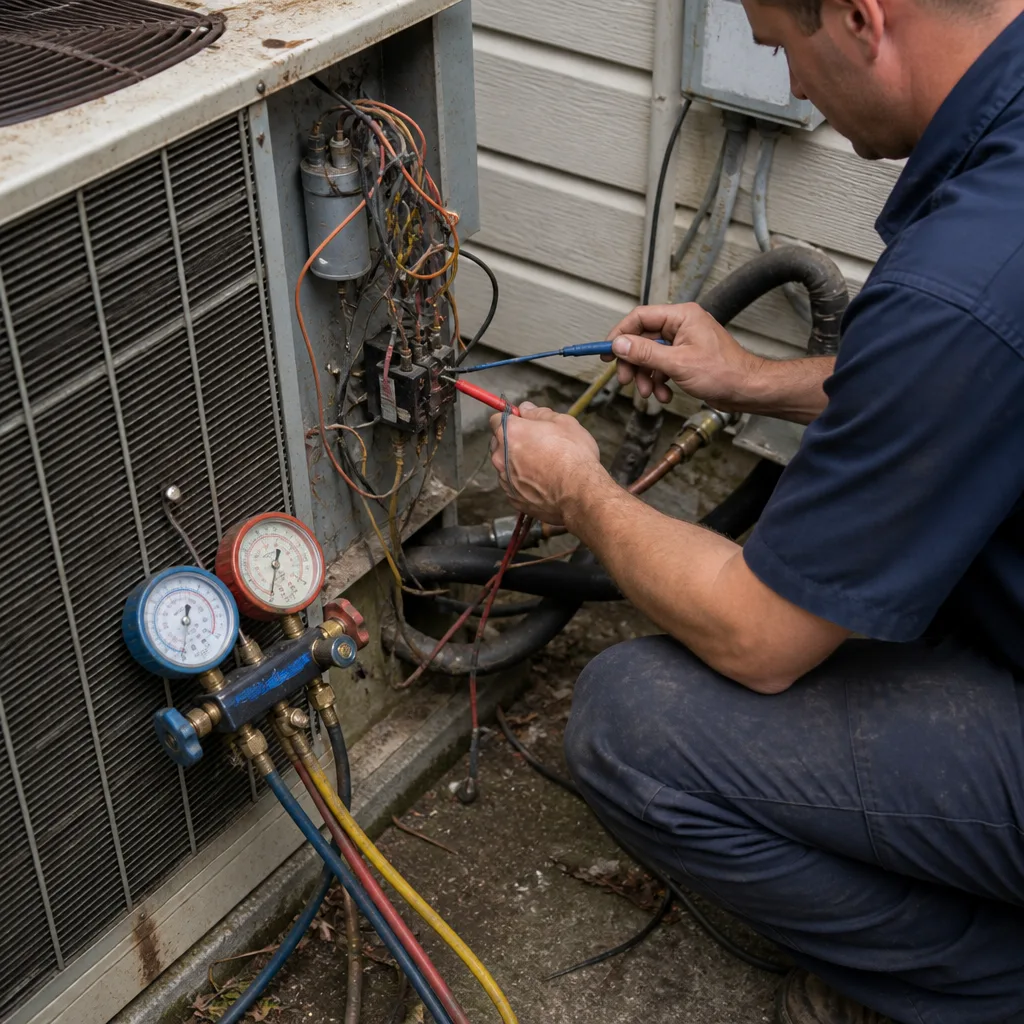 Before
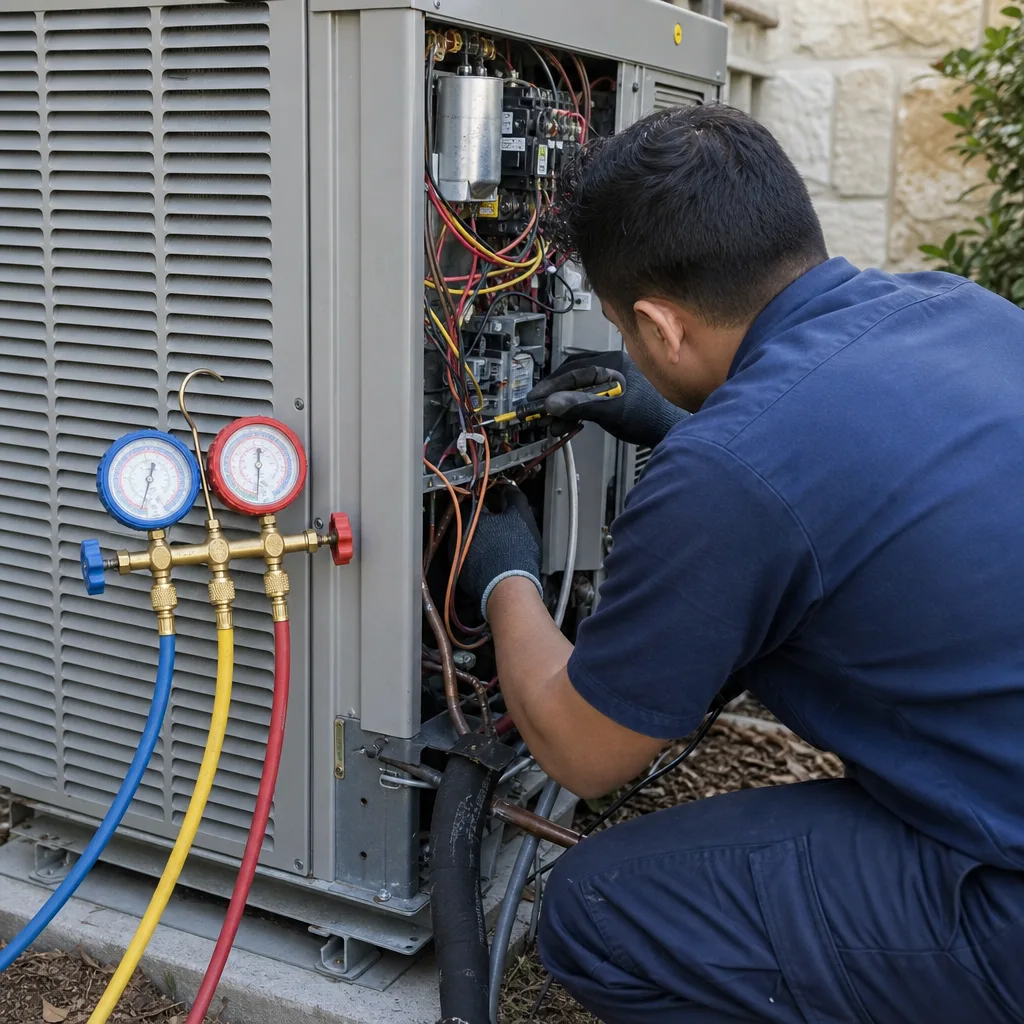 After
After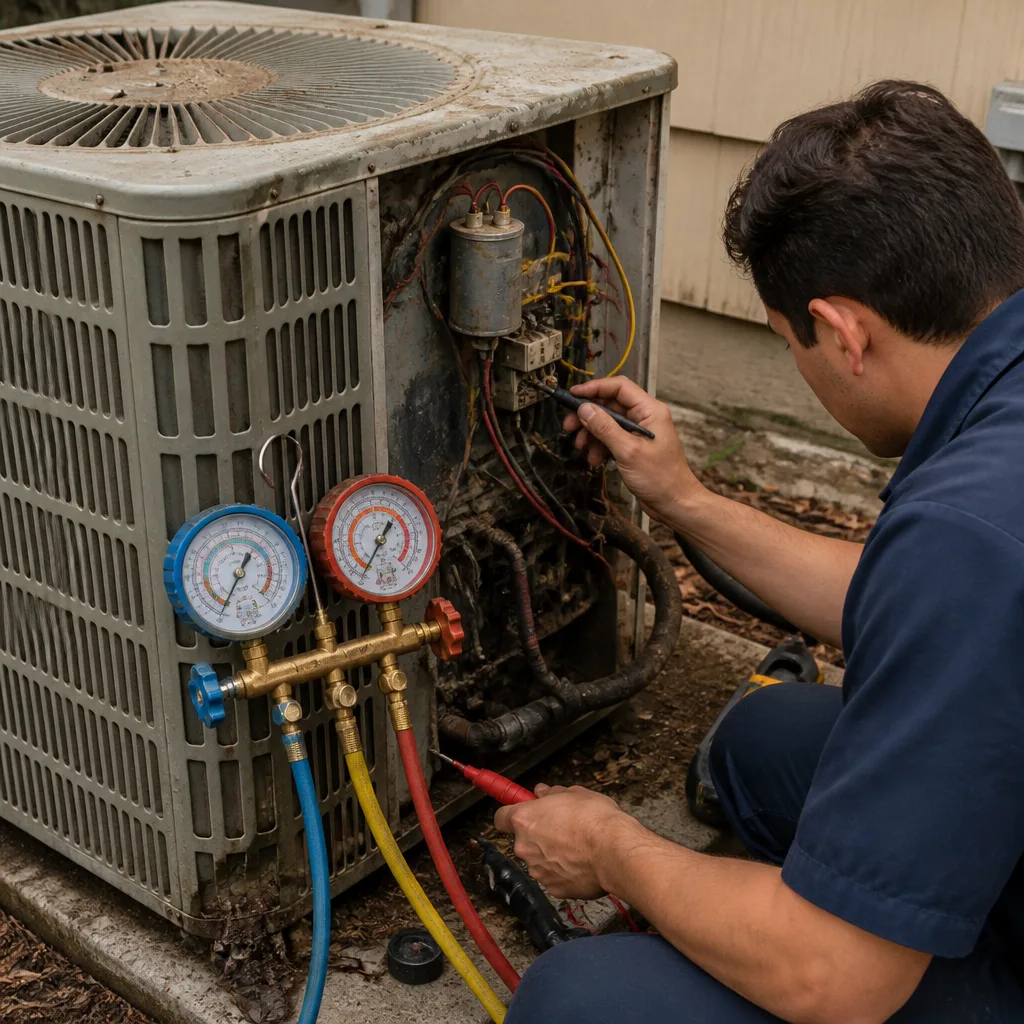 Before
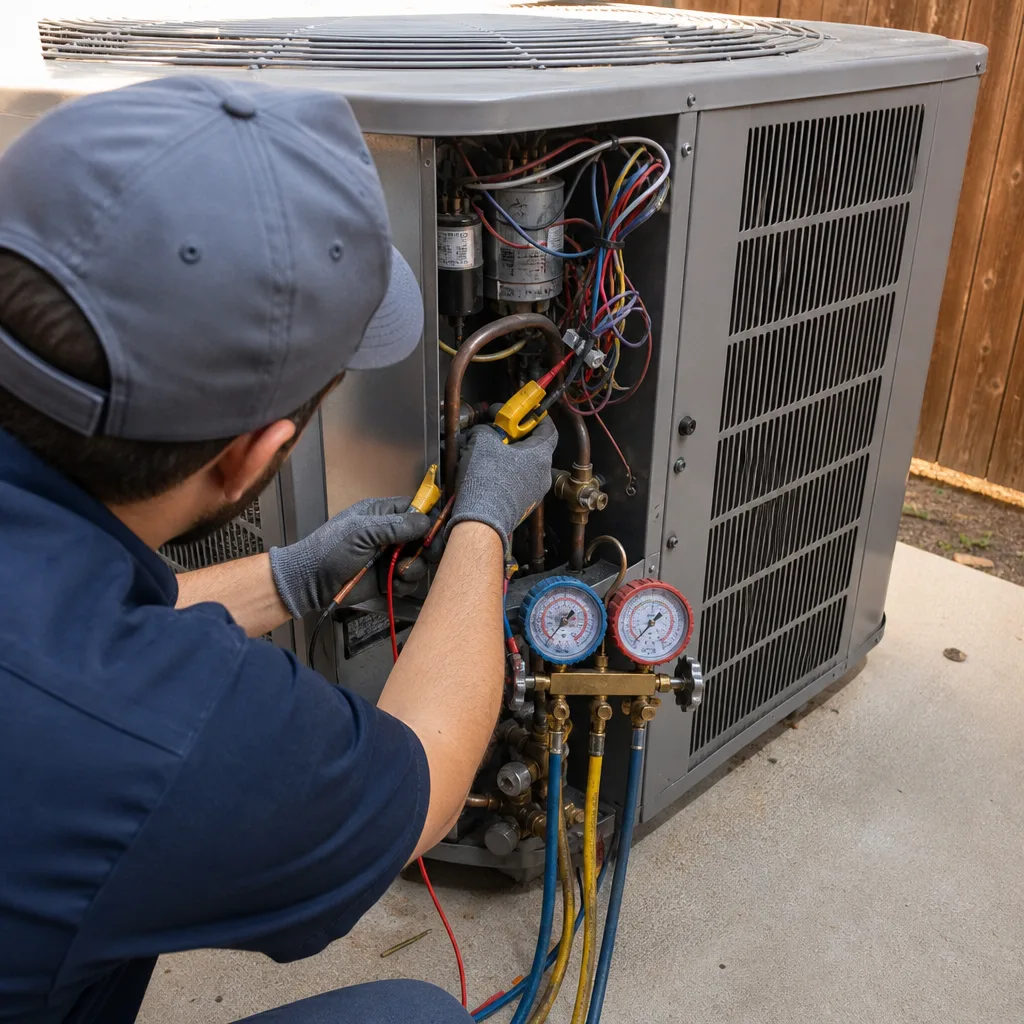 After
After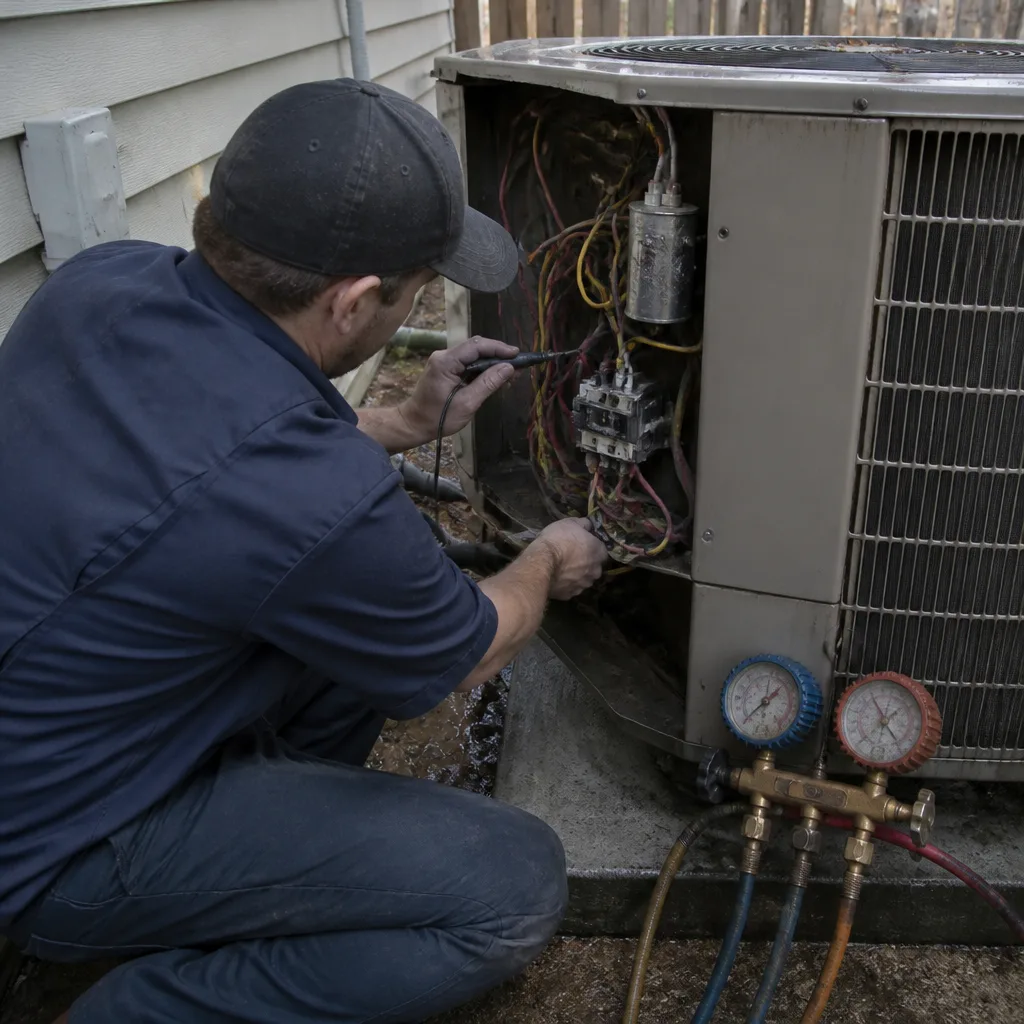 Before
 After
AfterReplacement Cost & What’s Included
For ductwork repair in Austin, here’s what we see in the field and what it costs:
- Sealing a leaking joint or small tear: $150 – $350. Includes mastic, UL-listed tape, and usually 20 – 40 minutes of work at the leak source.
- Replacing a failed flex duct run (6″ – 10″, up to 25 feet): $450 – $900. Includes new R-6 flex duct, straps, collars, mastic, and labor. Price moves with run length and how accessible the attic is.
- Rebuilding a plenum connection or supply box: $500 – $1,200. This is the heavy end – cutting back damaged metal, fabricating a new collar or transition, and sealing everything properly.
Every repair we do in Austin gets a written price before work begins – that’s the Kingswell Way, and it applies to every job, not just the big ones. The work is covered by our 365-Day Done Right Promise: if a repair fails inside a year, we come back and make it right at no charge. In writing, every time.
DIY or Call Us?
There are two things a homeowner can reasonably check without help. One: look at the visible registers and returns – are they attached flush, and is there any gap between the boot and the drywall? Two: if you have flex duct in a walkable attic, look for obvious separations or kinks. That’s fair game.
Beyond that, ductwork repair gets physical fast. Attics in Austin summers run 130°F or hotter, and working on a ladder in that heat while handling insulation is a real way to end up in an ER with heat exhaustion. And if your ducts are metal and the repair involves cutting or re-hanging sections, you want someone who’s done it a hundred times and knows how to seal it so it stays sealed. That’s us. One visit, one diagnosis, one fix – that is the only way this works. Call (361) 204-1605 and we’ll give you a straight answer over the phone before we even step into the attic.
FAQs
In Austin’s heat and humidity, flex duct typically lasts 15 – 20 years before the outer jacket degrades and the inner liner starts to leak. Metal duct can last 30+ years, but joints and insulation break down long before the metal itself. Attic heat accelerates everything – we’ve replaced duct in 12-year-old homes where the flex had essentially baked brittle.
Individual tears, separated joints, and failed collars can be repaired for $150 – $350. If the duct is crushed, saturated, or the inner liner has torn along more than a few feet, a section replacement makes more sense than patching. We’ll tell you which one applies to your system before we quote the work. Call (361) 204-1605 for an exact number.
Most repairs take 1 – 3 hours once we’re on site. A single leaking joint may take 30 minutes. A full flex run replacement in a tight attic with difficult access can run 3 – 4 hours. We give you a written price and a time window before the work starts, and we hit that window.
Yes. Our trucks carry R-6 flex duct in common diameters, metal collars, mastic, UL-listed tape, duct straps, and sheet metal for transitions – everything needed for most repairs in one visit. We also service Carrier and Trane systems, so the truck is stocked to handle whatever duct configuration we find.
Written by Victor Mancini, Owner & Lead HVAC Technician, Cold Harbour Heating and Air Austin at Cold Harbour Heating and Air Austin, serving Austin and nearby areas.