
 Furnace & heating
 AC repair
 Heat pumps
 Ductless mini splits
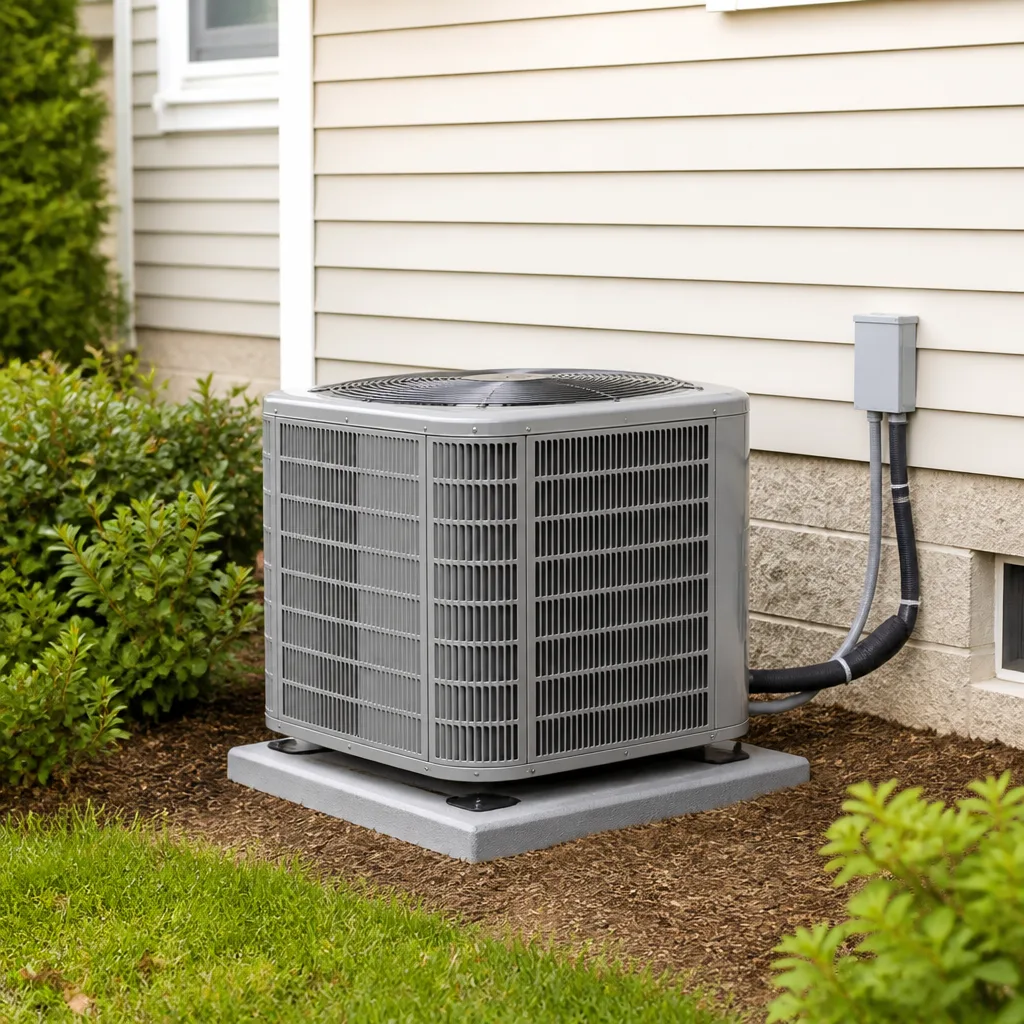 Carrier
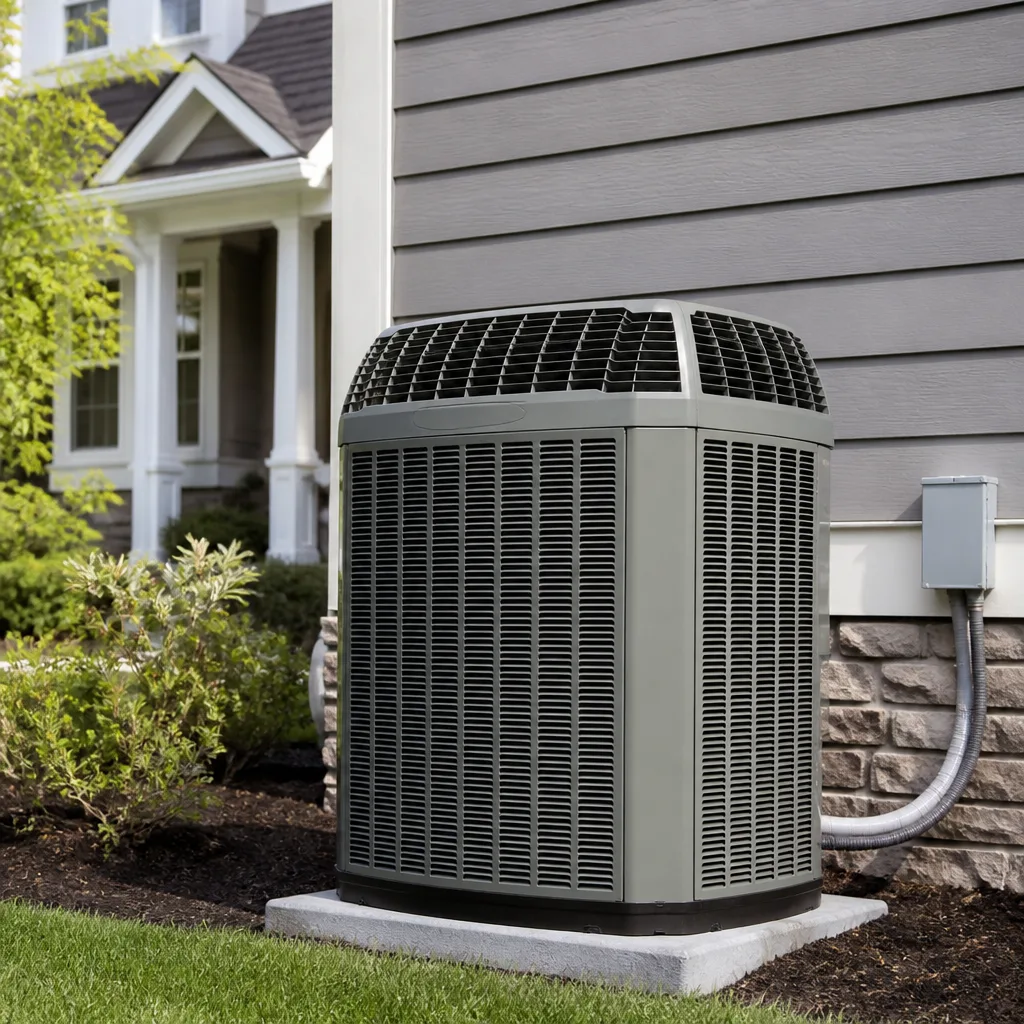 Trane
Trane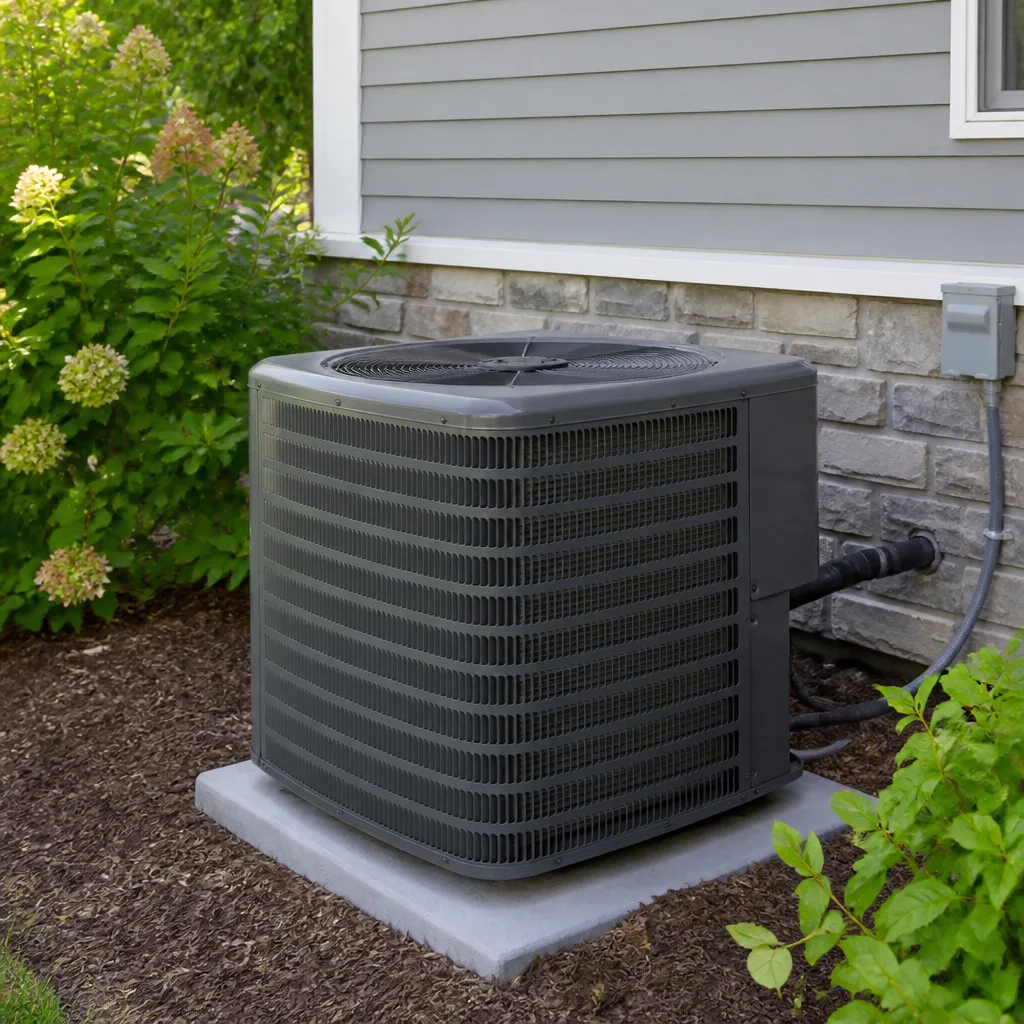 Goodman
Seasonal tune-up and full diagnostic on your Carrier, Trane, or Goodman system - readings shown to you before any repair is proposed
Diagnosis first, numbers second - you approve the repair price before a single part goes in.
Get your free estimateTrane Capacitor Replacement: The Austin Owner’s Guide
We stock and install Trane-compatible capacitors across Austin on a same-day basis most weeks. A full Trane capacitor replacement, part and labor included, typically runs $150 – $275 in the Austin market, depending on whether your unit takes a single run capacitor or a dual run capacitor. Most homeowners discover the problem the same way: the outside unit hums but the fan isn’t spinning, or the compressor won’t kick on when the thermostat calls for cooling.
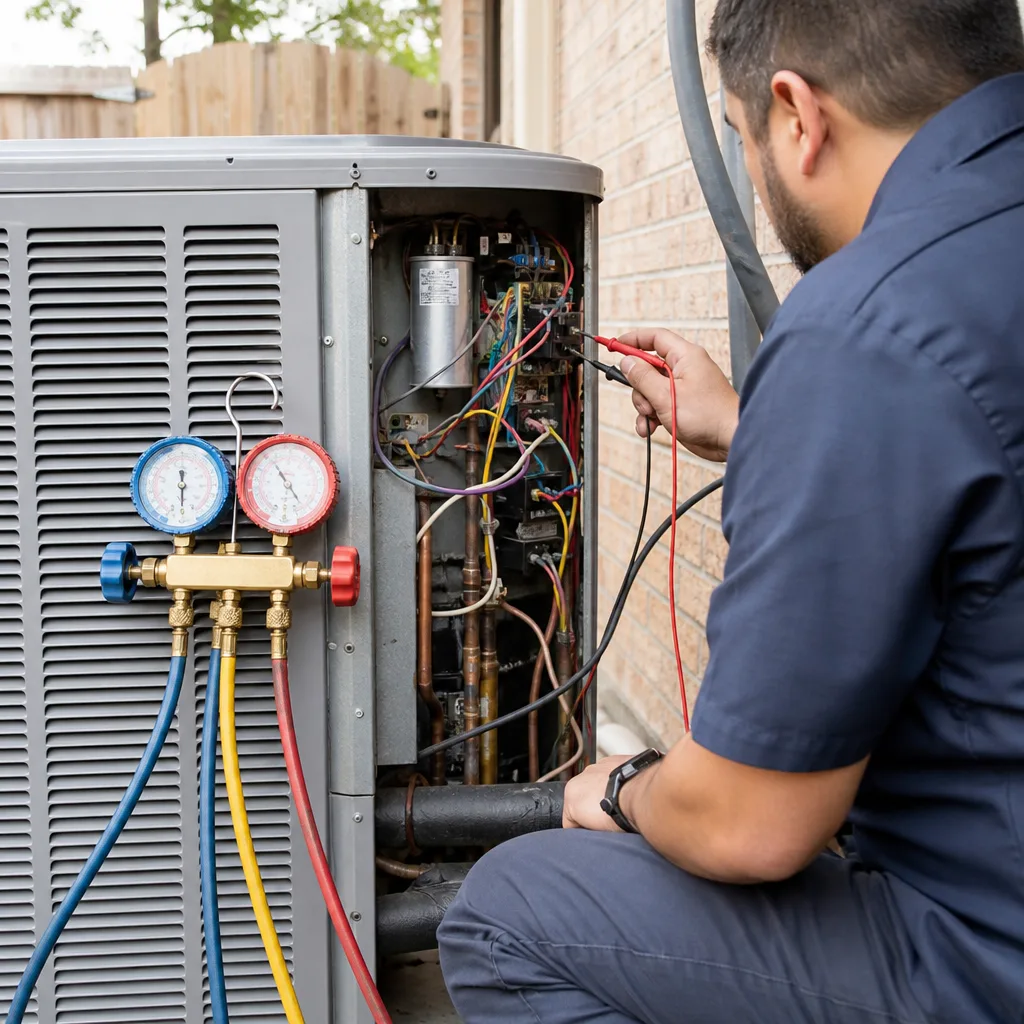
The capacitor is the electrical component that gives your compressor and fan motor the starting jolt they need to get moving. In Austin’s heat, these parts get worked hard. A Trane system that cycles on and off every 20 minutes from May through September will wear out a capacitor years faster than the same unit somewhere with a shorter cooling season. When it fails, the whole system goes down with it, usually on the hottest afternoon of the year, because that’s when the load is highest and the weakest link parts company.
Which Trane Models This Applies To
Trane uses capacitors across nearly every residential cooling line, and the good news is the part itself is fairly universal in shape: a metal cylinder with a label showing the microfarad (mfd or µF) rating, the voltage, and the terminal layout. What varies from model to model is the rating, and that’s where matching matters. XR13, XR14, XR15, XL16i, XL18i, and XB series condensers from the last 15 years generally take either a 35/5, 40/5, 45/5, or 50/5 dual run capacitor, depending on compressor size and fan motor draw. Older XL1200 and XE1000 units from the 1990s and early 2000s often use separate run capacitors for the compressor and condenser fan, usually in the 15 to 45 mfd range at 370 or 440 volts.
The gotcha Austin homeowners run into: the label is on the side of the capacitor, and you’re reading it wrong if you’re squinting at the old one and transposing a digit. A 45/5 and a 40/5 look nearly identical from six inches away, but the wrong value shortens the life of the compressor or fan motor. Trane’s OEM capacitors are built to their spec, typically rated for 440 VAC even when the system only asks for 370, which buys a little tolerance for voltage spikes Austin’s older neighborhoods are prone to during storm season. We install OEM Trane capacitors as standard, and for owners on a budget, we offer quality aftermarket equivalents like AmRad and Titan HD that meet or exceed the original spec at roughly 20-30% less on the part cost. The labor is identical, and honestly, the aftermarket units with metal cases tend to hold up just as well in Texas heat.
Cold Harbour Heating and Air Austin is an independent service provider, and we’re not affiliated with Trane or any manufacturer. That independence is the point: our recommendation is based on what works for your system, not what a corporate program tells us to push.
Styles & brands we work with
Signs Your Trane Capacitor Replacement Is Failing
- The outside unit hums but the fan won’t spin. The capacitor has lost enough microfarads that it can no longer deliver the starting torque the fan motor needs, so the motor sits there drawing locked-rotor current and tripping the thermal overload. This is the classic call we get in July across Westlake, Cedar Park, and Round Rock, and it’s usually a dead capacitor, not a dead motor.
- The compressor clicks on, runs five seconds, then shuts off. A weak capacitor can’t keep the compressor running once the start winding drops out, so the compressor draws high current, the thermal protector trips, and the unit short-cycles. Repeated short-cycling is how a $200 capacitor problem becomes a $2,500 compressor replacement.
- The fan starts only when you push it with a stick. If the capacitor still holds a fraction of its rating, the fan may get just enough of a shove to break loose and start turning when manually spun. Homeowners in Hyde Park and Allandale with older Trane units tell us this all the time. It’s a temporary workaround at best, and it’s rough on the motor.
- Visible bulging, splitting, or oil leaking from the capacitor’s top or sides. Austin’s attic heat is one thing; the ambient temperature inside a condenser cabinet on a 103° day is another. Electrolytic paste breaks down, internal pressure builds, and the metal can or plastic top swells. A swollen capacitor is a failed capacitor, even if the unit still runs today.
- The system runs but the air feels weak or the compressor sounds labored. A run capacitor that’s drifted down to 70% or less of its rated value still keeps the motor turning, but the motor runs hot and inefficient. You’ll notice the compressor thrumming harder than usual, higher than normal energy bills, and warm air from the registers on the hottest afternoons.
See the difference
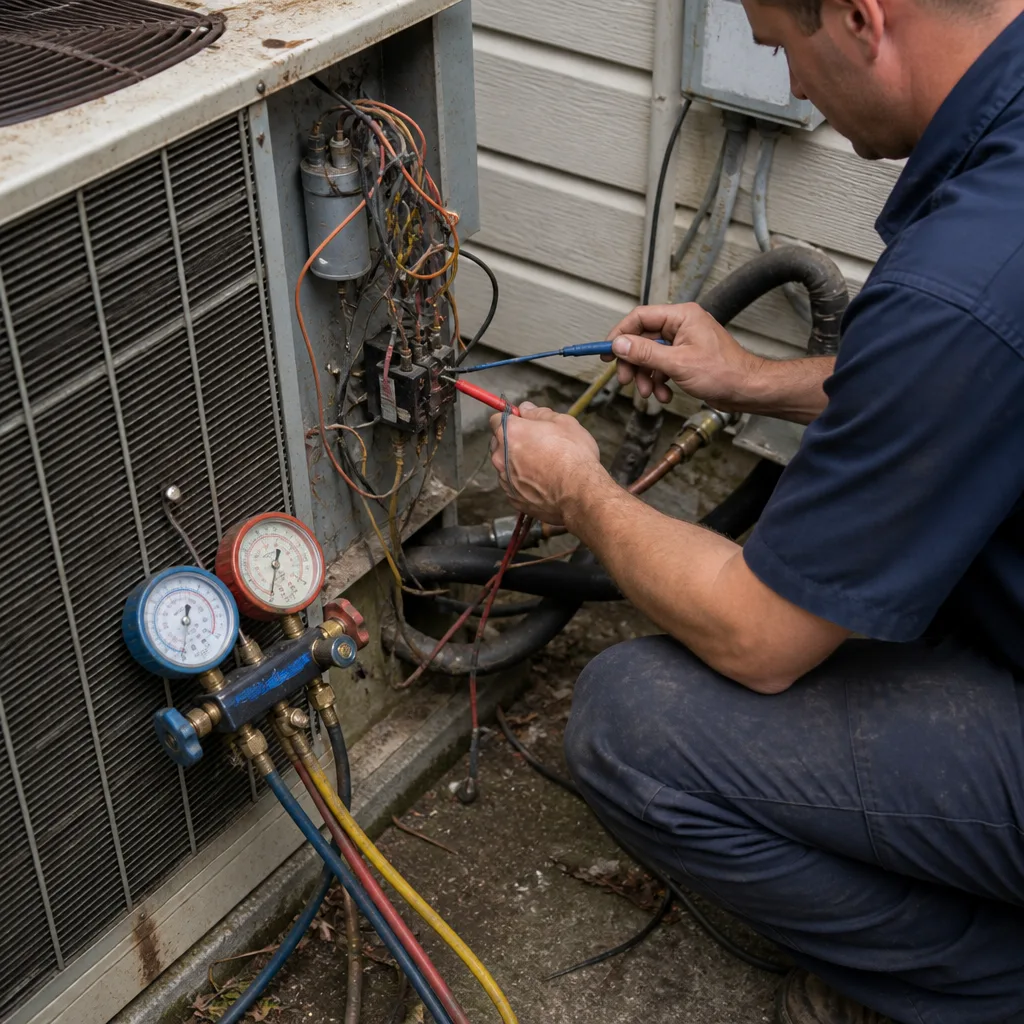 Before
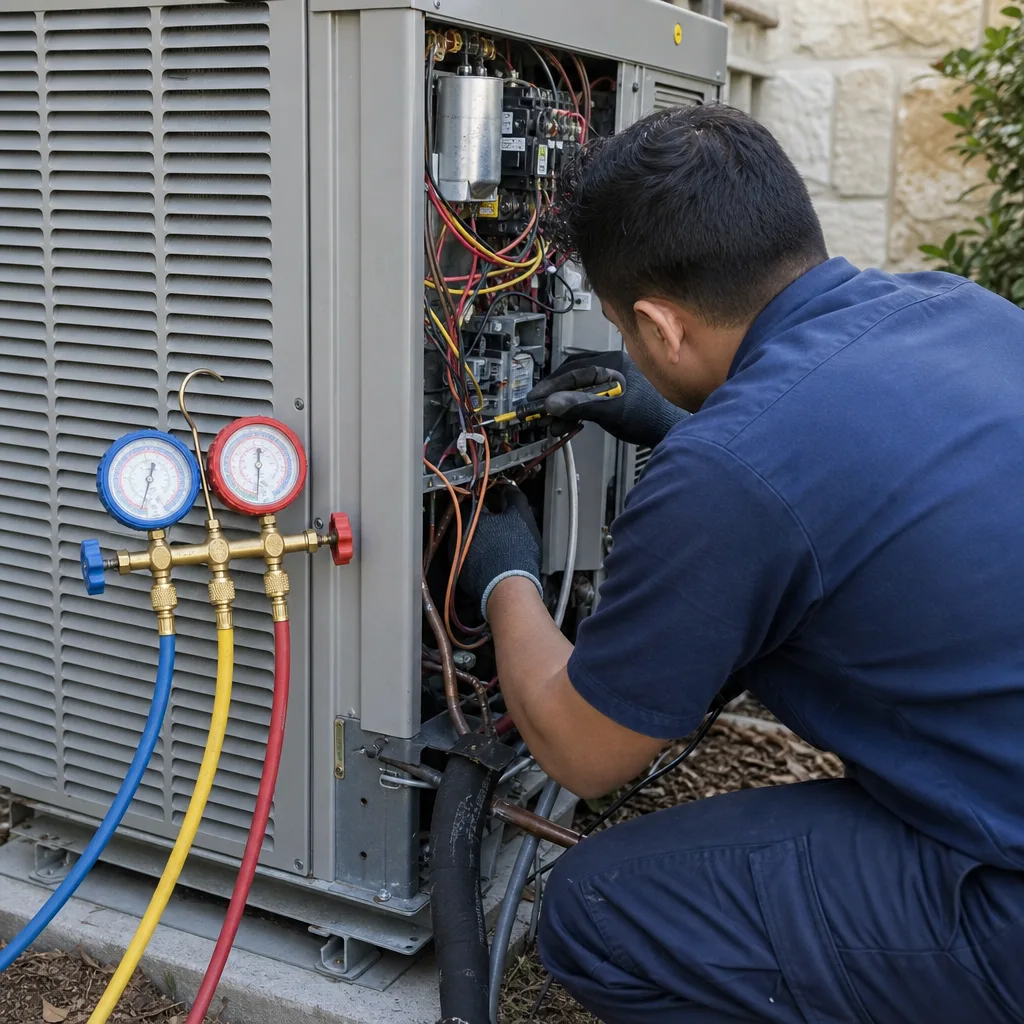 After
After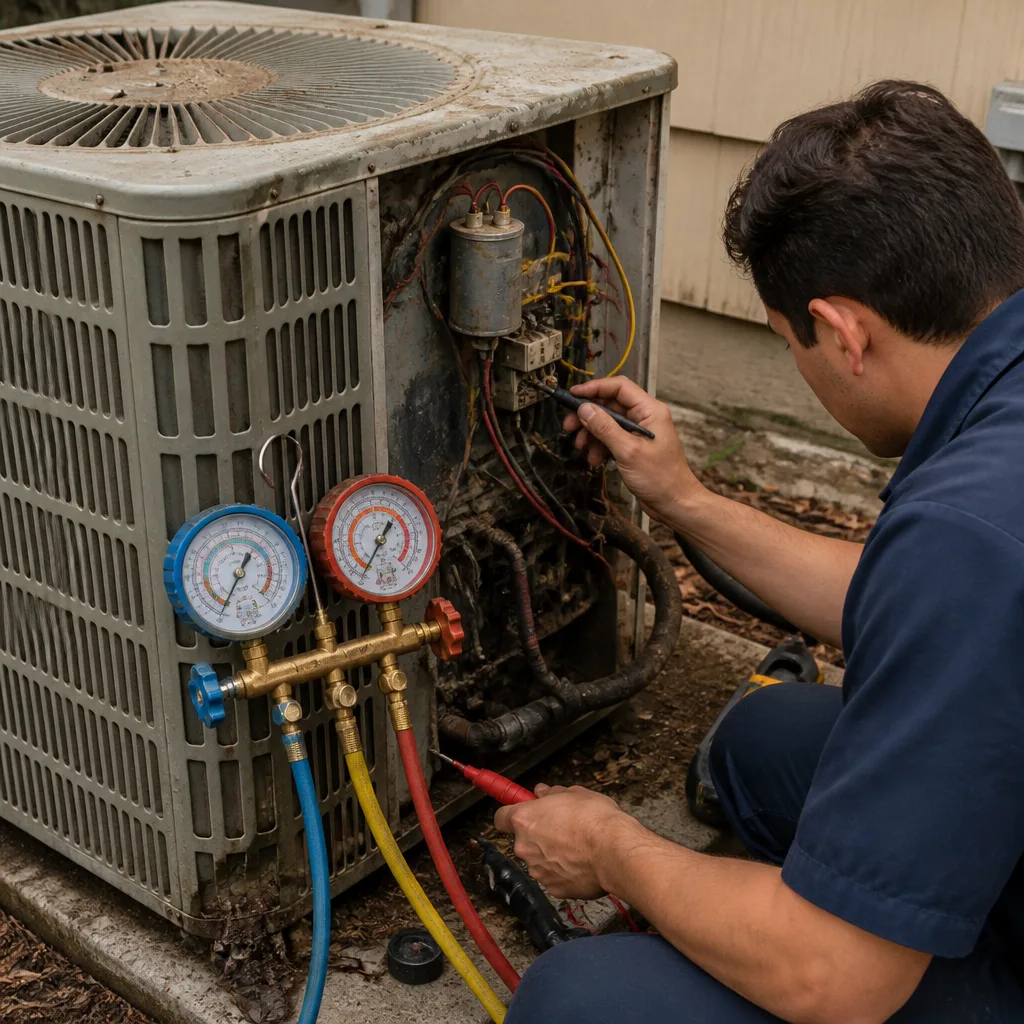 Before
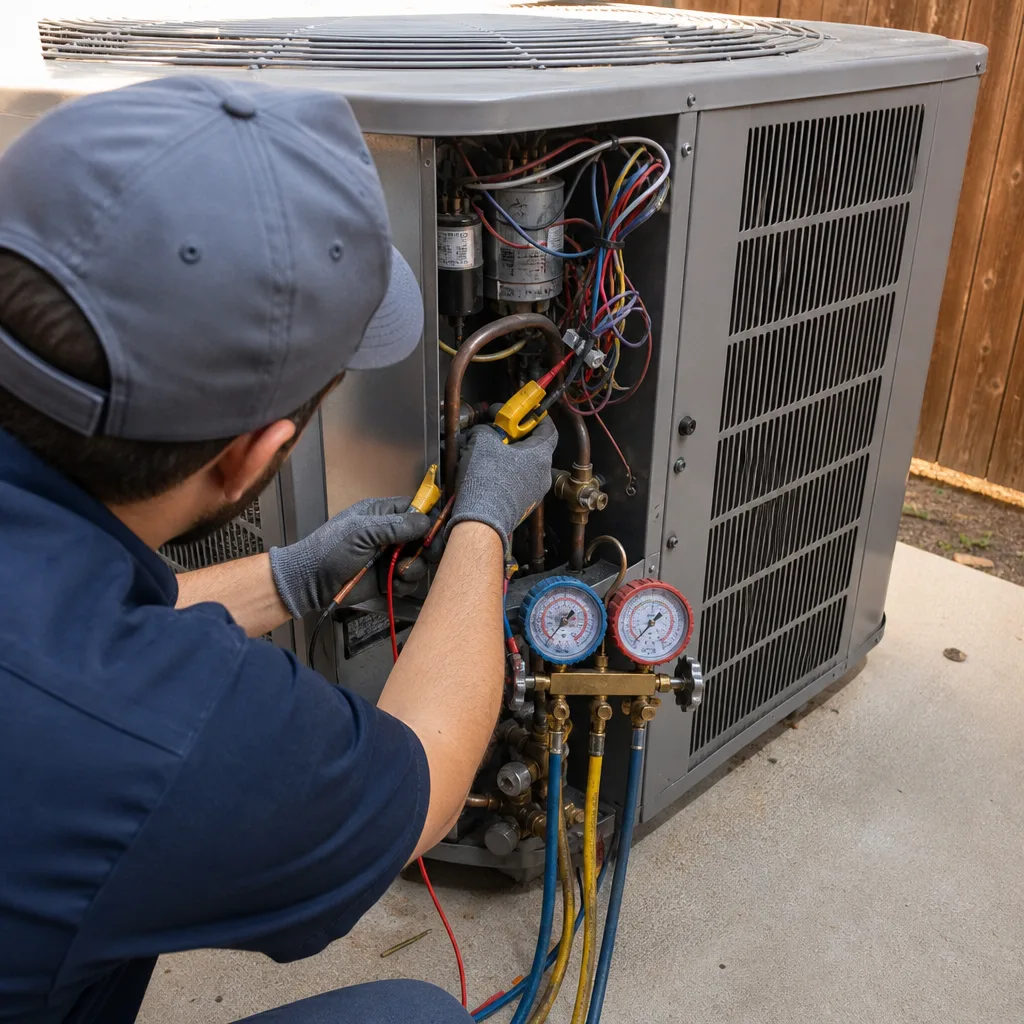 After
After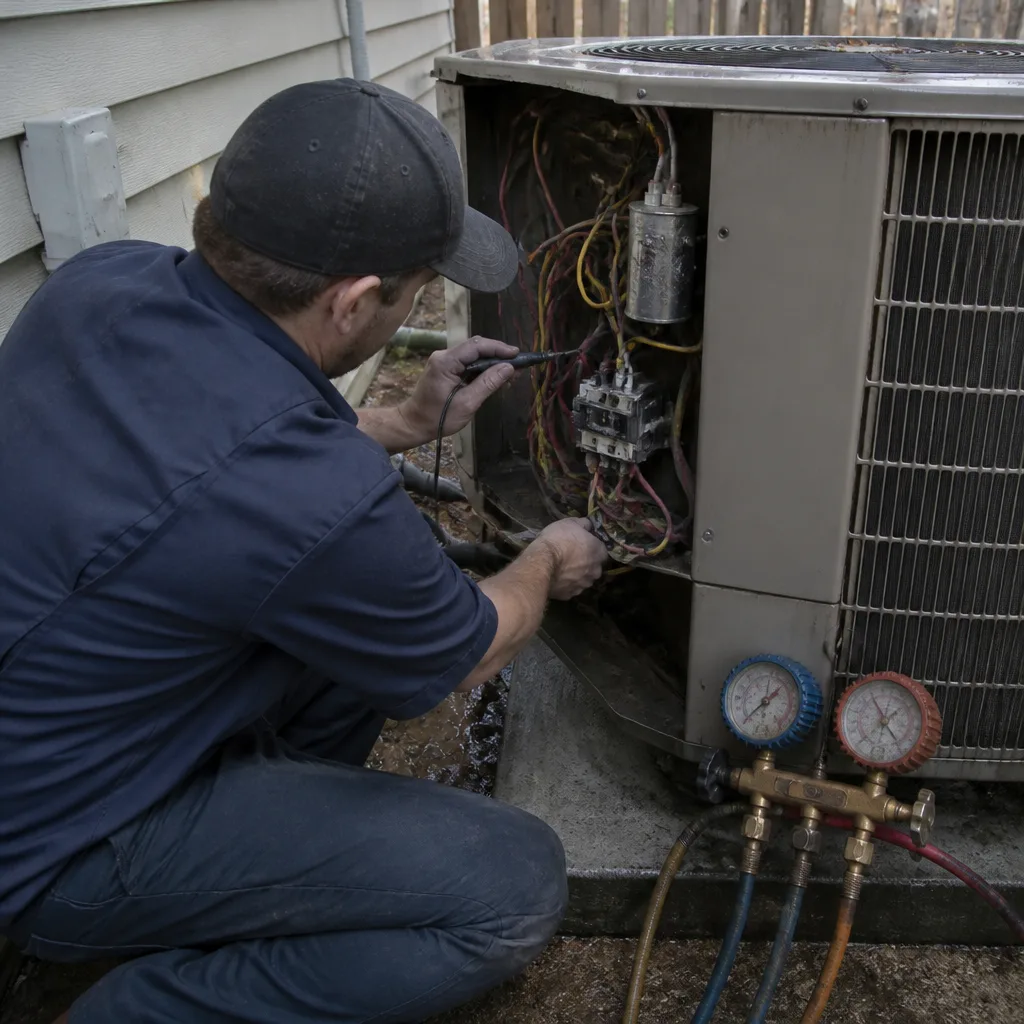 Before
 After
AfterReplacement Cost & What’s Included
In Austin, a Trane capacitor replacement runs $150 – $275 installed, parts and labor included, and we hand that to you in writing before a single tool comes out of the truck. A single run capacitor job lands at the low end, usually $150 – $190, while a dual capacitor for a larger Trane compressor runs $180 – $275. If you have a two-stage Trane XL or XV system, the capacitor count and spec are different, and we’ll quote it after we see the unit, still at a fixed price before work begins.
That price covers the service call, the OEM or quality aftermarket capacitor of your choosing, installation, testing the system under load, and our 365-Day Done Right Promise in writing. If that capacitor fails within a full year, we come back and replace it at no charge. No arguments, no fine print. We also check the contactor and wiring terminals while we’re in there, because a pitted contactor is often what killed the capacitor in the first place, and we’d rather catch it on the first visit than have you call us back for a mystery failure in September. That’s the Kingswell Way: say the price before the work, show up in the window given, leave the place cleaner than found, put the guarantee in writing, come back if it fails.
DIY or Call Us?
The honest answer from someone who does this every week: this one is not a DIY job for most homeowners, and here’s why. A capacitor holds a charge even after the power is off at the breaker. Touch the wrong terminal and you’ll get a shock that can knock you out and, in rare cases, stop your heart. That’s not scare talk; that’s the physics of a component designed to store and release electrical energy. We discharge the capacitor safely as step one, and we test it under load before we call the repair done.
What a homeowner can do safely: confirm the outdoor unit has power at the breaker, check that the thermostat is calling for cooling, and clear leaves and debris away from the condenser cabinet. If the fan still won’t spin on its own, call (361) 204-1605 and a live person will answer. That’s another thing we do that’s rare in this trade: no voicemail tree, no after-hours runaround. About the diagnosis: Victor Mancini and our crew are trained to diagnose once and diagnose it right. No parts ordered on a guess, no return visits for the same problem. One visit, one diagnosis, one fix, that is the only way this works.
FAQs
A Trane capacitor in the Austin climate typically lasts 5 to 8 years, but we’ve replaced them at 3 years on systems that run nearly nonstop from April to October, and we’ve seen 12-year-old originals still holding spec on lightly shaded lots in Tarrytown. The Austin variable is sustained high ambient temperature: every hour your condenser runs over 95°F outside shortens the capacitor’s life, because the dielectric inside degrades exponentially with heat. If yours is past the 5-year mark and you’re noticing rough starts, call (361) 204-1605 and we’ll test it under load before it strands you on the hottest weekend of the year.
No, a capacitor cannot be repaired. Once the dielectric material inside the can degrades or the casing vents, the part is finished. There is no way to recondition one, and anyone offering to “repair” a capacitor is charging you to fail. Replacement is the only fix, and it’s a fraction of the cost of the compressor or fan motor it protects.
The physical swap takes 30 to 45 minutes once we’re on site, including discharging the old capacitor, disconnecting the terminals, installing the new one, securing it in the strap, and running the system through a full cooling cycle to confirm both the compressor and fan are running within spec. Figure an hour from truck to handshake, and we’ll give you a firm arrival window the same day you call.
Yes. We keep a full range of single and dual run capacitors in common Trane ratings, 35/5 through 50/5, in OEM Trane parts and AmRad and Titan HD aftermarket equivalents, plus the 370 and 440 volt versions for older XE and XL units. We also carry Carrier and Lennox-compatible capacitors for the other brands we service. If your Trane takes an uncommon spec, we can have it out of our local Austin parts network the same day in nearly every case.
Written by Victor Mancini, Owner & Lead HVAC Technician, Cold Harbour Heating and Air Austin at Cold Harbour Heating and Air Austin, serving Austin and nearby areas.